 Universal Pickup Support
Universal is an easy word to put on a spec sheet. It is harder to mean.

The modular guitar system
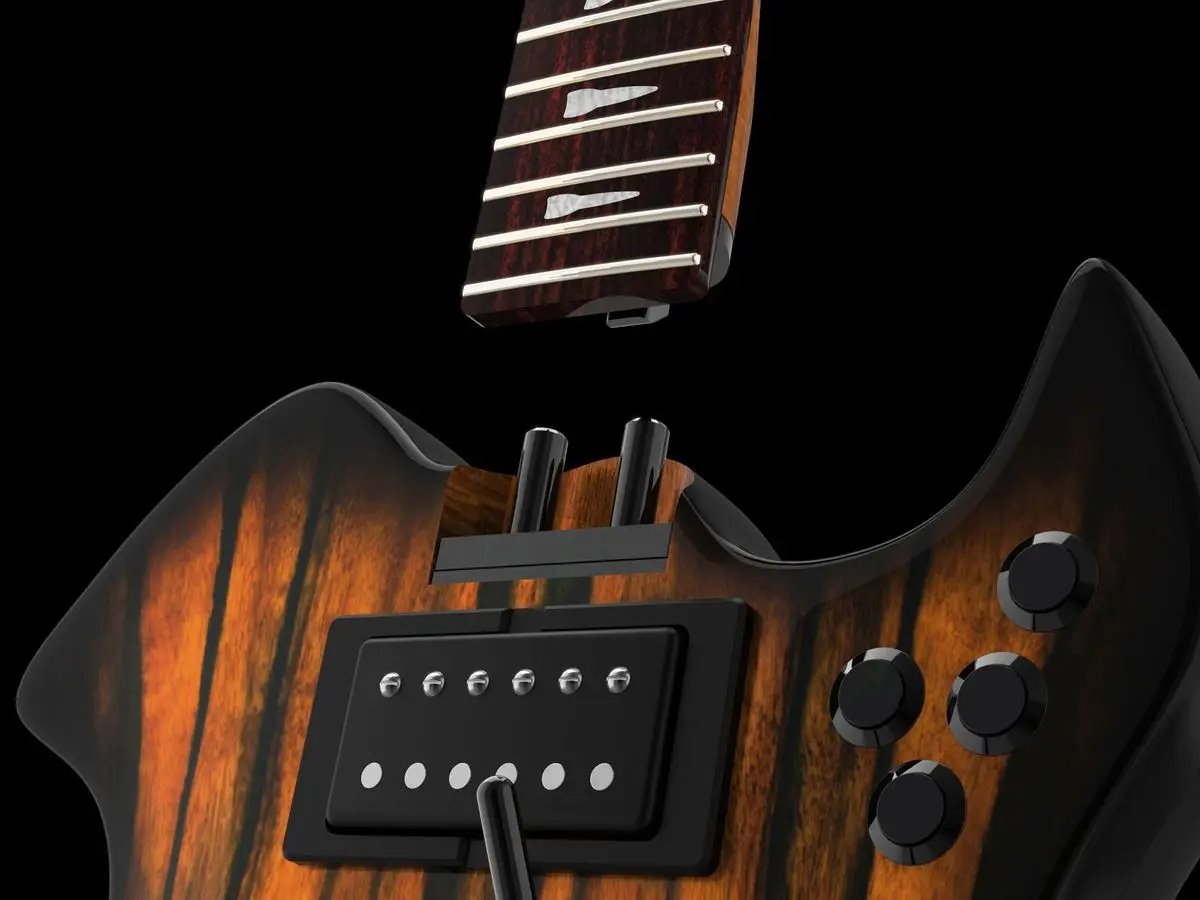
A modular electric guitar is one whose main parts come apart and swap by hand, so one instrument can become another. Ocean Environment is Shark's system for it: one fit for every Shark part. Necks, bodies, pickup modules, FX cards, the bridge and the nut move between guitars.
A guitar built so its main parts come off and go back on by hand. One body takes another neck, another pickup or another effect, and the guitar changes with it.
Any Shark neck fits any Shark body with the same fret count: 24 with 24, 22 with 22.
Every body shape takes the same necks, pickup modules and bridge.
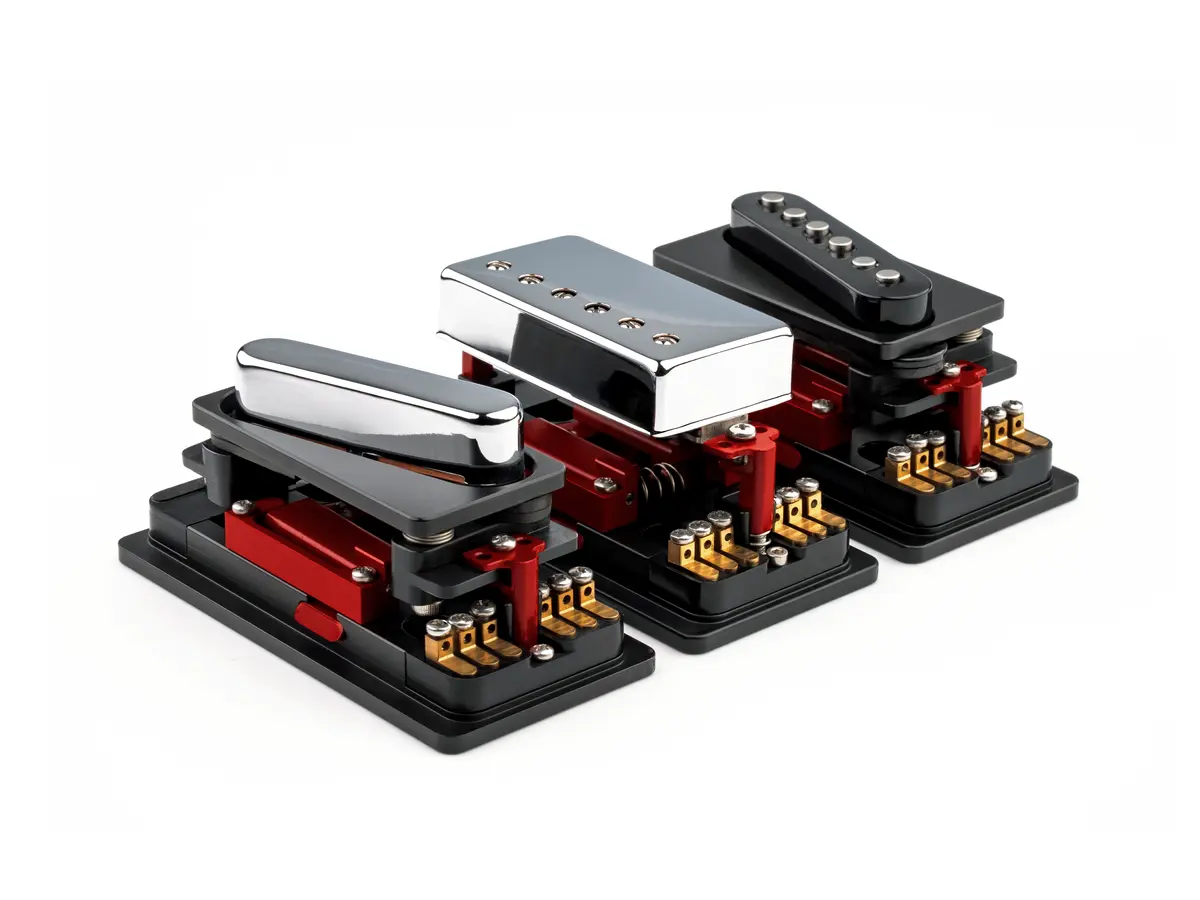
Solderless. Single coils, humbuckers, P90s and active pickups all fit the same slot.
Overdrive, distortion, fuzz, delay, reverb and more, plugged into the Supreme electronics hub without tools.
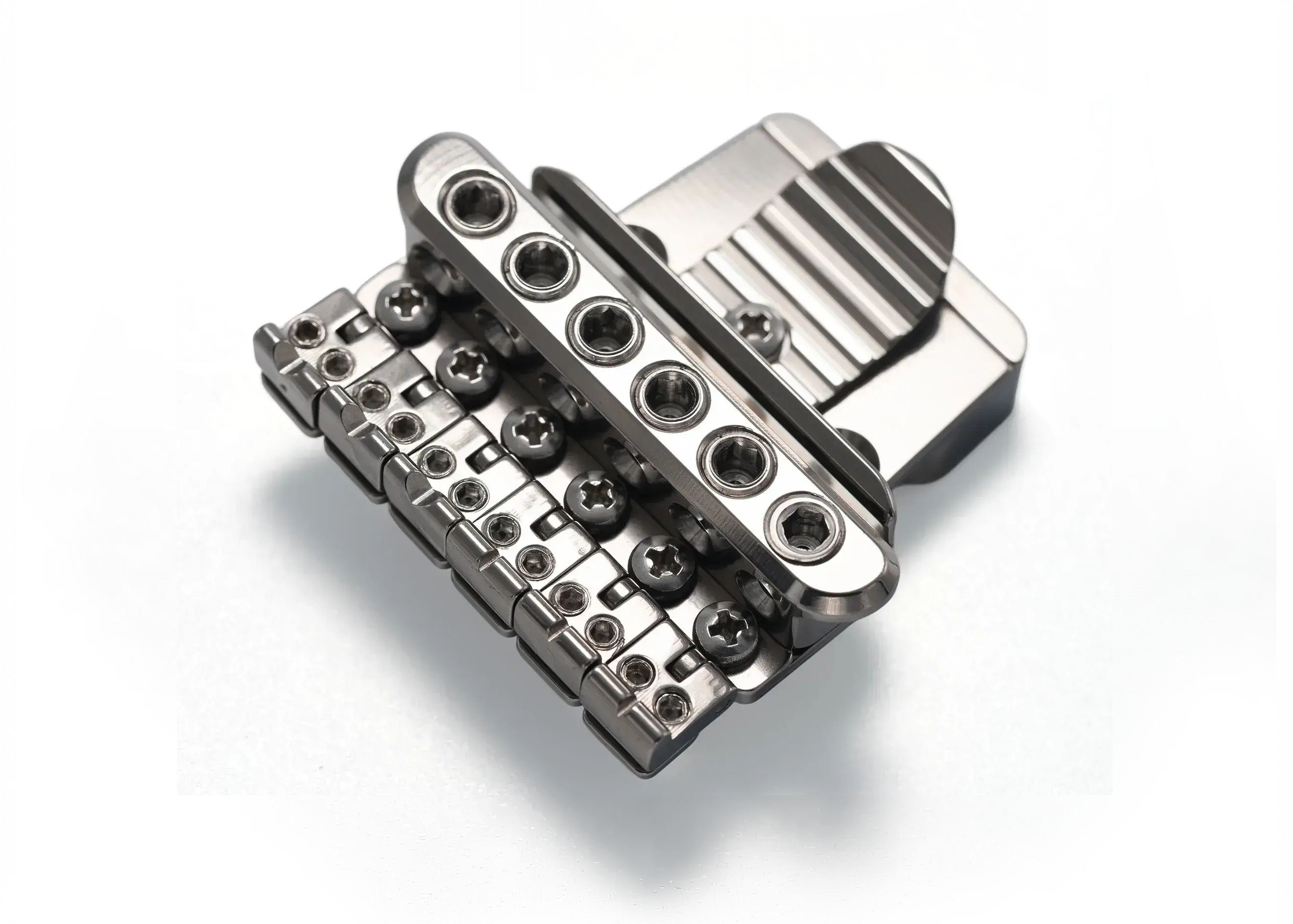
One all-titanium linear tremolo with integrated tuners, switchable between fixed and tremolo mode.
A removable titanium nut with a string carrier, so a neck comes off without restringing.
Bodies and necks are wood, chosen for how they sound. The joints, the bridge, the nut and the hardware are Grade 5 titanium, CNC-machined in-house to within 0.01 mm, so a part seats the same way on any Shark.
See the titanium parts in the OEM catalog

Each pickup module has its own release button on the back of the body.

The pickup comes out whole, in its module, with nothing to unsolder.
Any pickup module fits any slot and plays as soon as it clicks in.
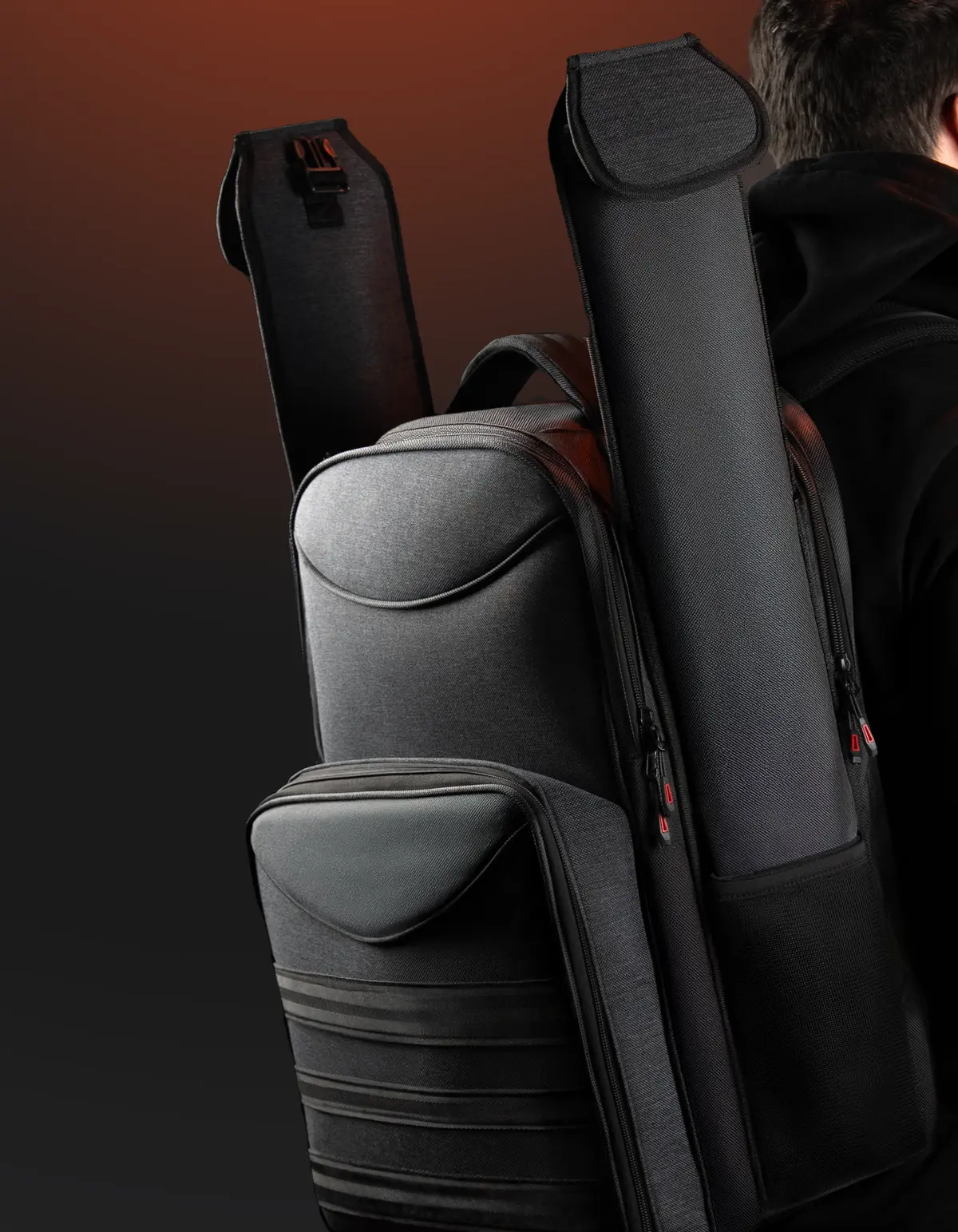
Take the necks off and two bodies, two necks, pickup modules and FX cards travel in one Ocean Environment backpack, ready to put back together wherever you play.
Count the parts you own. A neck pairs with every body of the same fret count, and every pickup module fits every slot. Another neck or another pickup module is another guitar, not another purchase of a whole instrument.
different guitardifferent guitars
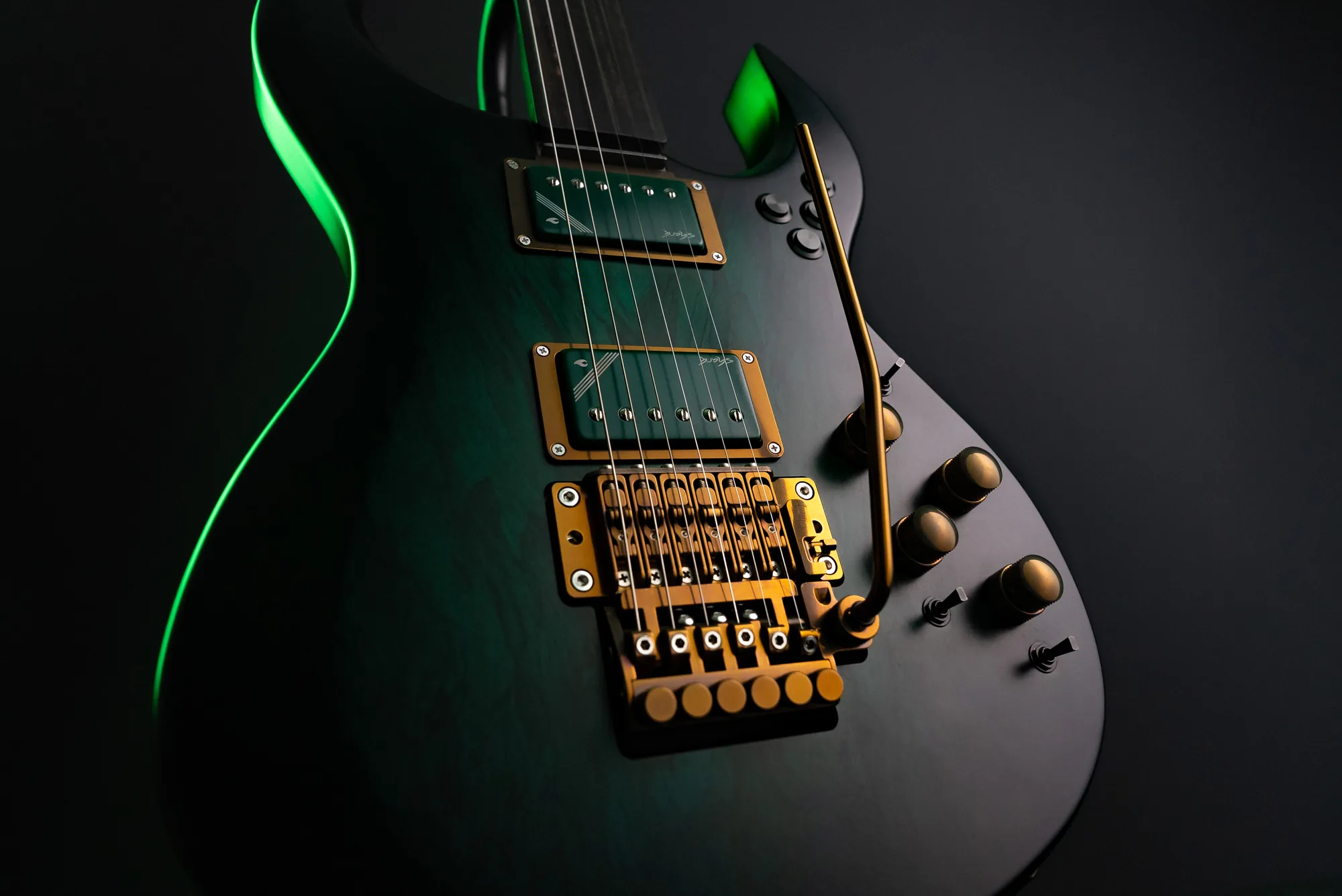
Design a guitar in the 3D designer, then add necks, bodies and pickup modules whenever you want another sound.
The Ocean Environment is the platform that connects all Shark technologies. Every Shark component is inter-compatible: any neck fits any body, any pickup module fits any slot, any FX card works in any Supreme electronics module. The only constraint is fret count (24-fret with 24-fret, 22 with 22). Through OEM licensing, any manufacturer can integrate components. Learn more: Ocean Environment | What is Guitar v2.0.
No. Shark necks only fit Shark bodies. The titanium T-Form joint is a proprietary precision connection — it's not compatible with bolt-on, set-neck, or other attachment systems. Within the Shark ecosystem, any neck fits any body (matching fret count). Details: Neck System.
The Shark Modular Nut features a removable string carrier with per-string adjustment. During a neck swap, the carrier lifts out holding the strings, and drops back in when the new neck is mounted. A fixed OEM nut variant is also available for builders. Details: Nut Product Page | Nut Design Blog | Buy Nut.
Yes. The pickup module accepts single coils, humbuckers (passive and active), blade-style, and stacked pickups. Solderless installation via screw terminals. Active pickups (Fishman, EMG) are powered by the built-in 9V system. See Pickup Module | Shark Pickups | How Pickup Modules Work.
Titanium reflects string energy exceptionally well (longer sustain), resists corrosion and scratching, and is lighter than steel. It also allows anodized color options with no finish wear over time. Because there's no coating, we hold very precise tolerances across every surface. See the titanium bridge and nut in detail: Bridge | Nut.
A titanium Convertible Bridge with integrated tuners. Quick-change neck system (44 profiles). Individually adjustable frets. Solderless pickup modules. Sub-0.01mm precision machining. A platform that evolves with you. See everything: All Products.