

The Ocean Environment
Production-ready titanium hardware, fret systems, and advanced electronics for the fretted instrument industry. Designed from the start to integrate into other manufacturers' instruments.
Ocean Environment is a unified parts ecosystem. Bridge, nut, fret system, pickup modules, and electronics - designed to work in tandem, intercompatibly, or as singular components. The system is designed for straightforward OEM integration: adopt a single product or the full platform.
Every component is an improvement on a real engineering challenge. Fret alignment difficulties and refretting needs. Tuning instability on tremolo systems. Soldered pickup installations. Nut slots that can never be adjusted after cutting. The platform addresses these with precise manufacturing and integrated design, using technologies available to this era but not yet applied to fretted instruments.
These products reinforce whatever is already prominent on the guitar without changing its identity. They offer the best version of that model - in stability, in precision, and in aesthetics.
Bridge, nut, and fret system: Grade 5 Titanium (Ti-6Al-4V), CNC-machined in-house to sub-0.01 mm tolerance. Frets also available in stainless steel.
Seven patents applied across the platform, some already granted. Your instruments' integration and the competitive edge it brings are protected for our partners through our IP coverage. OEM licensing available for individual components or the full system.
 →
→
 →
→
 →
→
 →
→
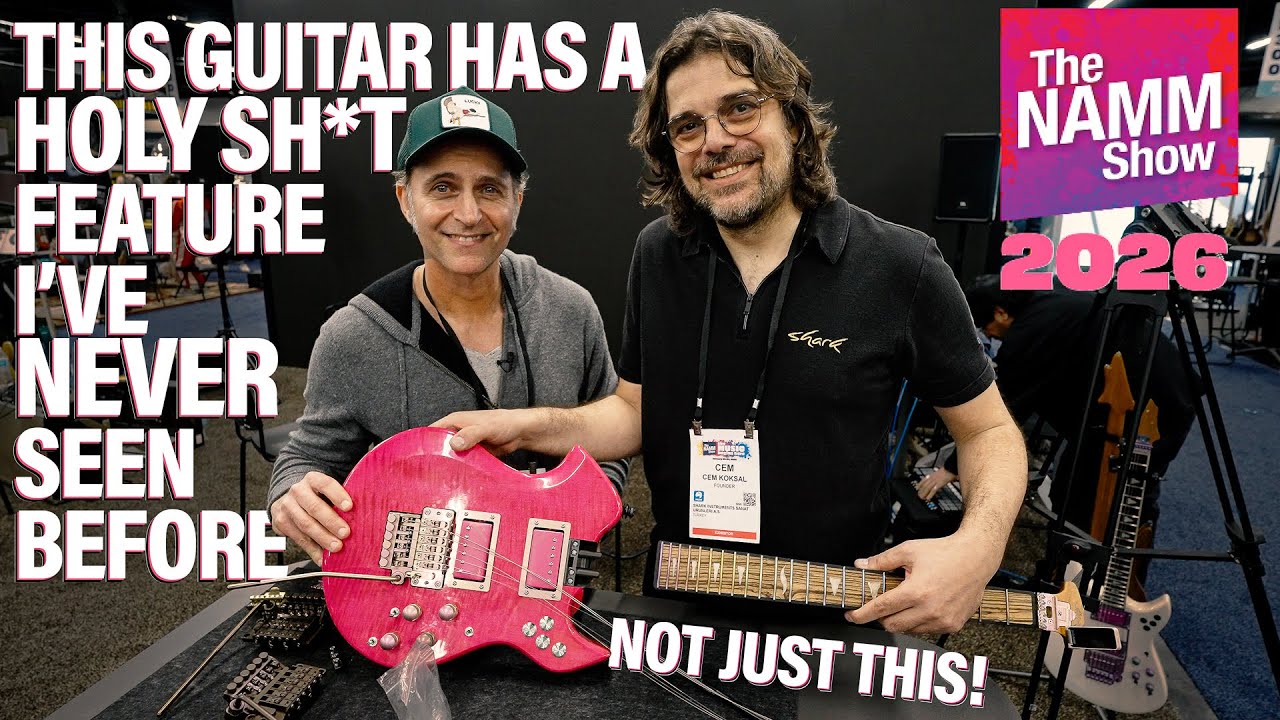
Ocean Environment technologies were demonstrated at NAMM 2026 to industry professionals, custom shops, and production builders. The response has been strong across every product category.
Interest has come from custom shops, production manufacturers, and extended range specialists. Professional artists have tested the system and endorsed the approach. The Adjustable Fret System generated the highest volume of inquiries - for every other product request, there is a fret system inquiry. Demand for bass, 7-string, and multiscale configurations has been consistent and clear.
Public reception on social media has been overwhelmingly positive. Across audience feedback, over 96% of responses are positive or curious. The technical community in particular has recognized that these are genuine engineering solutions, not marketing features.
We are excited about what Ocean Environment can do for your instruments and we would like to share it with you.
Request the full OEM integration package: routing files, technical drawings, sample components, and direct engineering consultation.


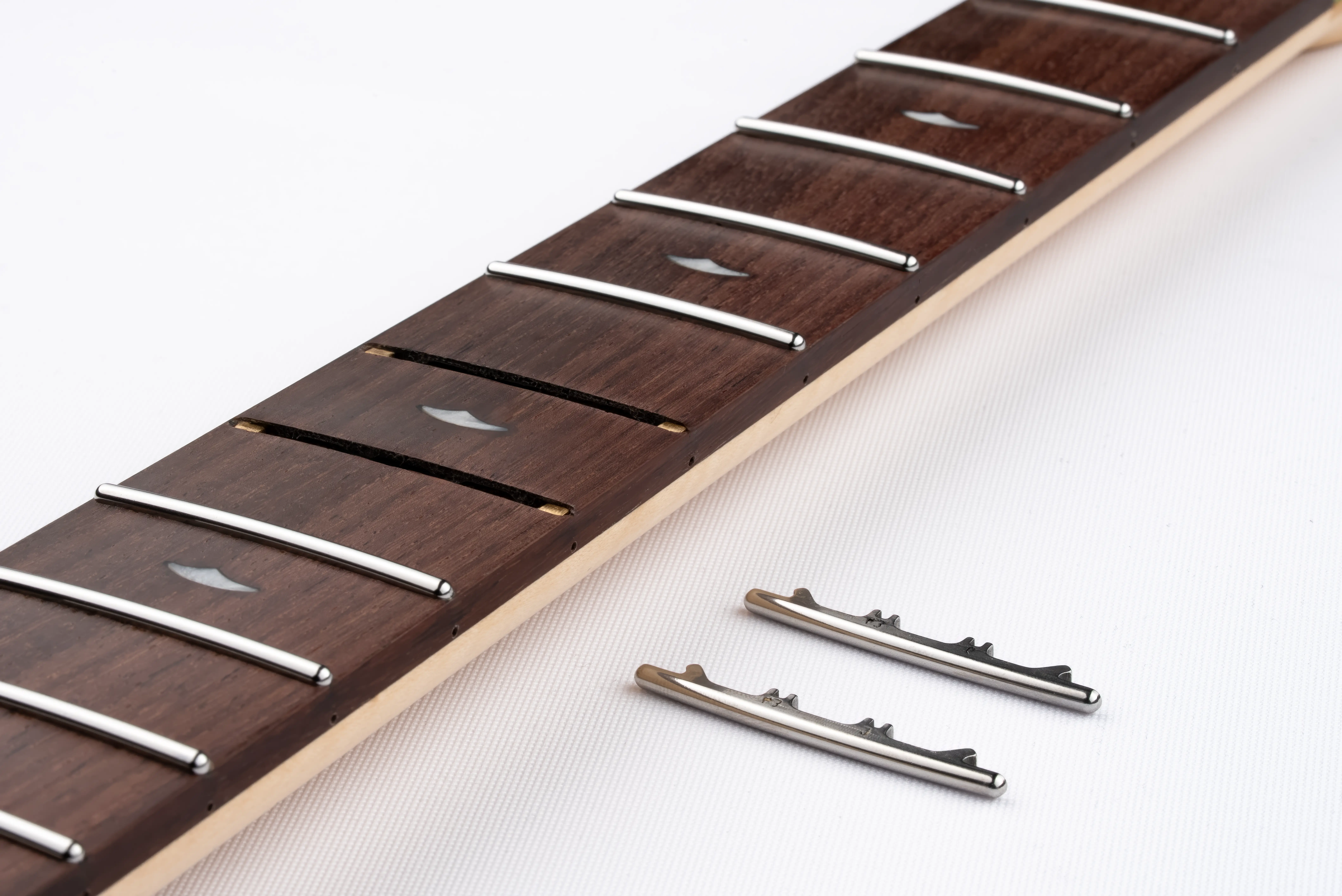
Individually height-adjustable frets, calibratable with electronic precision using the Shark Fret Calibration Tool. Available in titanium and stainless steel, CNC-machined and polished in-house. Can be produced for any fretted instrument: electric guitar, bass, ukulele, and beyond.
Every fret is individually height-adjustable from the side of the fretboard, per-fret and per-side. Combined with the Shark Fret Calibration Tool, which provides electronic measurements with audio and visual feedback, this system gives fretted instruments the ability to be the most precise versions of themselves, physically possible. Shorter production time, less labor, ultimate precision. Manufactured in stainless steel and titanium, these frets are highly resistant to wear in the first place. And if a fret ever needs replacing, it can be individually swapped by simply clipping it out and snapping a new one in. No refretting, no crowning, no leveling.
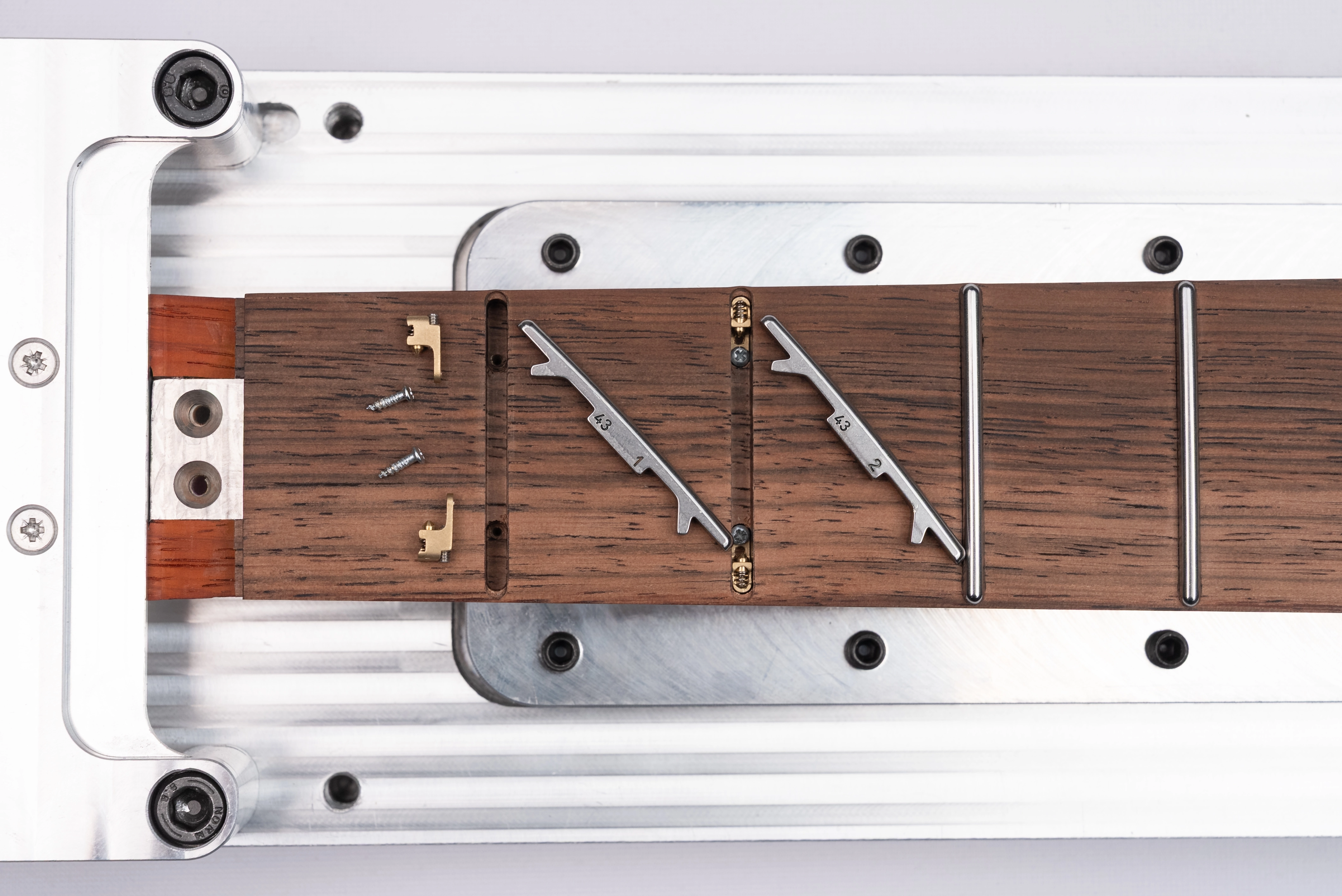
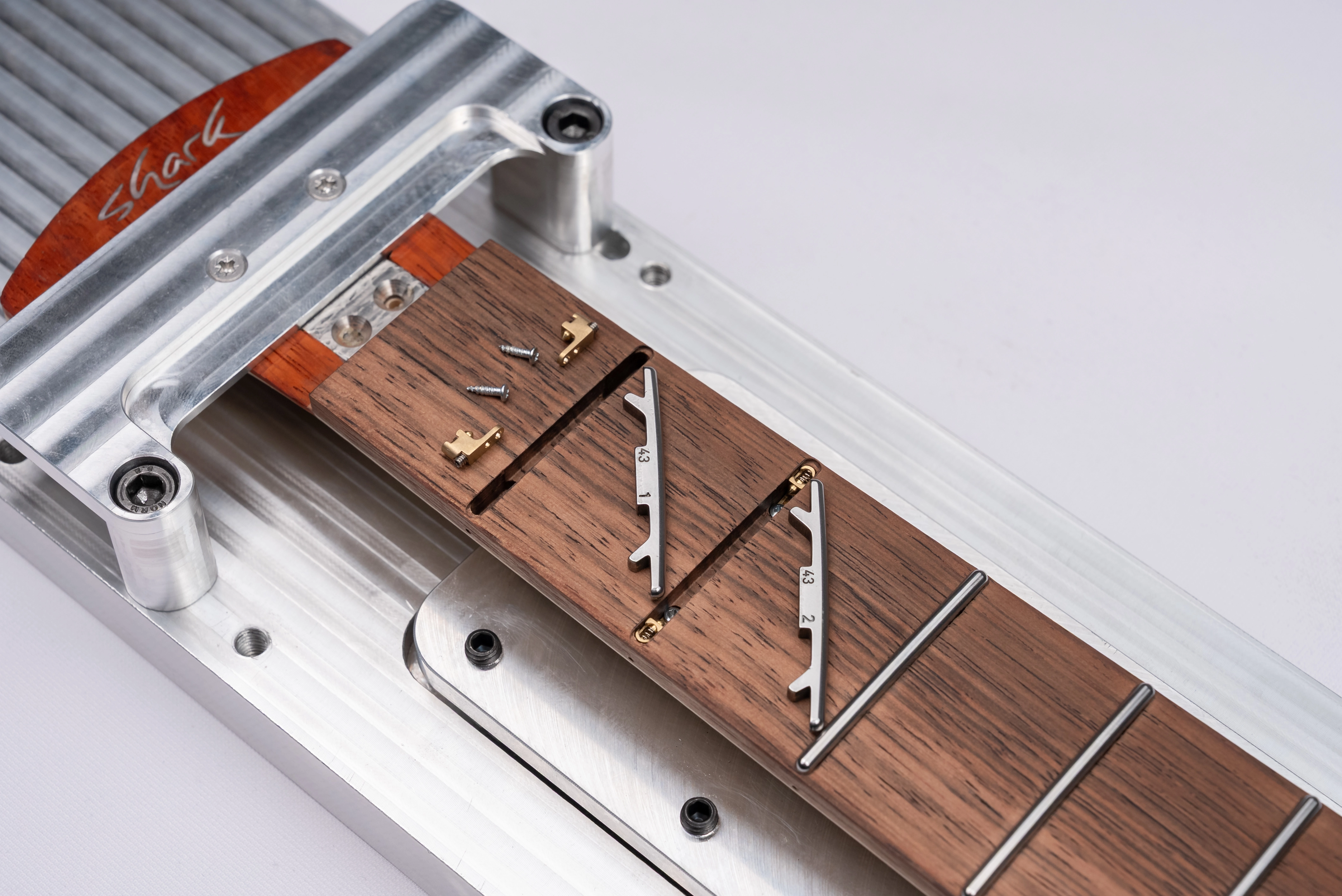
Each fret position has a channel with two mounting points, one on each side of the fretboard. Two brass adapters are mounted into each channel with screws. The fret clips into these adapters through a spring-loaded system: press the fret down and it snaps into place.
Each adapter has its own height adjustment. Using a hex key from the side edge of the fretboard, you raise or lower each side of each fret independently. Per-fret, per-side control.
Worn frets clip out, new ones clip in. No heat, no pressing, no regluing, no releveling. What was once an expensive repair (a full refret) becomes a component swap. This transforms the economics of fretwork for both production and aftermarket service.
Instruments equipped with this system endure longer. Necks stay in service indefinitely because the frets are always replaceable and recalibratable. Even years later, the guitar remains as precise as the day it was produced. This works beautifully with real relic designs as well: the instrument keeps its story, its character, its wear - while being as precisely playable as a brand-new build. And it stays that way indefinitely.
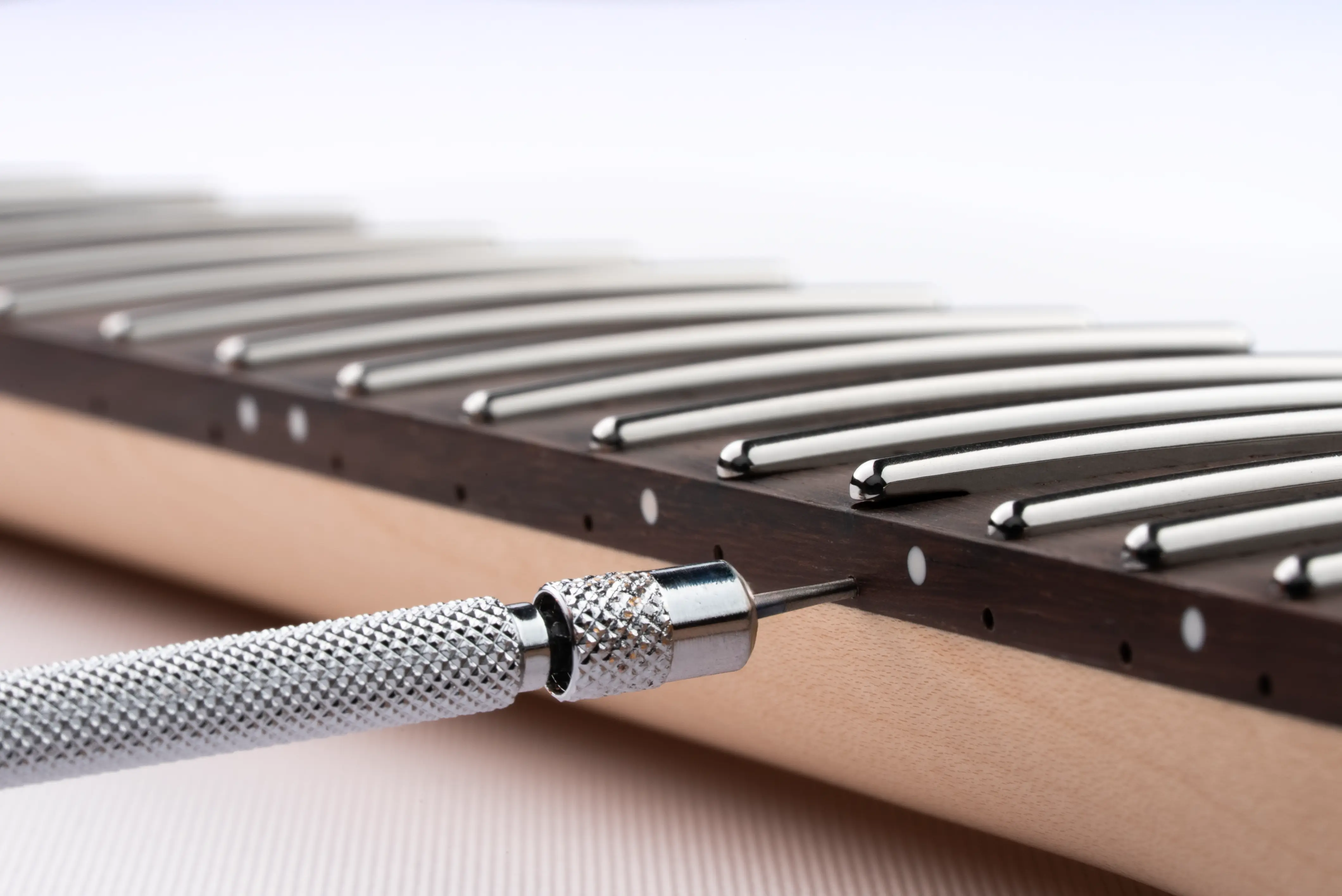
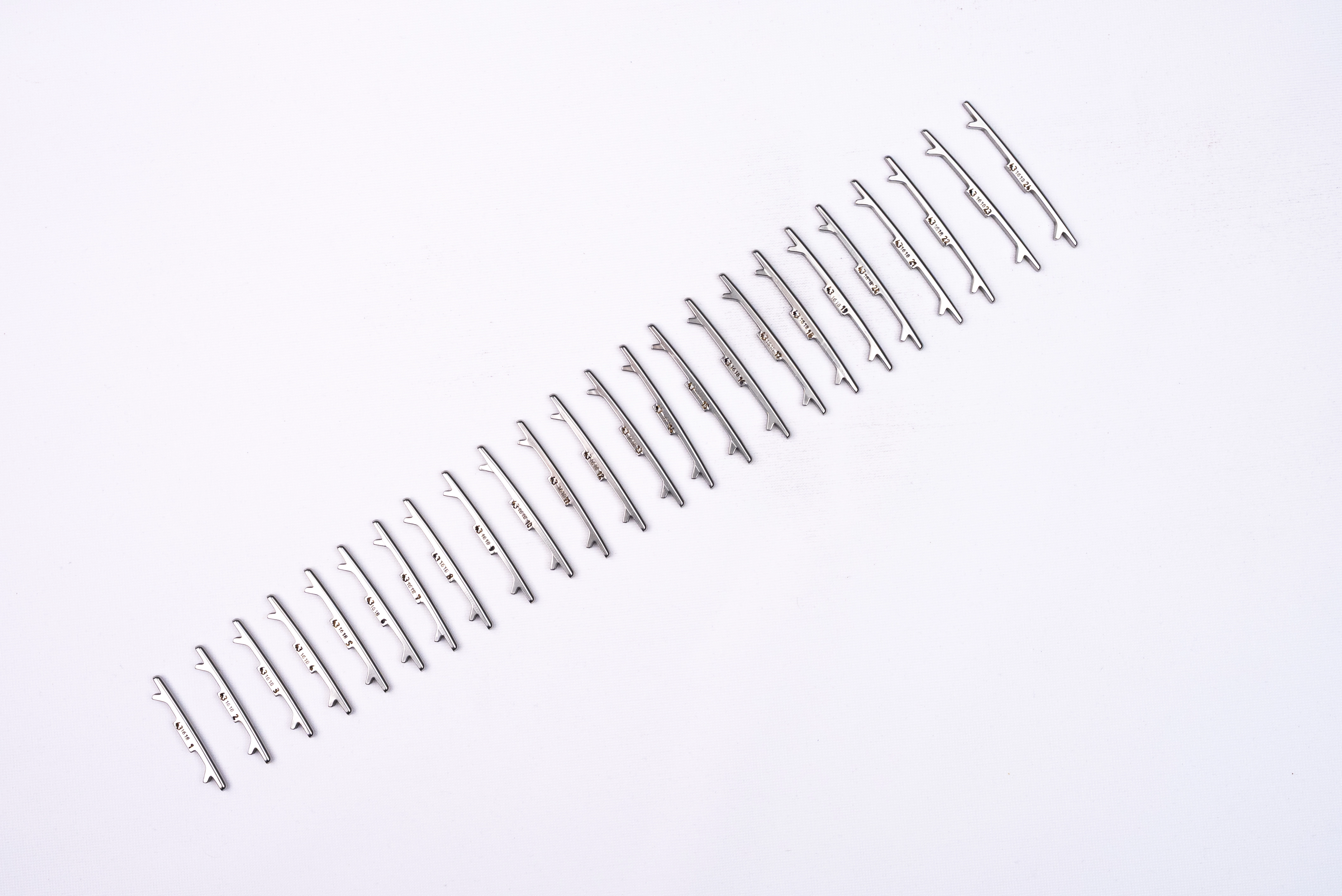
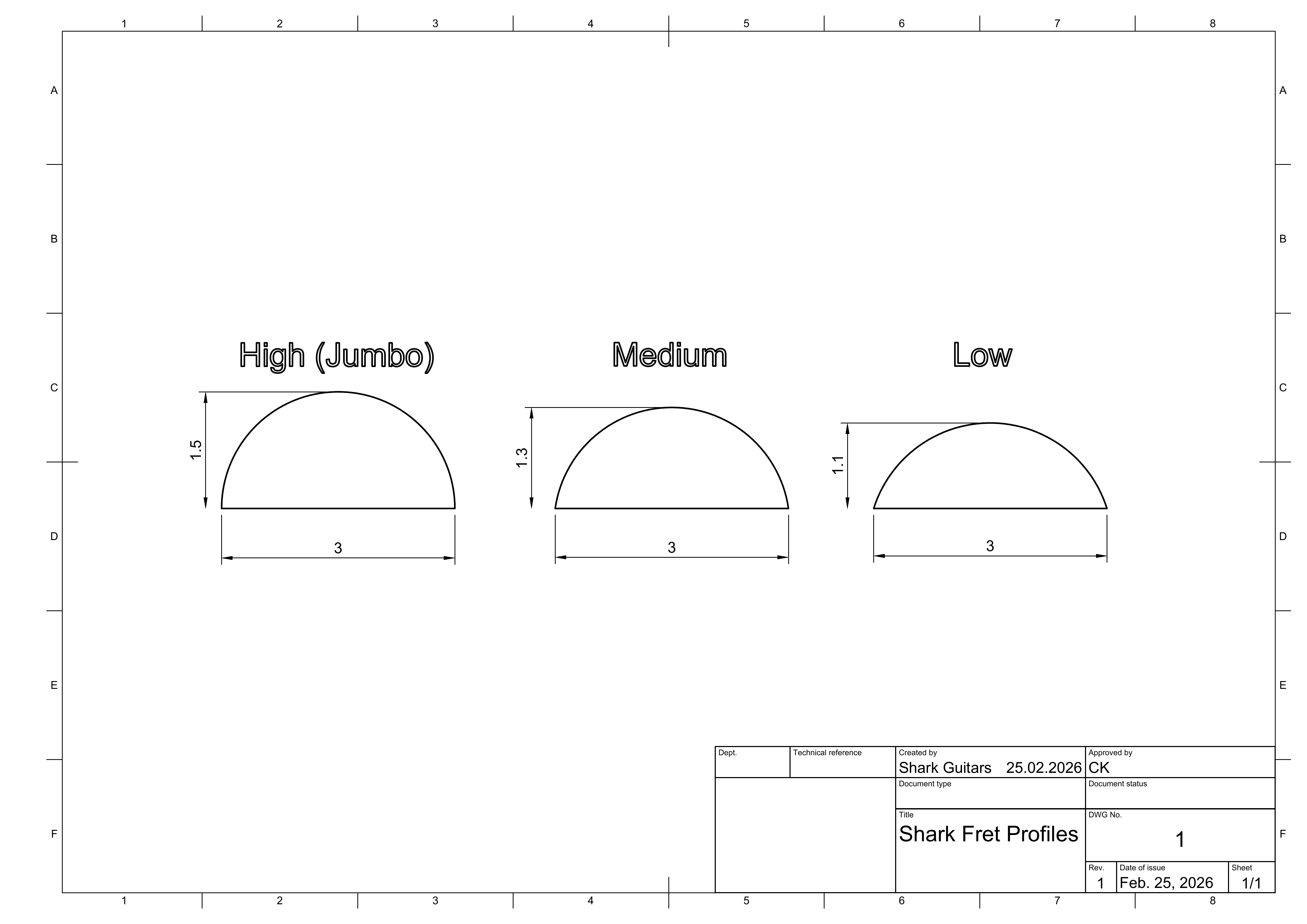
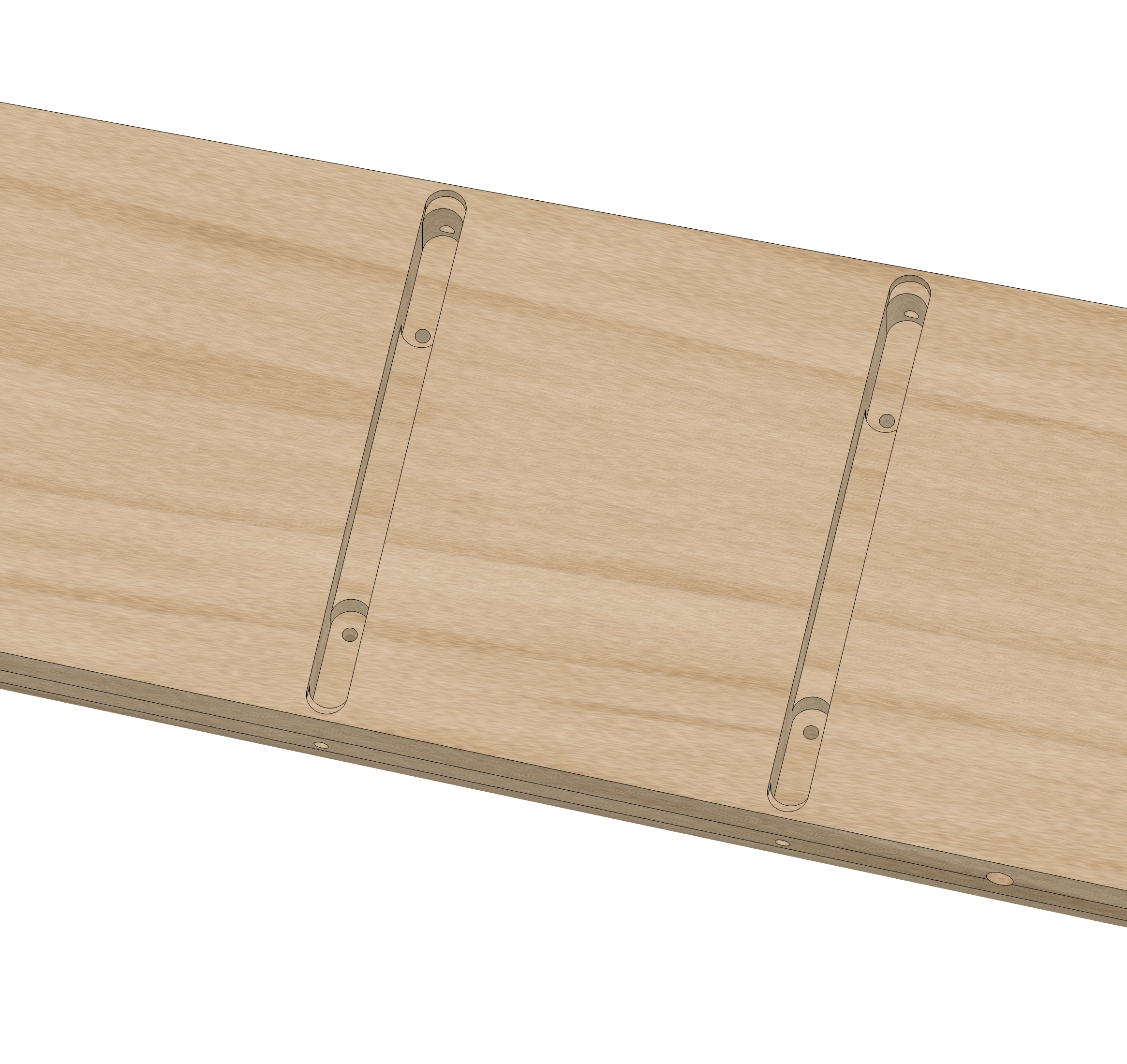
Stainless steel or titanium frets available. Titanium frets can be anodized to any color. All frets CNC-machined in-house from raw material.
Standard radii: 10", 12", 14", 16", 18". Compound radius available (e.g. 10" to 12", 12" to 16", 16" to 18"). Custom radii can be produced to any specification. Any radius model can be purchased and changed regardless of the neck radius. Frets can even be raised to a level where they behave like a very shallow scallop, for players who prefer that feel. System scales to any fretboard width and scale length.
Eliminates pressing, edge cutting, beveling, edge rounding, leveling, re-crowning, and polishing from the production process entirely. Height calibration is a simple, repeatable adjustment step. Precision is determined by the adjustment, not by technician skill variance.
Three steps to install the Adjustable Fret System into any neck. Shark provides 3D Solid models and DXF files customized to the client's parameters. For builders without 5-axis CNC machines, a metal template is available for manually drilling the side-adjustment holes.
Channels and holes are routed into the neck according to the provided 3D Solid models and DXF files, customized to the client's scale length, fret count, and fretboard dimensions.
Two brass adapters are mounted into the channels for every single fret position using screws. These adapters provide the height-adjustment mechanism and the spring-loaded seating for each fret.
Each fret is pressed into the spring-loaded adapter system until it snaps into place. The fret is now seated, adjustable, and replaceable. No gluing, no pressing tools, no heat required.
Guitars equipped with this system are more precise, endure longer, and are easier to service. Fret leveling is eliminated as a production step. QC tolerances on fretwork tighten. Setup-related returns decrease. Frets are precision-machined components that arrive ready to install. Replacement frets clip in without heat or pressing - transforming an expensive repair into a component swap. System can be produced for guitar, bass, ukulele, and any fretted instrument. Component sets and integration support provided with OEM orders.
To produce your fret set, we need: Fret count, fretboard width at nut, fretboard width at last fret, fret radius at nut, fret radius at last fret.
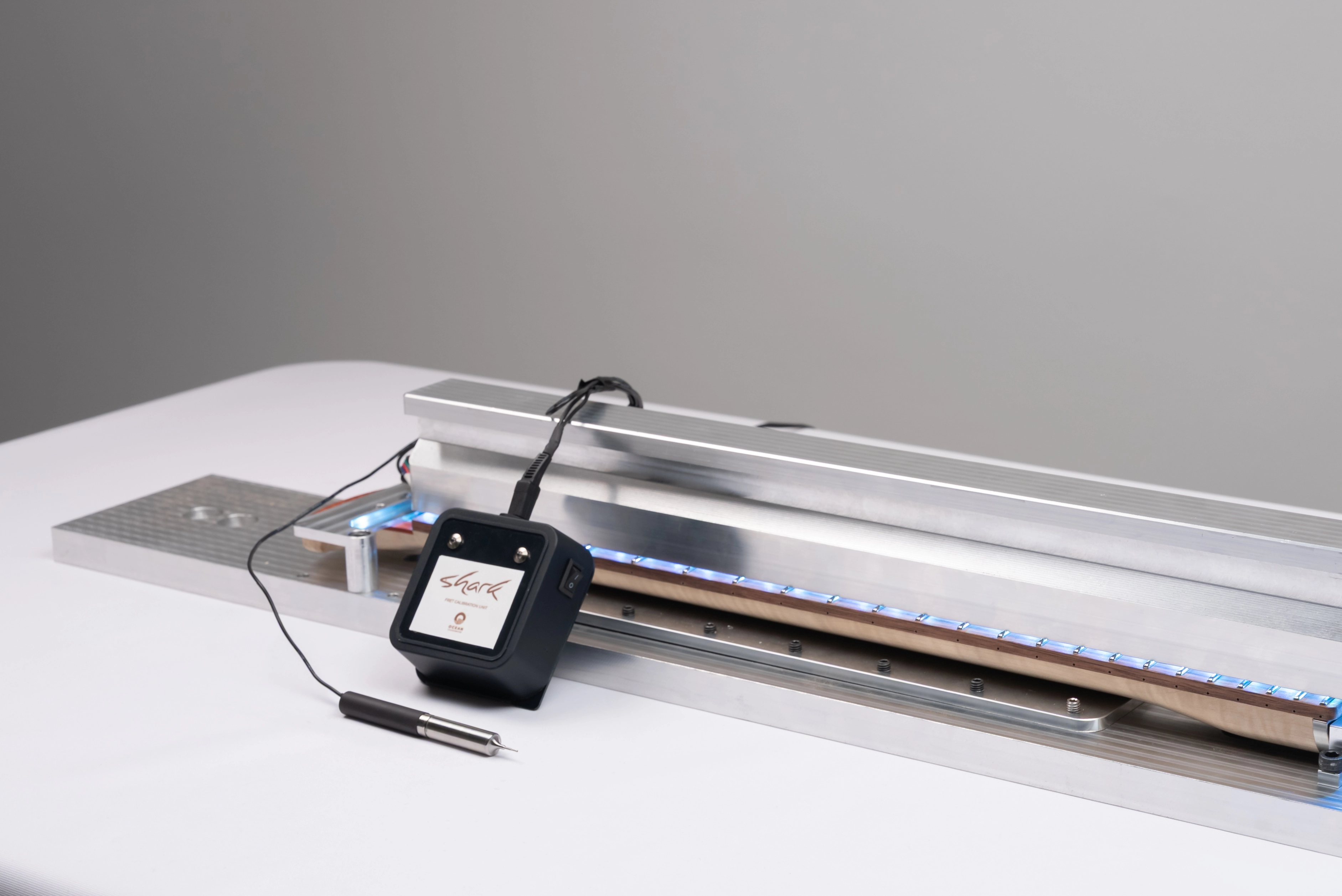
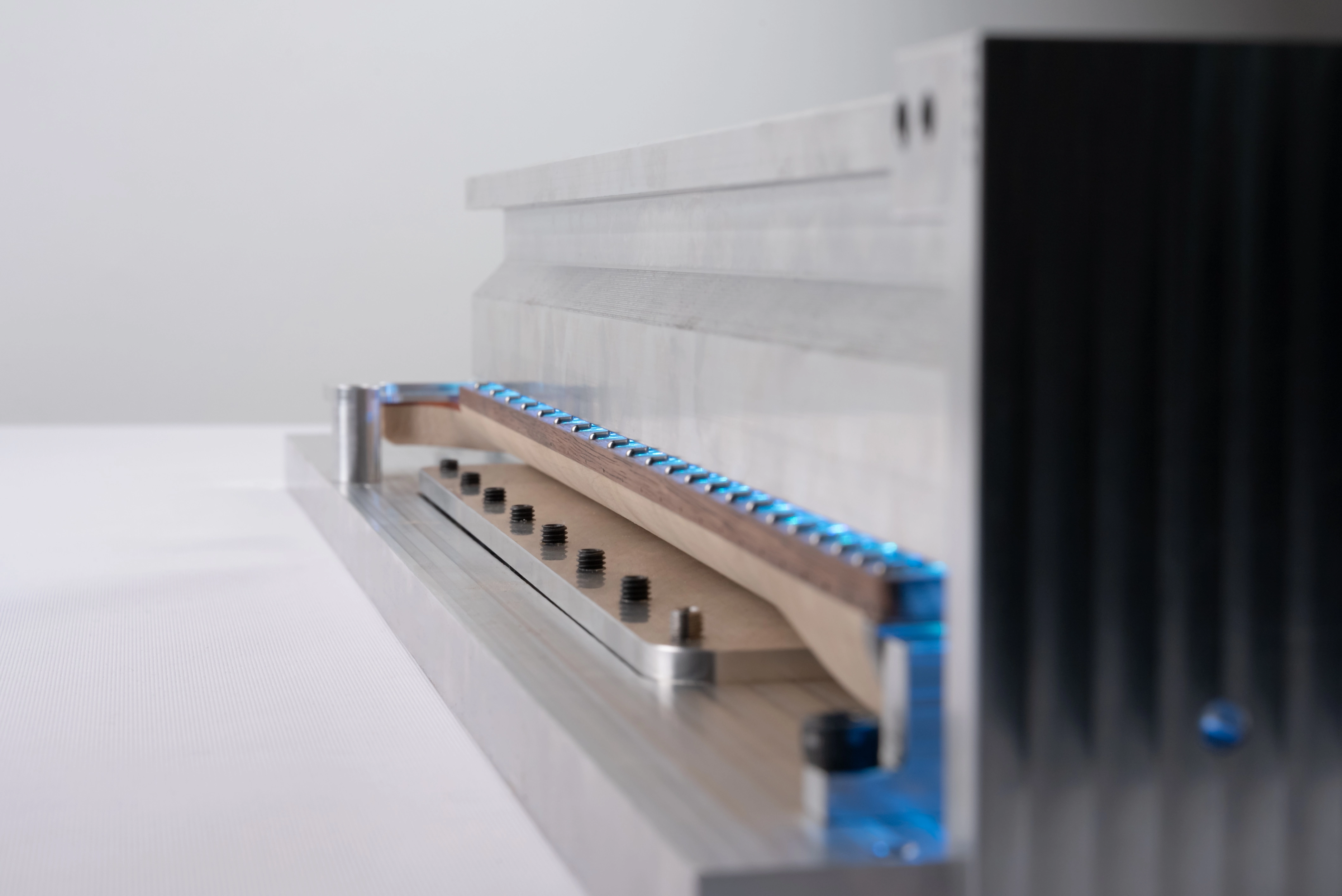
A purpose-built precision instrument designed specifically for the Adjustable Fret System. The tool consists of an internally illuminated straightedge and the Shark Fret Calibration Module, which provides both an electronic audio alert and a visual LED indicator when a fret makes contact with the straightedge surface.
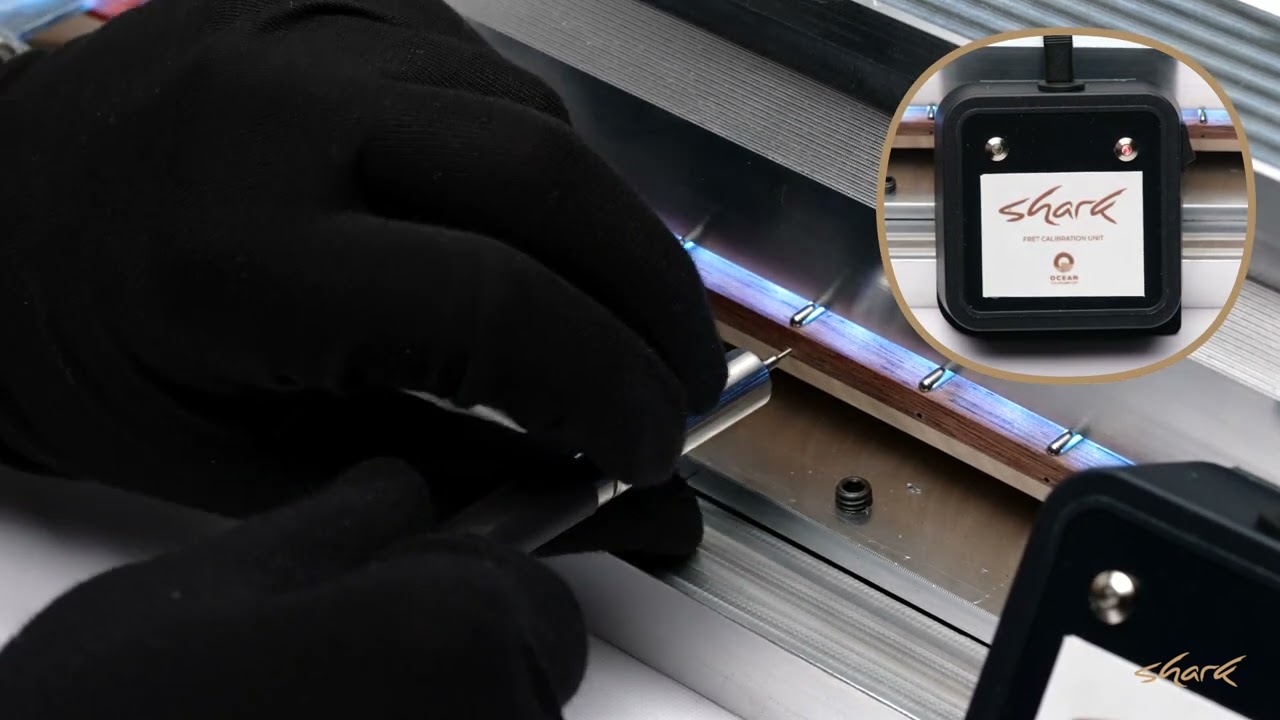
This tool provides electronic precision for fret calibration. Calibration is performed with strings removed. Because the truss rod is adjustable, the neck is set to its playing position before the process begins. The illuminated straightedge is placed over the frets. As each fret is raised with a hex key from the side of the fretboard, the internal blue lighting allows the technician to visually confirm contact. The moment the rising fret touches the straightedge, the Shark module instantly triggers both a sound alert and a blue LED indicator light, providing multi-sensory confirmation of exact contact.
Available as a standalone product alongside the fret system. For OEM partners, it can be offered as part of the setup toolkit that ships with instruments equipped with adjustable frets, giving end users and technicians a dedicated tool for maintaining calibration over the life of the instrument.
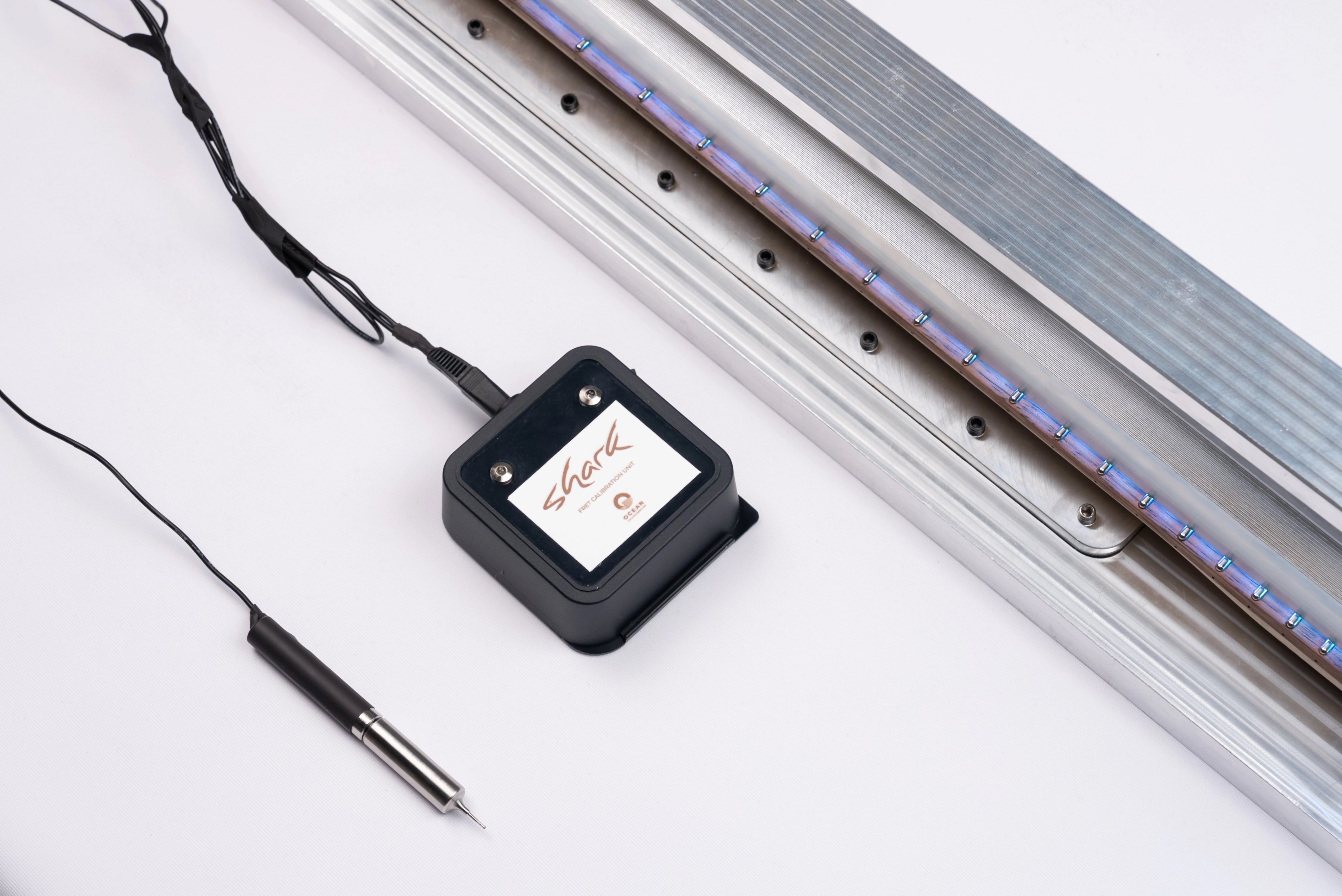
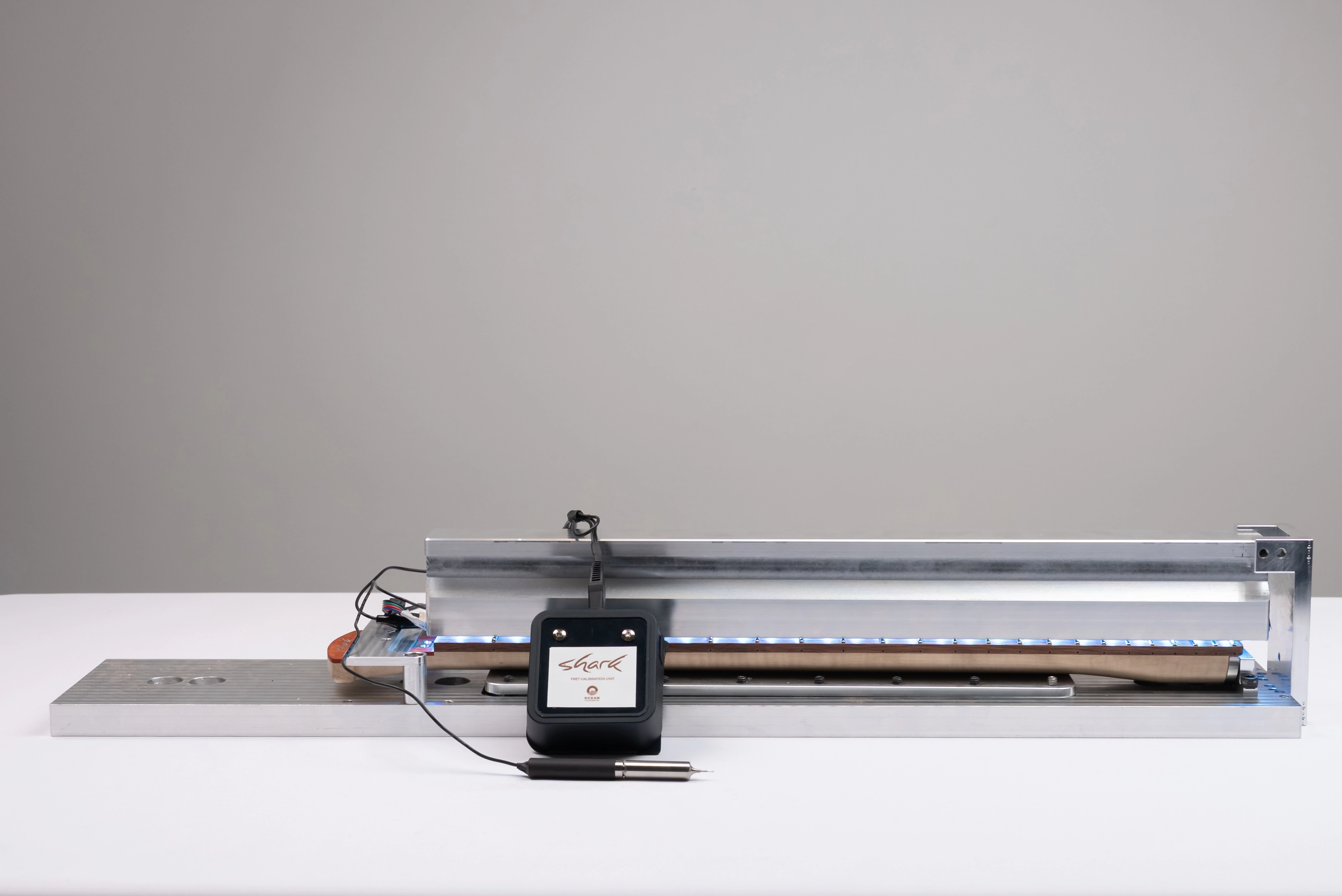
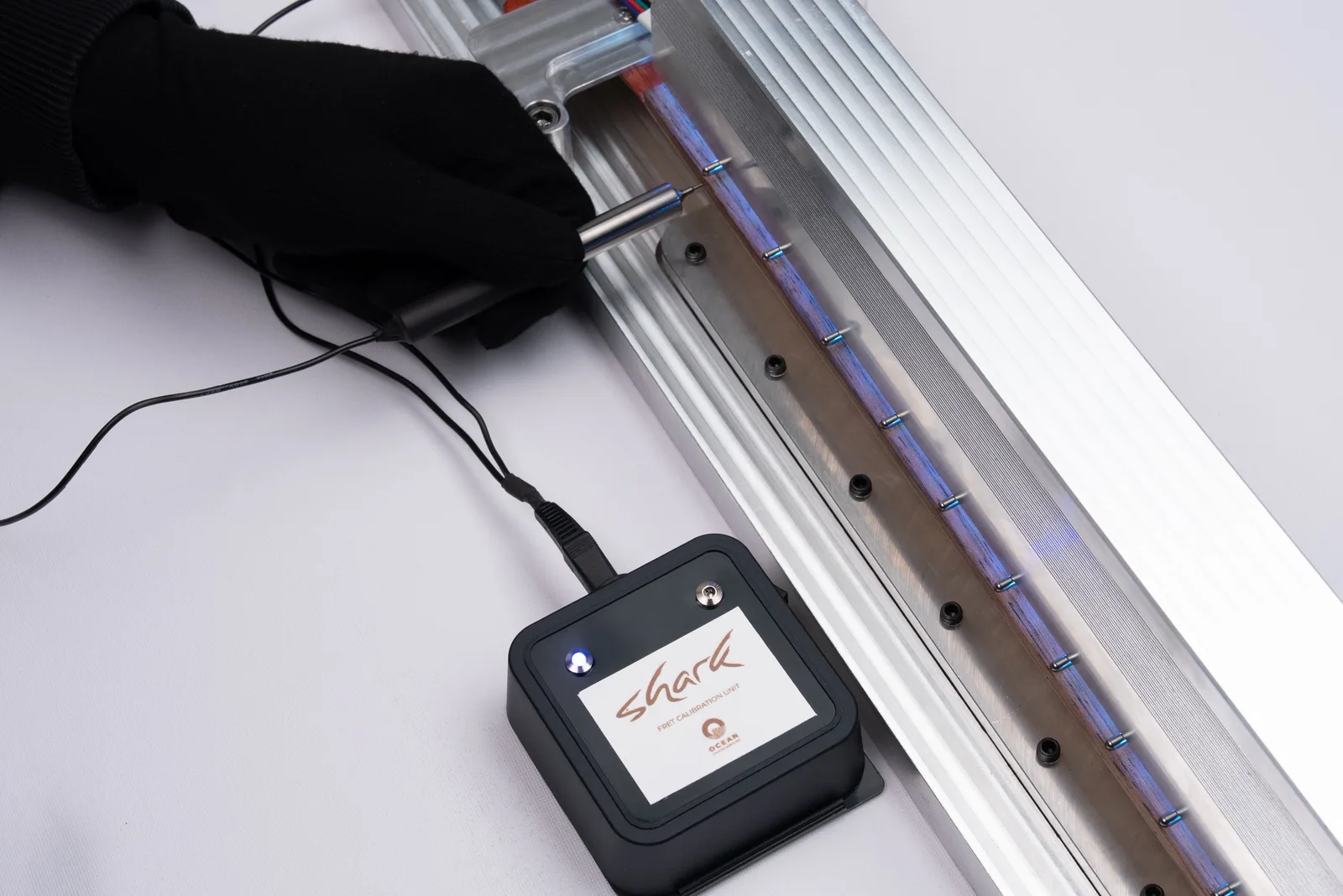
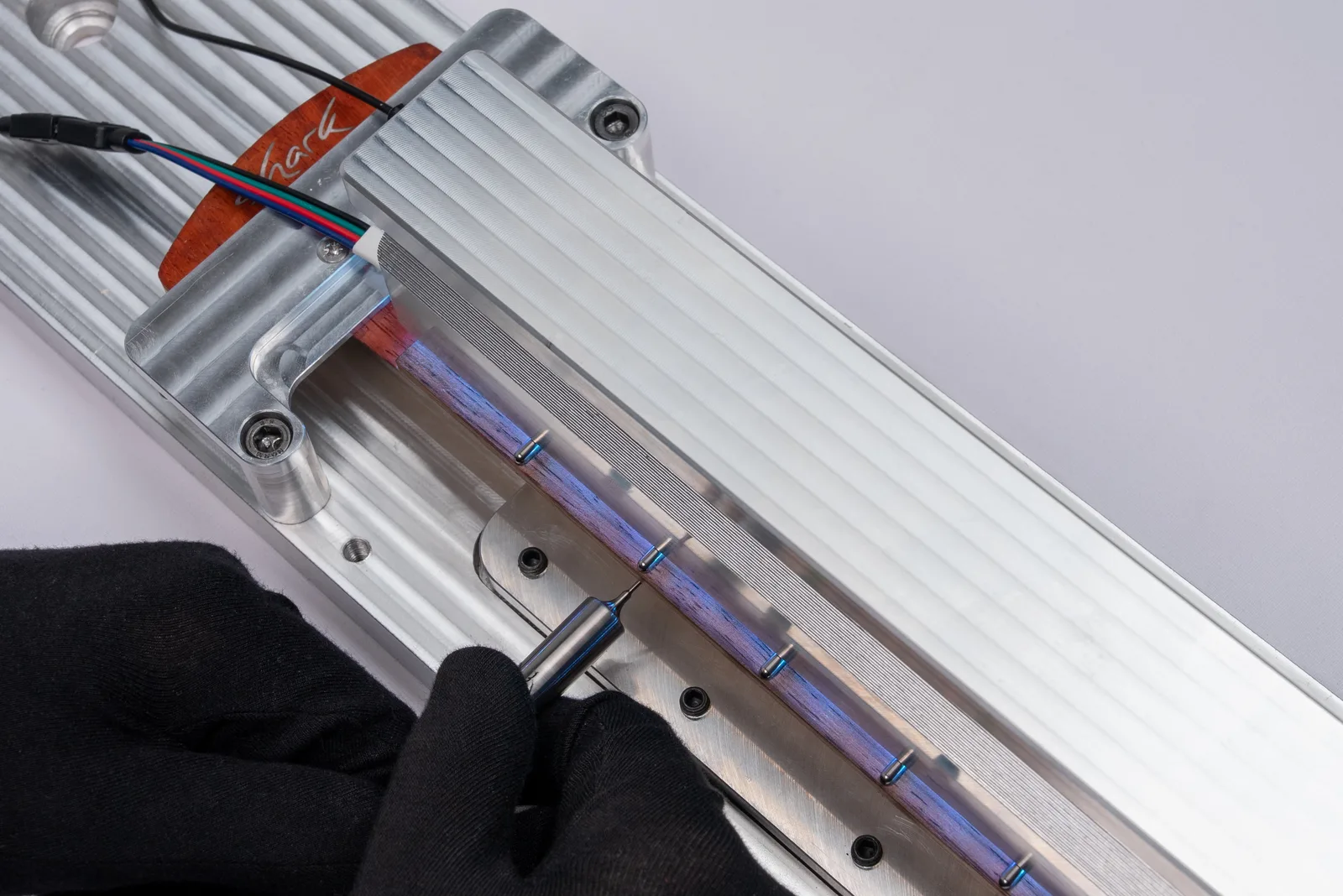
A repeatable, four-step process. One side of the fretboard is calibrated at a time, isolated with masking tape to ensure clean electronic readings from the module.
Paper masking tape is applied lengthwise down one half of the fretboard to electronically isolate that side. This ensures the calibration module reads only the side being adjusted.
The illuminated straightedge is placed on top of the neck over the untaped side. The internal blue lighting illuminates the gap between the straightedge and the fret tops.
Using the hex key from the side of the fretboard, frets are adjusted one by one. The moment a fret touches the straightedge, the Shark module triggers both a sound alert and a blue LED light. The technician can also visually confirm contact through the internal illumination.
Once the first side is fully calibrated, the masking tape is moved to cover the completed side. The straightedge is repositioned to the remaining side, and the process is repeated until the entire fretboard is calibrated.
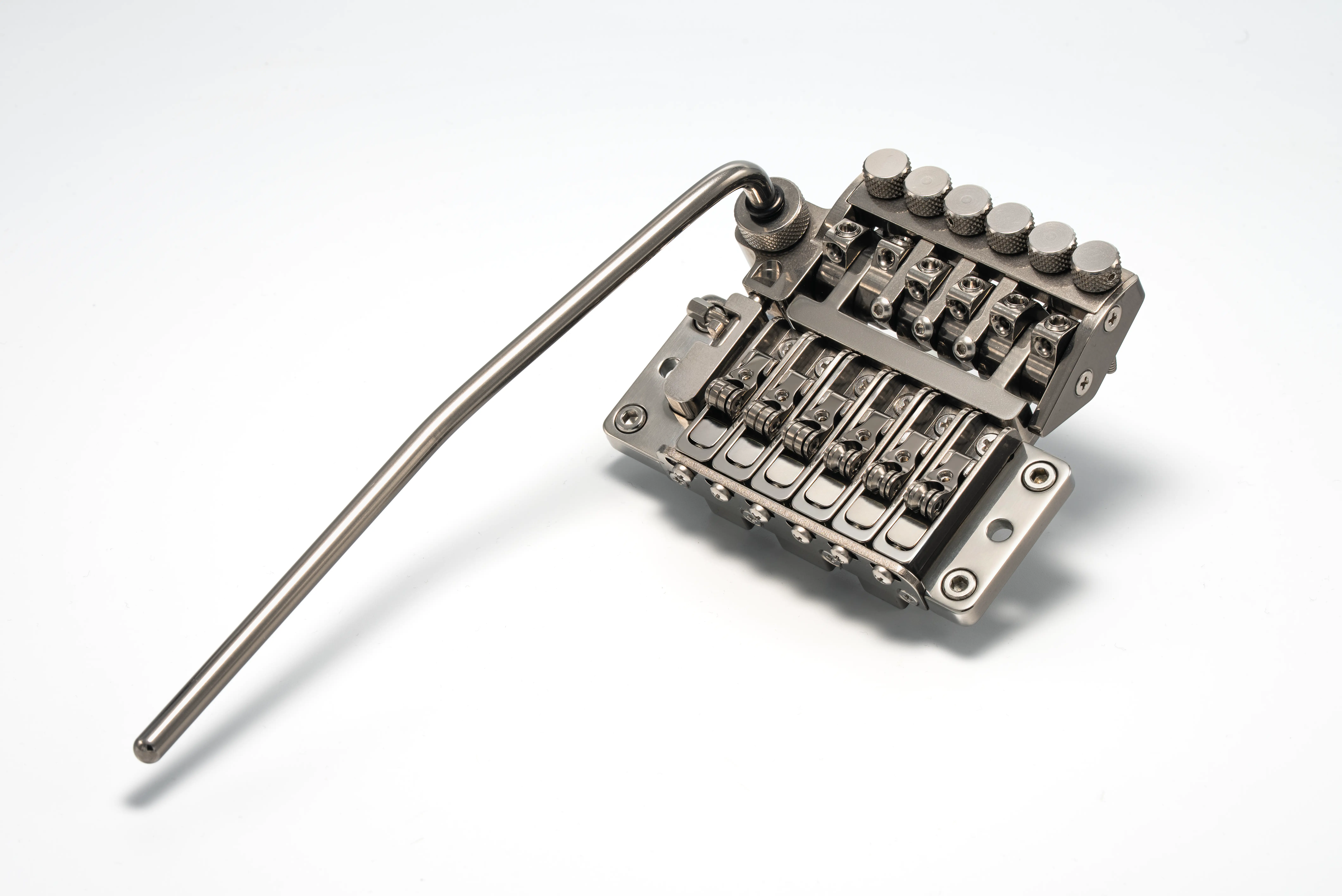
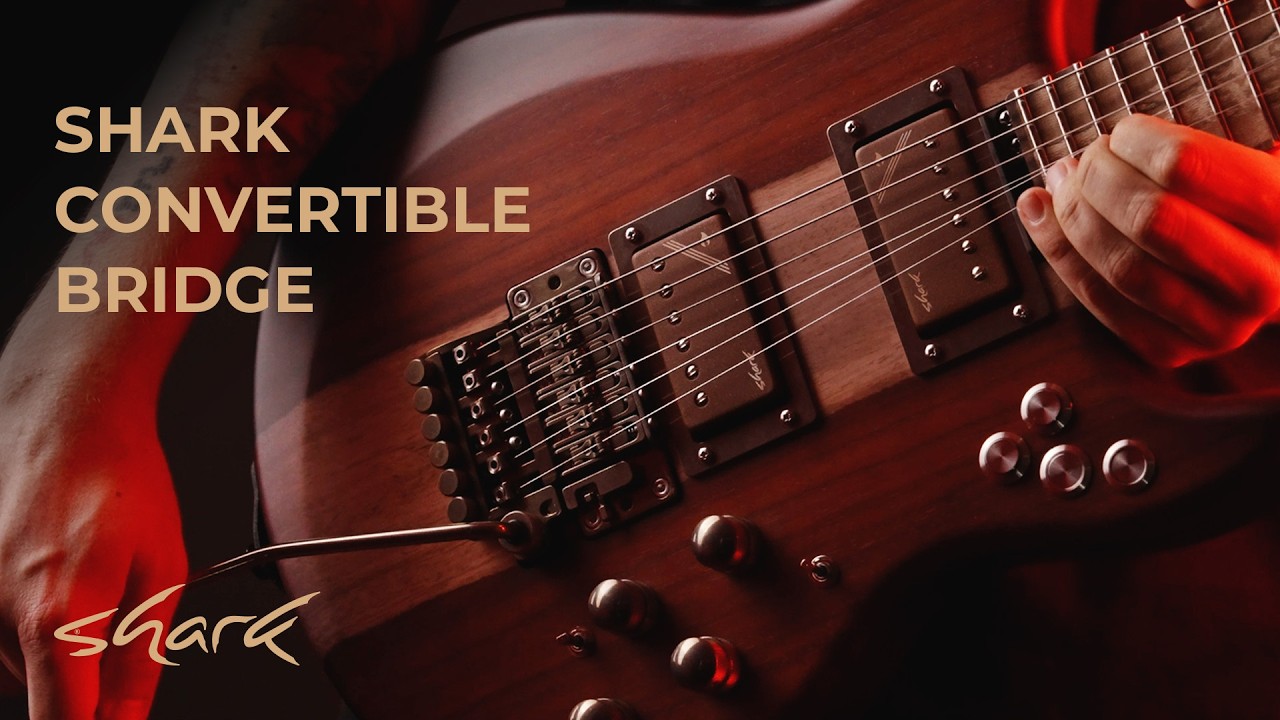
A multi-function titanium guitar bridge that combines tremolo and hardtail modes in one unit, with an integrated full-range tuning system, complete control over string action, and tuning stability in active playing through no-rattle micro roller saddles with precision ball bearings. Precision machined from aerospace-grade titanium. 405 grams.
The Shark Convertible Bridge is produced in 6-string, 7-string, and 7-string multiscale configurations. The 7-string multiscale features a 73.5-degree fan angle. Left-handed versions and headless-compatible variants are also available. See the routing specification tabs further below for pocket dimensions and technical drawings for each configuration.
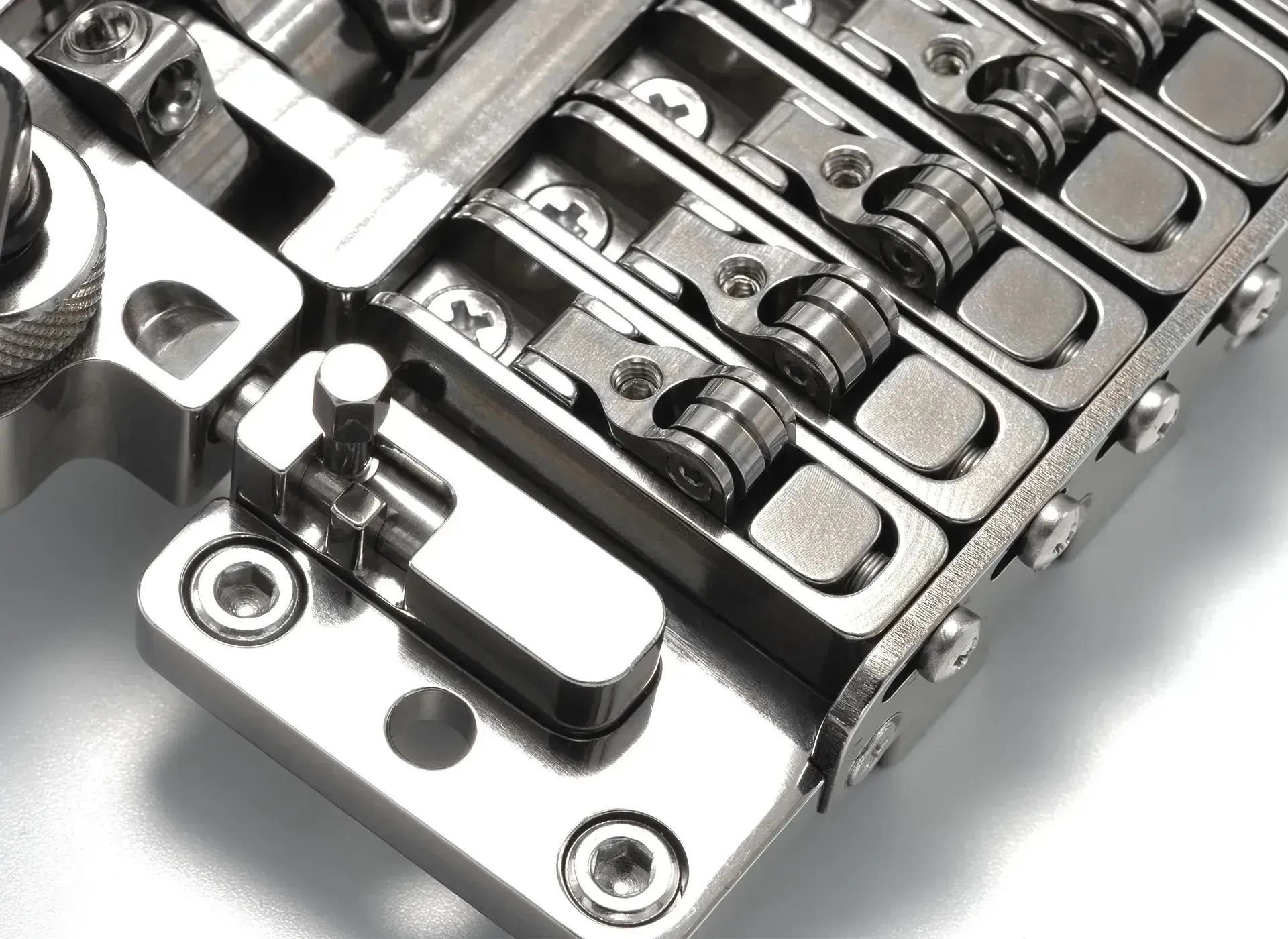
With the flick of a switch, lock the bridge into fixed mode or unlock full tremolo range. A dedicated slider controls the lock between three positions: tremolo, fixed, and maintenance. One bridge covers every playing style. For hardtail lovers, this is a hardtail that is more precise, adjustable, and durable. For tremolo users, enjoy whammy bar playing without worrying about tuning issues.
The strings sit on a fixed roller string bed at the front, with a separate linear tremolo and tuning section behind it. When you use the bar, only that rear section moves. The physical line of the strings stays on the same height plane. Bend a string - the arm is not in motion. It only moves when you use it yourself. Otherwise, it behaves as a fixed bridge.
This is achieved through several systems working in tandem with utmost precision in construction. Micro ball bearings in the rollers eliminate catching or resistance. The mechanism makes it difficult for lateral spring forces to affect adjacent strings. Due to the ball bearings, there is no rattle and no sustain loss from the roller system.
Self-locking precision tuners built into the bridge. Moves tuning from the headstock to the bridge, supports instant alternate tunings. Go from standard tuning to drop tunings in seconds. The tremolo can also be used with conventional machine heads and standard nuts. Combined with the Shark Nut's removable string carrier, you can easily access the fretboard to clean and maintain it, then put the strings back. The design supports all tuning combinations and was built with headless architecture in mind from day one.
Per-string height and intonation adjustable at the bridge, with simple tools (hex key, small screwdriver). String spacing is approximately 10.5 mm, consistent with industry standard (Fender, Ibanez, etc.). Overall string alignment is set by positioning the monoblock saddle assembly relative to the fretboard and pickups. The Shark Nut also provides per-string height and intonation adjustment at the headstock end. Combined, this gives complete two-end string control, allowing extremely precise setups across the entire fretboard.
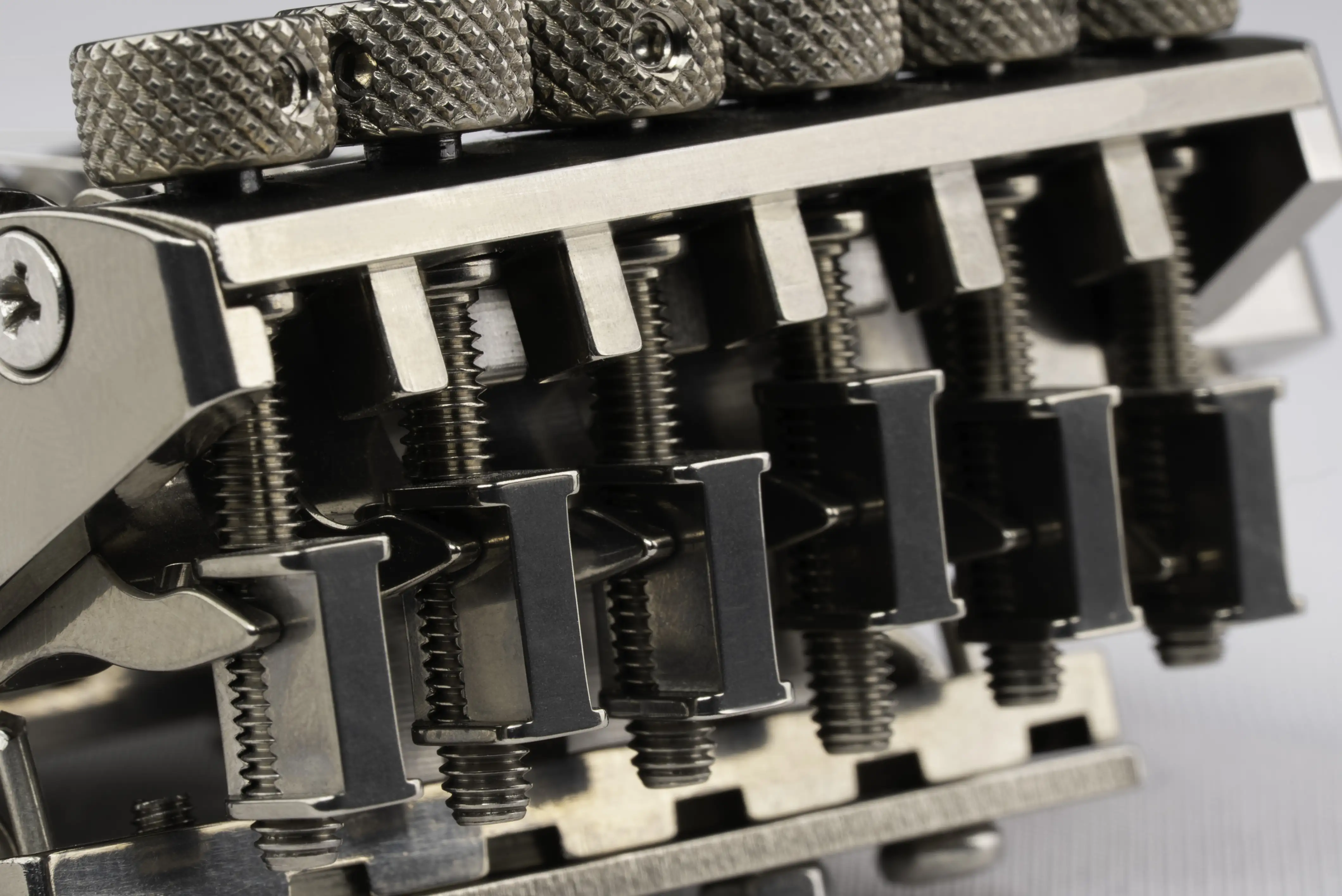
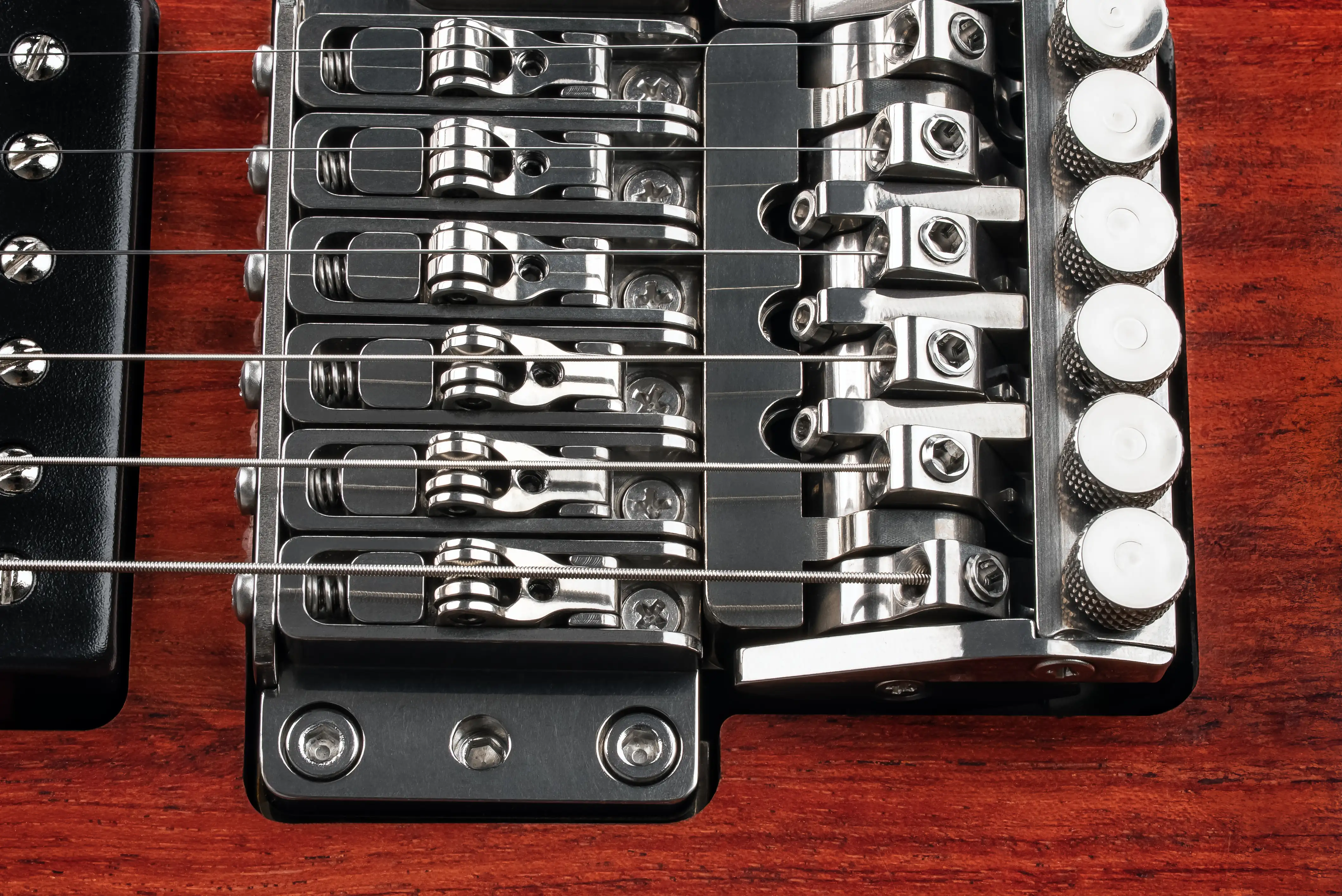
12 precision micro ball bearings across the roller saddles. No catching, no resistance in the initial push of the whammy bar. Perfectly smooth movement. The rollers provide zero-friction string contact, which means no sustain loss through the bridge and no rattle under any playing conditions.
But the biggest advantage is the combination of micro rollers and the bridge's geometric design: it prevents bends from affecting the tremolo and pulling other strings out of tune. This is the core of the Shark Bridge's tuning stability during active playing.
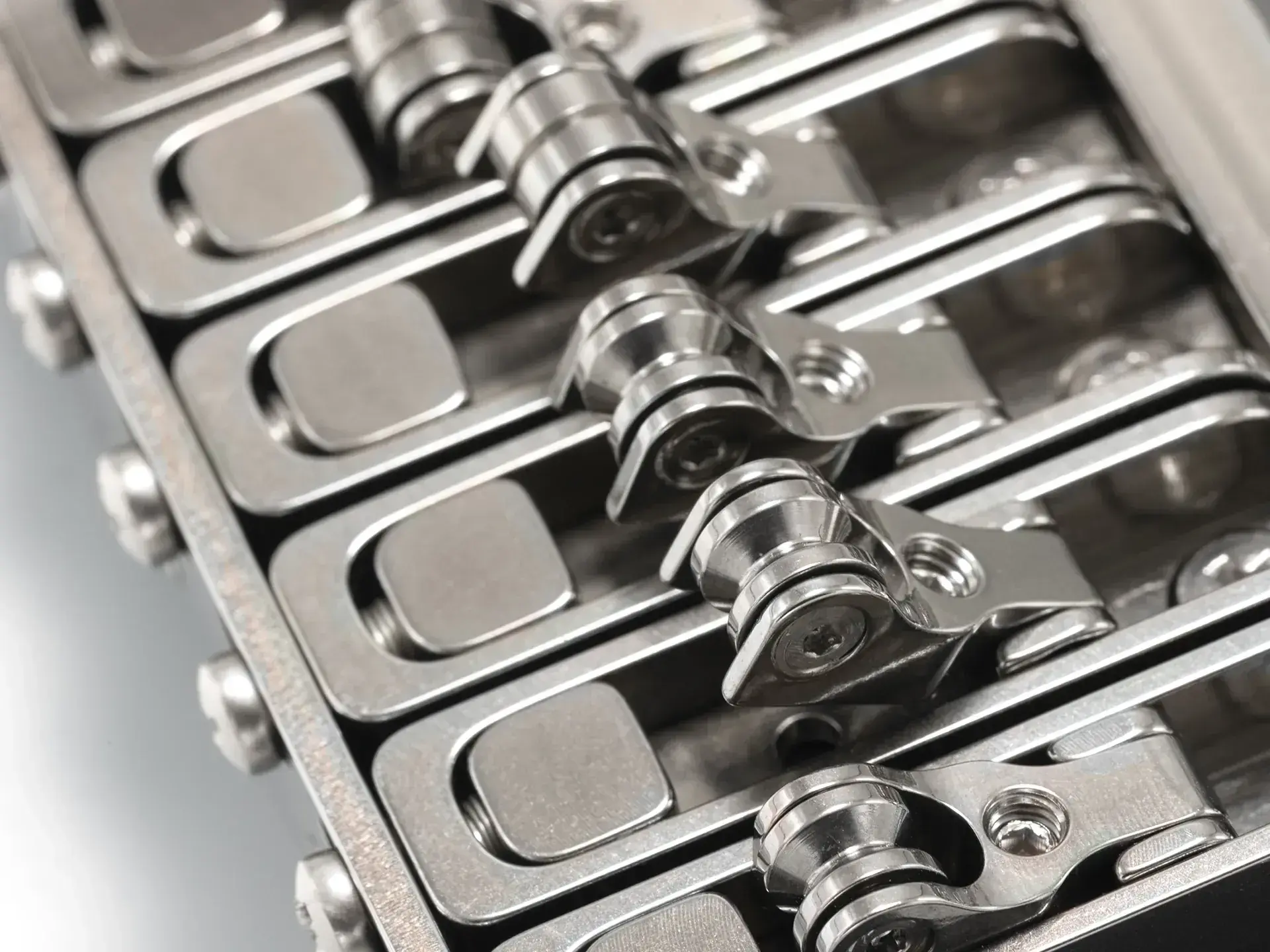
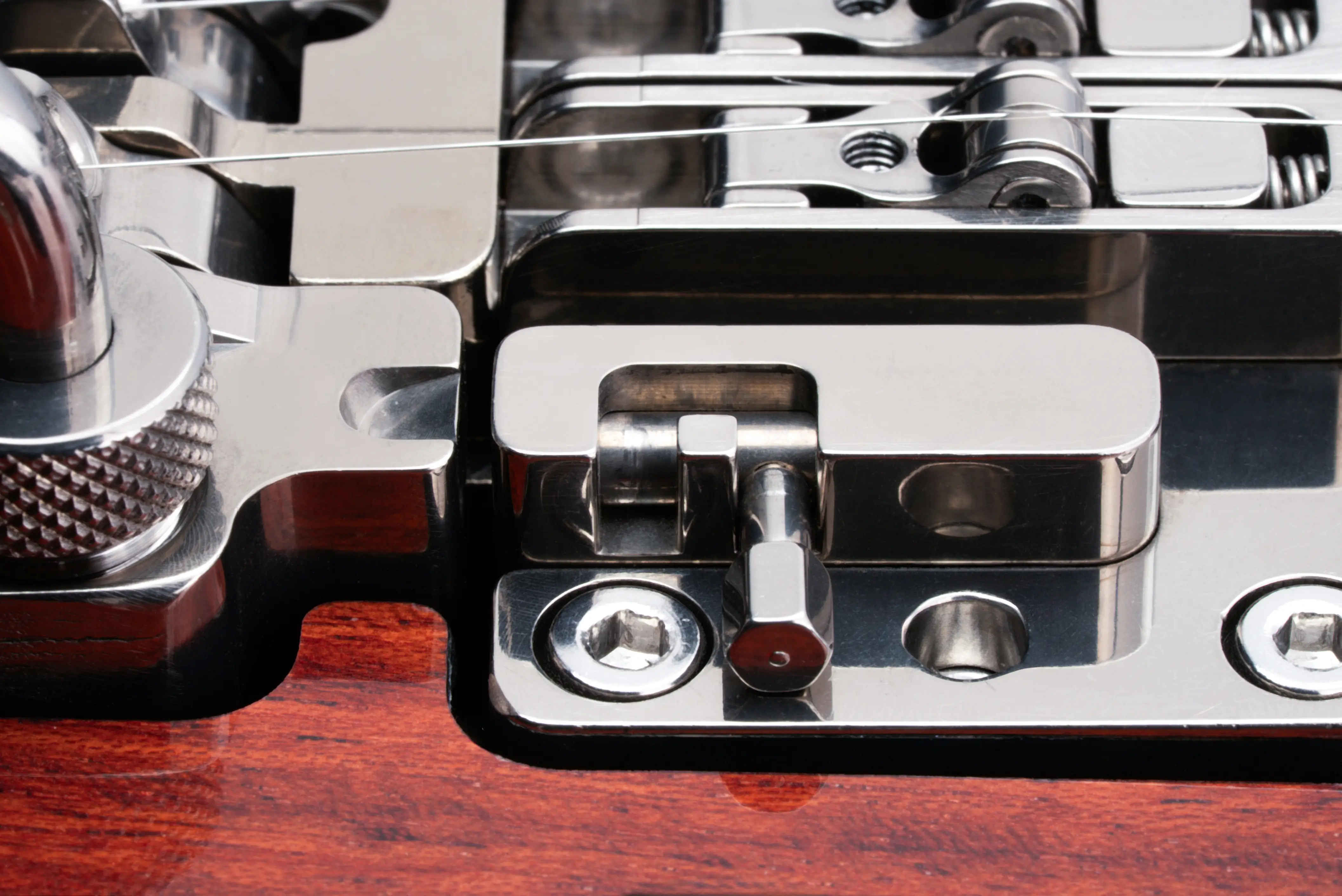
Full two-way arm action. Returns to zero after use. Responsive, maximum range movement in both directions. Due to the ball bearings in the initial push, the feel is perfectly smooth.
Sections locked together. Maximum sustain and simple tuning. The bridge behaves as a true hardtail. No compromise - it is a hardtail in this mode.
String tension transferred to bridge body. Enables neck removal without cutting strings. Travel with neck removed, reassemble with minimal re-tuning. Goes straight back to being in tune on reinstall.
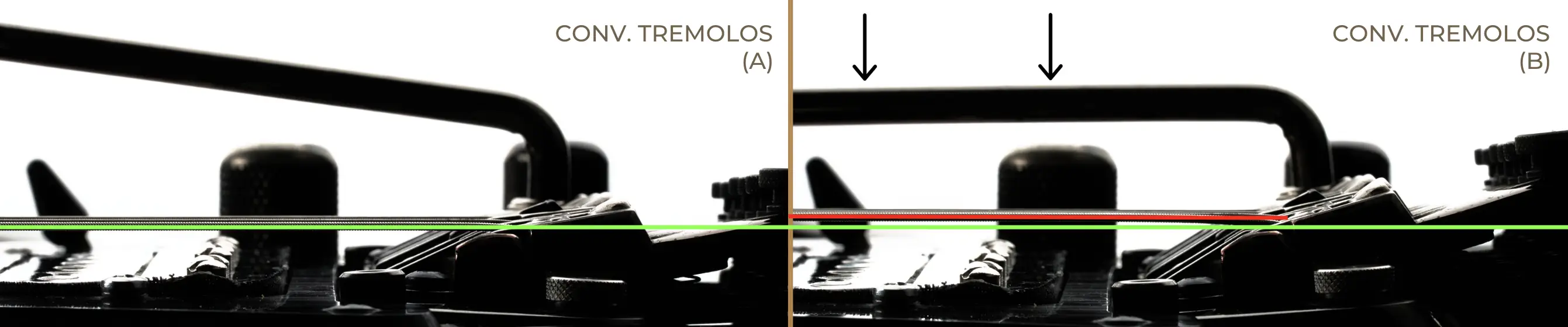
The entire bridge platform tilts when the arm is pressed. All strings shift out of their plane. Adjacent strings go out of tune. After heavy use, you re-tune before the next song.
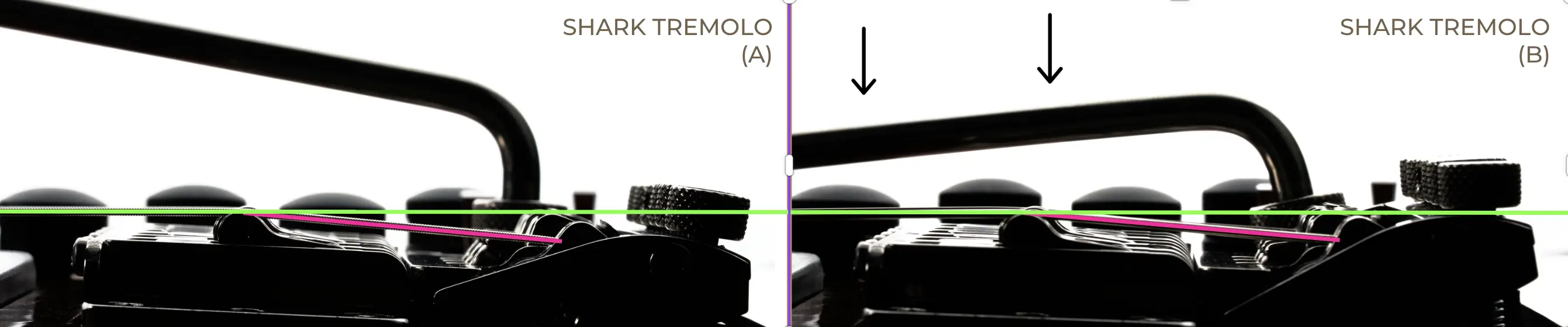
Strings sit on a fixed roller bed. The tremolo section moves independently behind it. Bend a string, the others stay in pitch. The arm is not in motion unless you are using it yourself.
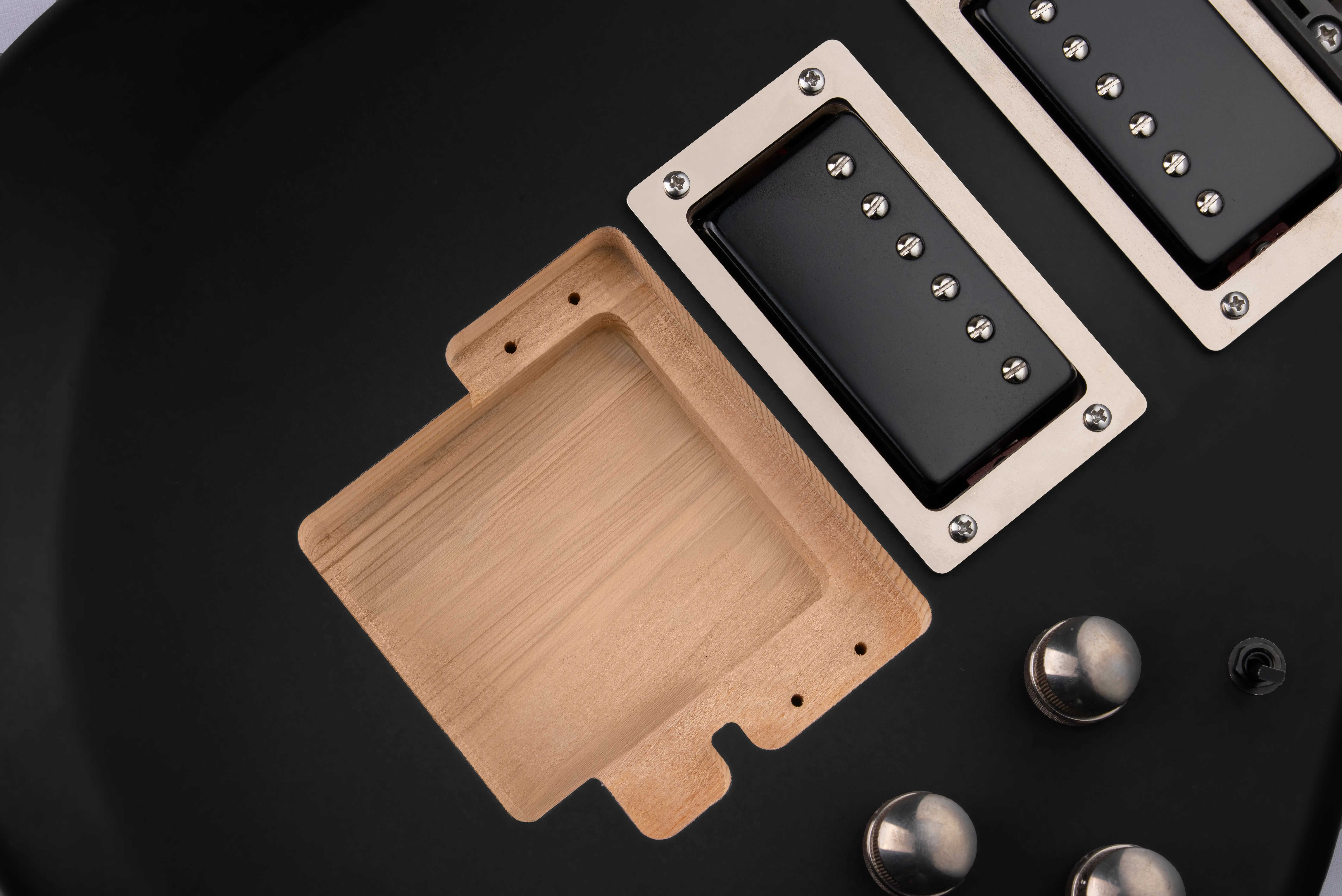
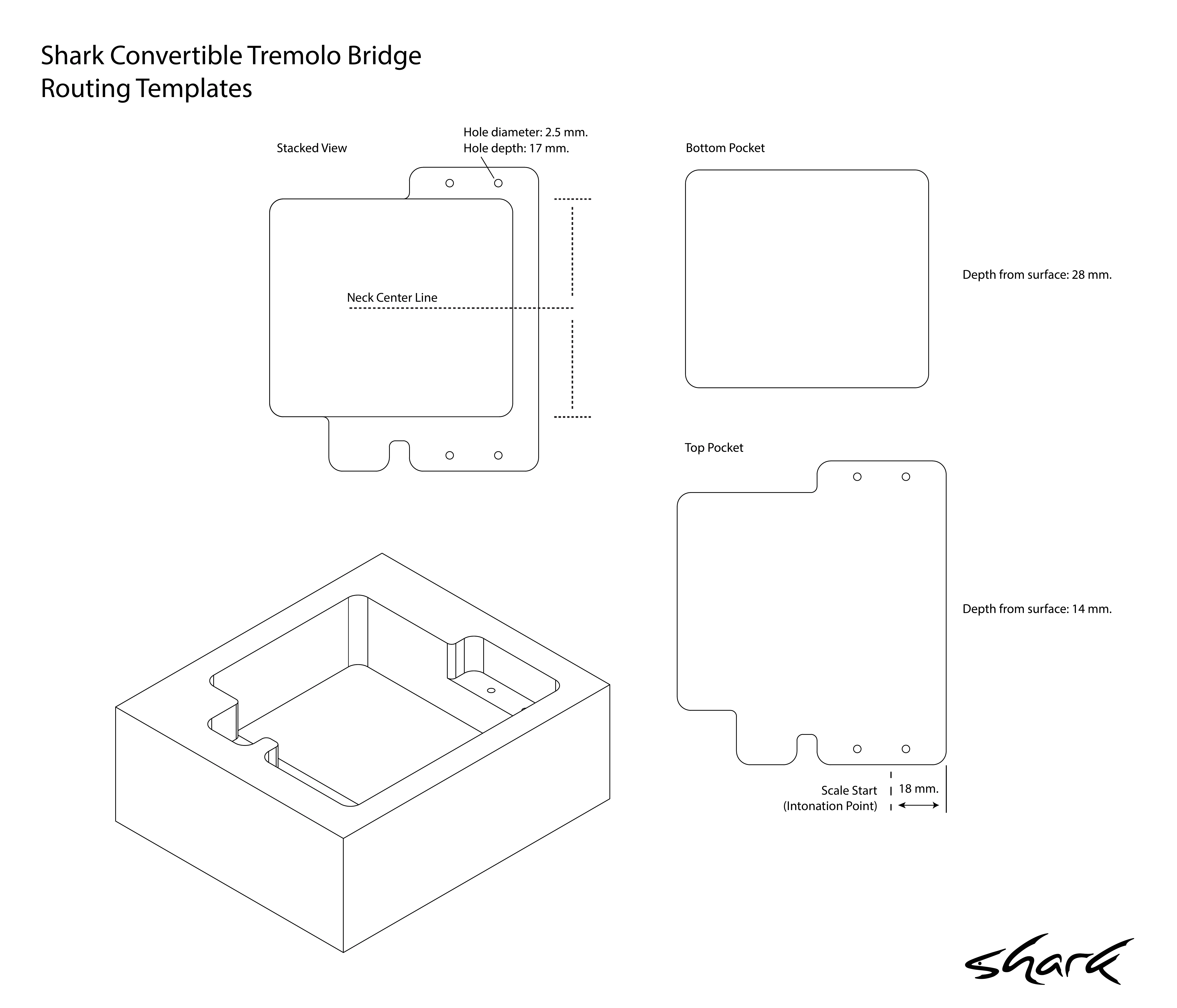
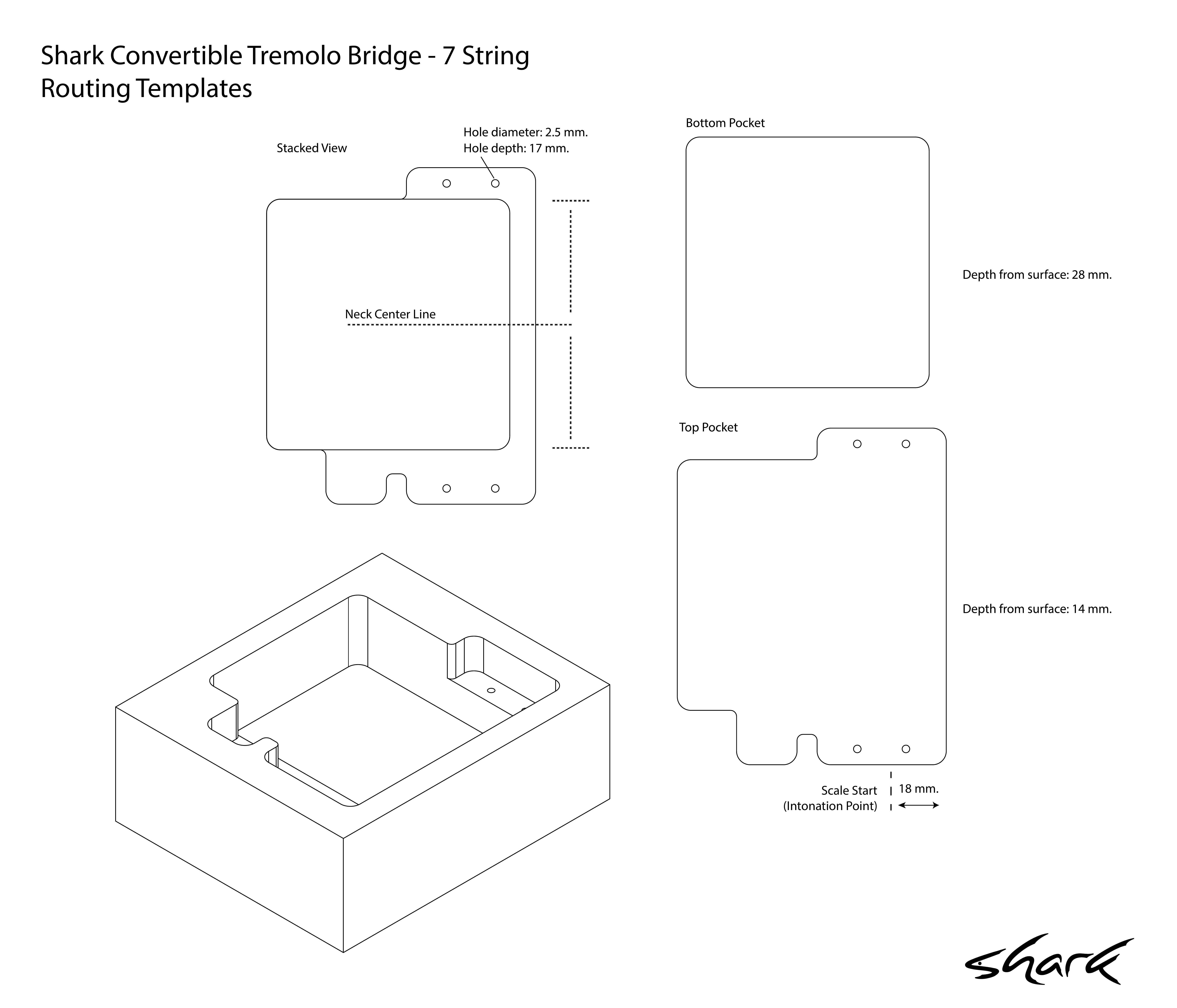
The Shark Convertible Bridge installs through a two-level front route only. No rear cavity, no back routing, no spring pocket. The entire bridge sits in a single front-facing pocket with two depth levels: a shallower upper step and a deeper lower section. Two mounting screws secure the unit to the body.
This makes integration straightforward for any production line. A single CNC pocket program covers all three operating modes. The bridge drops in, gets screwed down, and is ready. No specialized jigs, no proprietary tools, no extra machining on the back of the body. Routing templates in DXF and PDF formats are provided with every OEM order.
Every Shark Convertible Bridge uses a monoblock saddle assembly. All saddle rollers are precision-machined into a single titanium unit that sits on the bridge baseplate. The saddle assembly mounts onto the baseplate as one removable component. Each string still gets its own height and intonation adjustment through the rollers. String spacing is fixed at approximately 10.5 mm (industry standard). Overall lateral alignment is set by positioning the entire assembly relative to the fretboard and pickups.
The monoblock design is what makes the full product lineup possible. Because the saddle assembly is the only part that changes between standard and multiscale configurations, the baseplate and body routing stay the same within each string count. One body route, two bridge options. The saddle assembly is also available as a standalone component for end users who want to add multiscale capability to an existing bridge.
The monoblock saddle design has a direct production advantage. Because the saddle assembly is the only component that differs between the standard and multiscale 7-string configurations, the baseplate and body routing are shared:
6-string pocket (88.5 × 100 mm) for the 6-string bridge.
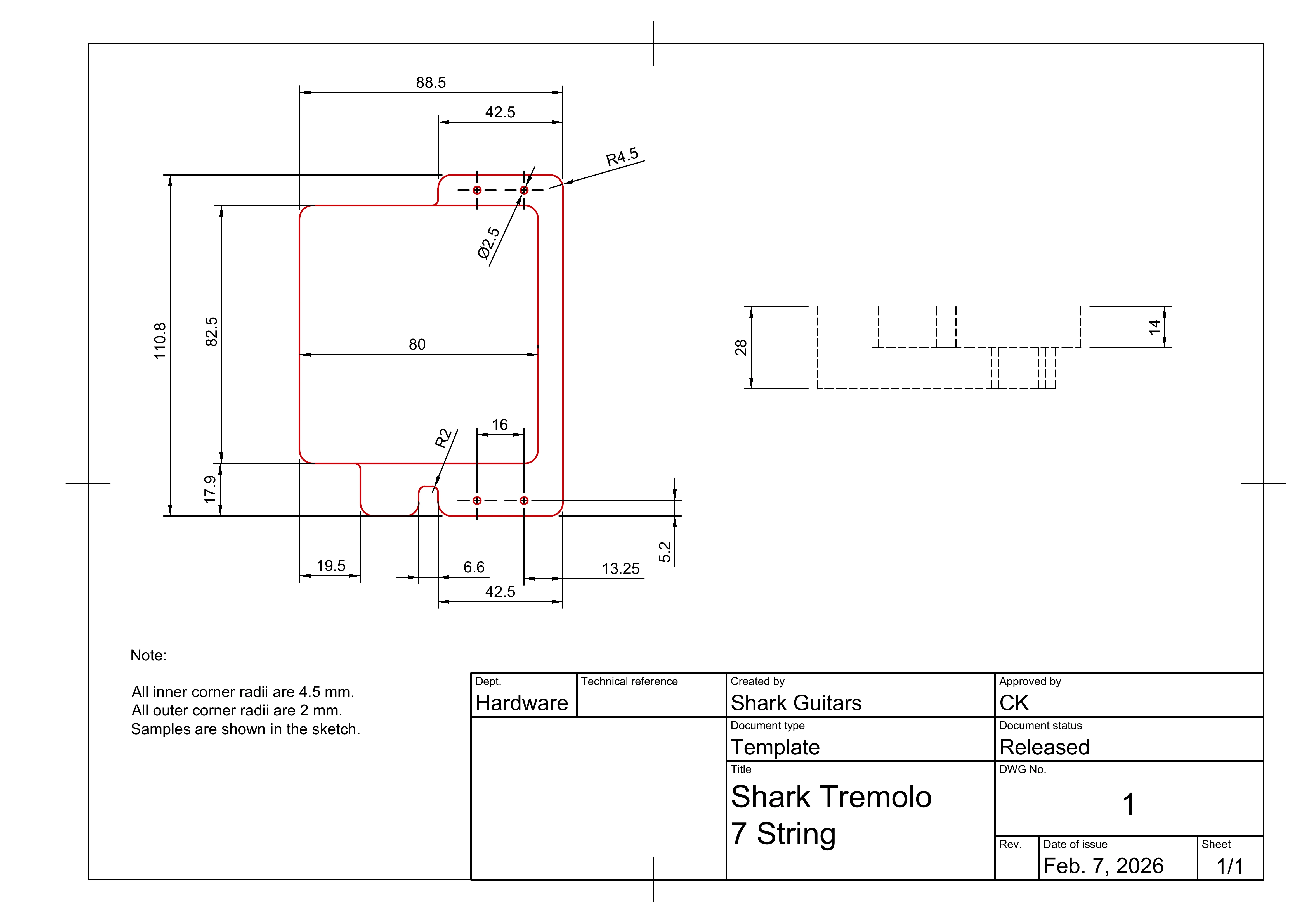
7-string pocket (88.5 × 110.8 mm) accepts both the standard and multiscale 7-string bridge.
Route once, offer both. The customer chooses at the hardware level, not the body level. The 73.5-degree fan angle is consistent across all multiscale hardware (bridges and nuts alike), so geometry aligns across the entire instrument.
Three steps to install the Shark Convertible Bridge. Shark provides 3D Solid models and DXF files customized to the client's parameters. For builders without CNC machines, a template is available for manual drilling. Each configuration below includes exact pocket dimensions, technical drawings, and product renders. One hardware set covers tremolo, fixed, and maintenance configurations. 100% titanium, CNC-machined.
Cavities and holes are routed into the body according to the provided 3D Solid models and DXF files. CNC routing recommended. A template is available for builders who prefer manual drilling.
Two adapters are mounted into the body cavity with wood screws. These adapters serve as the bridge's mounting and height-adjustment interface.
The tremolo/bridge unit is mounted onto the adapters using two height-adjustment screws and four connection socket hex screws. Height adjustment is set at this stage.
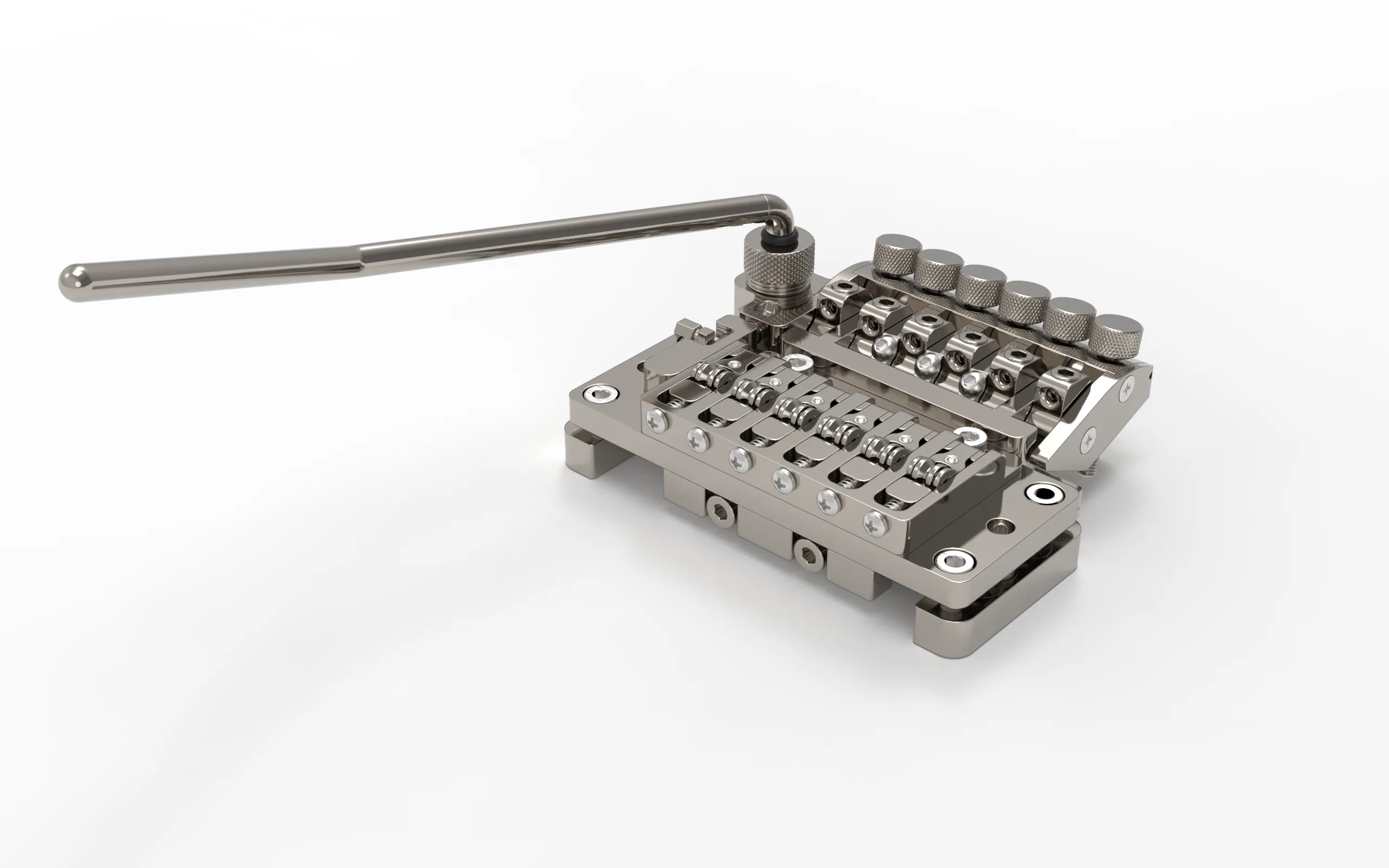
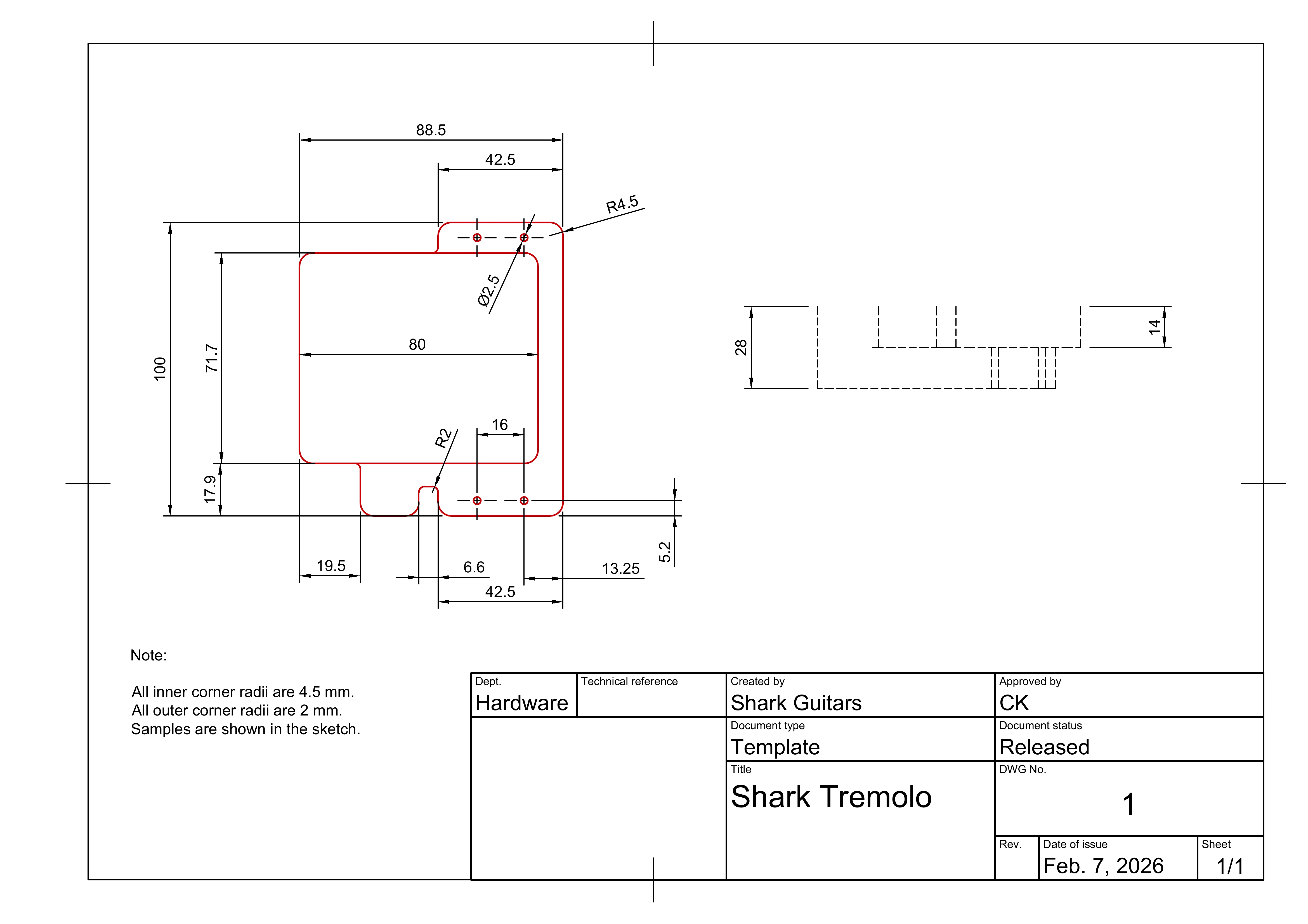
The standard configuration. Linear tremolo, hardtail lock, integrated tuners, zero-friction micro-rollers, and the monoblock saddle assembly in one titanium unit. Body routing: 88.5 mm wide by 100 mm tall. Two-pocket front route (28 mm bottom, 14 mm top). No back routing required. Weight: 405 grams. 26 precision micro ball bearings (12 saddle rollers, 14 in the tremolo mechanism).
| Parameter | Value |
|---|---|
| Installation | Two-pocket front route. No back routing. |
| Overall Width | 88.5 mm |
| Total Height | 100 mm |
| Inner Pocket | 80 × 71.7 mm |
| Bottom Pocket Depth | 28 mm |
| Top Pocket Depth | 14 mm |
| Inner Corner Radii | R4.5 mm |
| Outer Corner Radii | R2 mm |
| Mounting Holes | 2 × Ø2.5 mm, 17 mm deep |
| Scale Start | 18 mm from front edge |
| Weight | 405 grams |
| Material | Grade 5 Titanium (Ti-6Al-4V) |
Full-resolution PDF drawings and CNC routing files (DXF) provided with OEM orders.
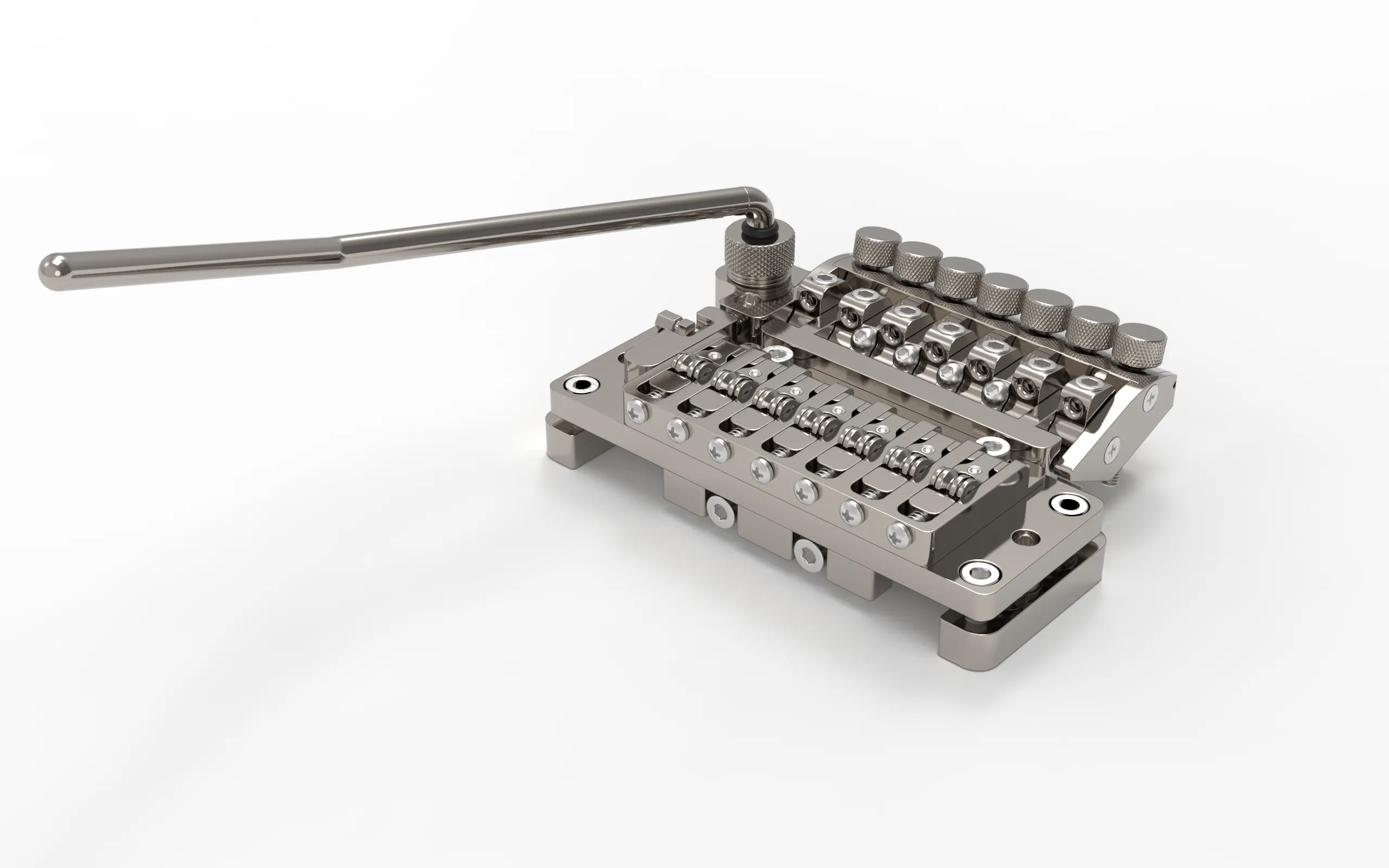
The full Shark bridge system scaled to seven strings. Body routing is 10.8 mm taller than the 6-string version (110.8 mm total height vs. 100 mm) to accommodate the seventh string. Same width, same pocket depths, same corner radii, same mounting holes, same scale start position. All features carry over: linear tremolo, fixed bridge mode, maintenance mode, zero-friction rollers, integrated tuners, monoblock saddle assembly.
| Parameter | Value |
|---|---|
| Installation | Two-pocket front route. No back routing. |
| Overall Width | 88.5 mm |
| Total Height | 110.8 mm |
| Inner Pocket | 80 × 82.5 mm |
| Bottom Pocket Depth | 28 mm |
| Top Pocket Depth | 14 mm |
| Inner Corner Radii | R4.5 mm |
| Outer Corner Radii | R2 mm |
| Mounting Holes | 2 × Ø2.5 mm, 17 mm deep |
| Scale Start | 18 mm from front edge |
| Material | Grade 5 Titanium (Ti-6Al-4V) |
The only change is +10.8 mm in total height (the pocket extends vertically to accommodate the seventh string). All widths, depths, corner radii, and mounting specs remain identical. If your line already routes for the 6-string bridge, only the height dimension changes.
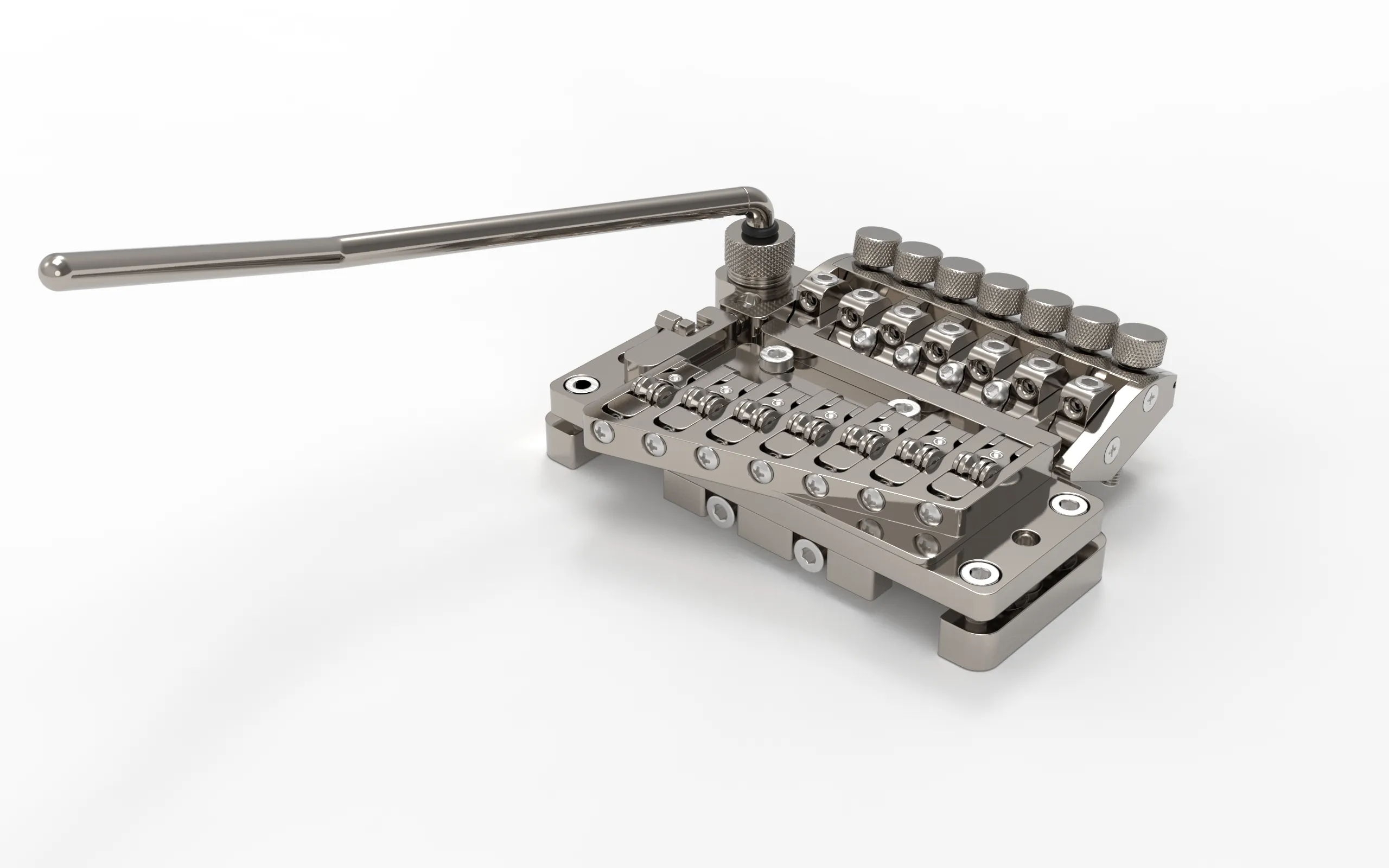
Same baseplate, same body route, same mounting geometry as the standard 7-string. The monoblock saddle assembly has angled roller positions for the 73.5-degree fan angle. One 7-string body route covers both the standard and multiscale bridge. All features carry over without compromise.
| Parameter | Value |
|---|---|
| Installation | Two-pocket front route. No back routing. |
| Overall Width | 88.5 mm |
| Total Height | 110.8 mm |
| Inner Pocket | 80 × 82.5 mm |
| Bottom Pocket Depth | 28 mm |
| Top Pocket Depth | 14 mm |
| Inner Corner Radii | R4.5 mm |
| Outer Corner Radii | R2 mm |
| Mounting Holes | 2 × Ø2.5 mm, 17 mm deep |
| Scale Start | 18 mm from front edge |
| Fan Angle | 73.5° |
| Material | Grade 5 Titanium (Ti-6Al-4V) |
The multiscale geometry is contained entirely within the monoblock saddle assembly. Body routing is identical to the standard 7-string bridge. If your CNC program already routes for the 7-string bridge, no changes are needed for the multiscale version.
Single front route covers all three operating modes. No proprietary tools or specialized jigs required for installation. Routing templates (DXF/PDF), technical drawings, and direct engineering consultation provided. The bridge integrates into any standard body design. It reinforces your instrument's character with improved stability, tuning precision, and player-facing features without altering its identity.
Floyd Rose direct drop-in version. A Shark Convertible Bridge that drops directly into existing Floyd Rose routing cavities with no modification. Currently in final engineering. Contact us for details and early access.
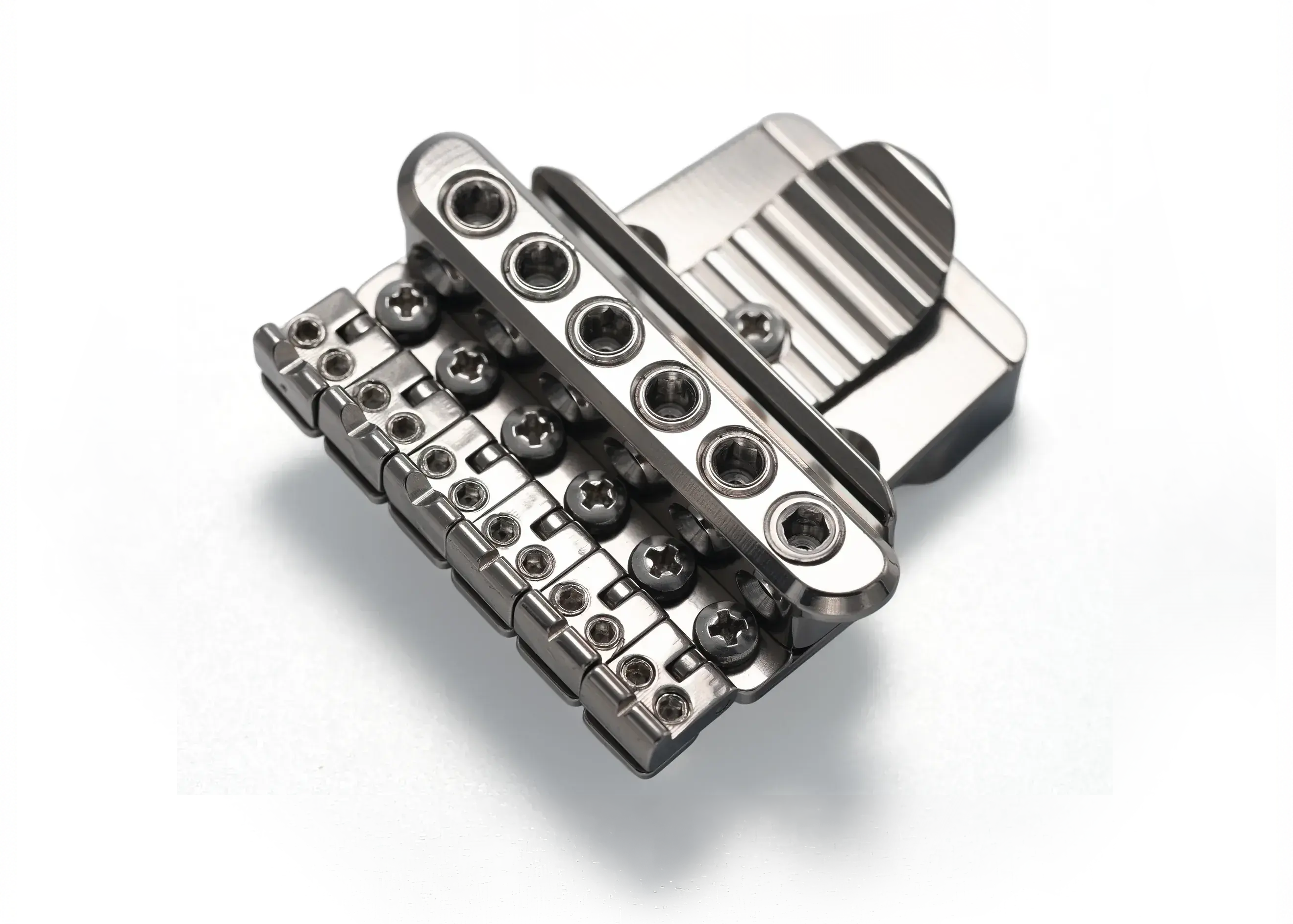
Precision titanium nut with per-string height and intonation adjustment. The other end of the string system. Combined with the bridge, it creates complete two-end control - align every string in every position on the fretboard precisely, with perfect intonation.
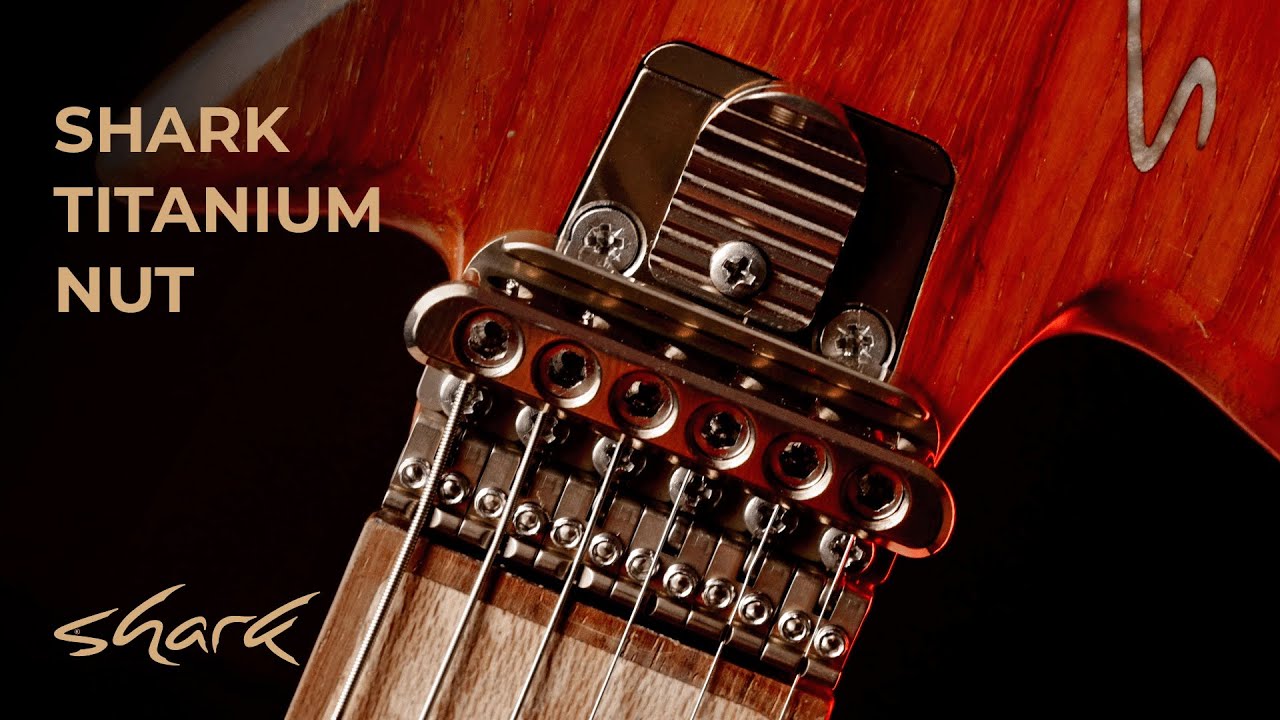
Two titanium pieces: a lower base that mounts directly into the nut pocket on the neck, and an upper removable string carrier holding all six strings.
Height screws under each string set how high that string sits at the nut. Mini saddles in front of each string fine-tune where the string actually starts, for precise intonation at the nut position.
Works in tandem with the Shark Bridge. Together, they make a system where you can set action, alignment, and intonation from both ends of the string path - the most adjustable and stable string setup on an electric guitar.
The removable carrier enables tension-free neck work. Set the bridge to maintenance mode, slide the latch, lift the carrier with all strings attached. Reassemble and it goes straight back to being in tune.
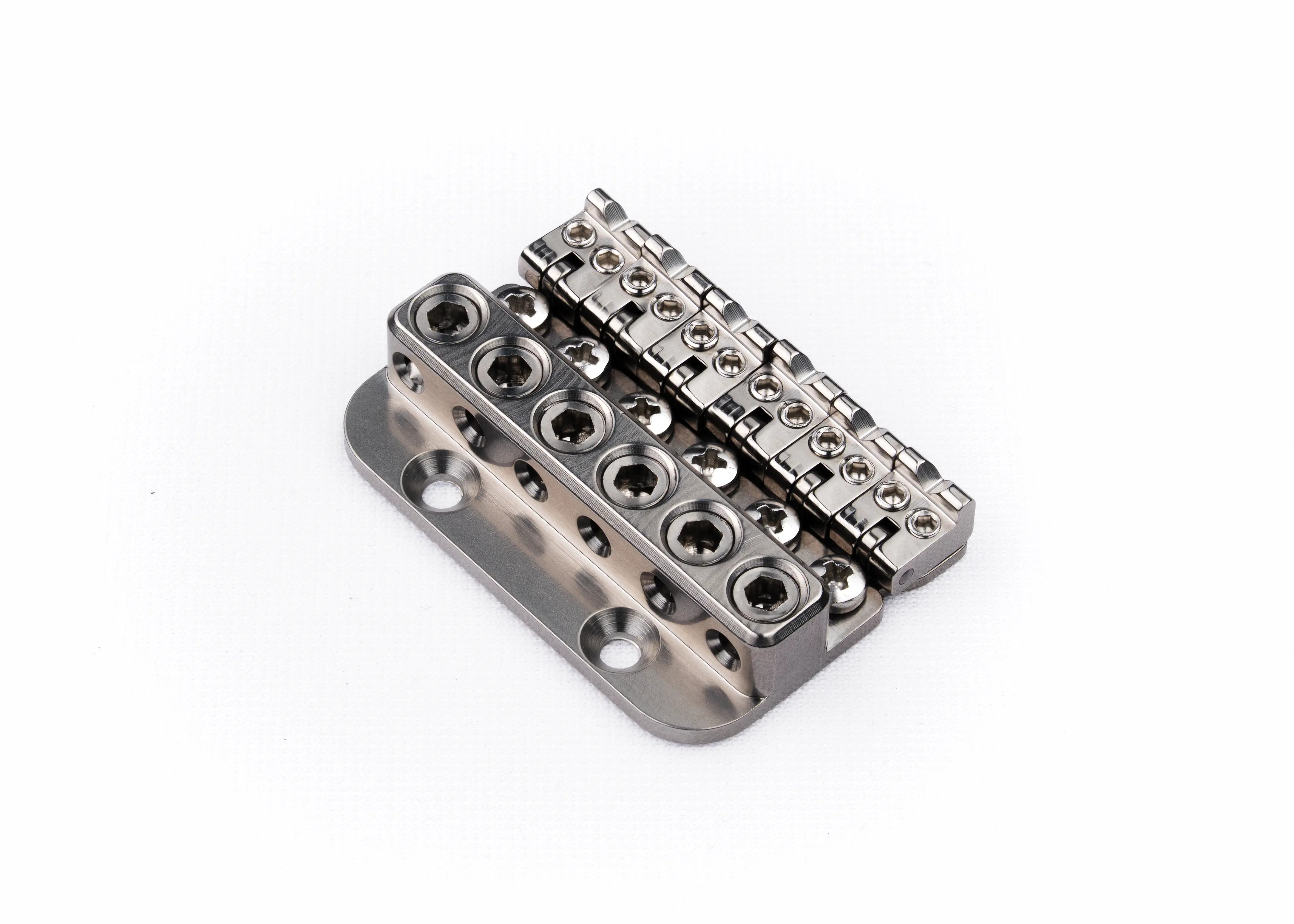
Same Grade 5 Titanium, same per-string saddle adjustments for height and intonation. Without the removable carrier and slide latch.
Direct upgrade for conventional builds. Installs with screws only, compatible with every radius by design. Delivers intonation compensation and height control at the nut position. No more slot-filing guesswork.
Combined with bridge-side adjustment, gives complete two-end string control on any guitar - including designs that were never intended to have nut-side adjustability.
Easily integrated into other guitar designs. Same properties as the full system, just fixed in place.
Both the Modular Nut (full system with removable string carrier) and the Fixed Nut (standalone OEM version) are available in 6-string, 7-string, and 7-string multiscale configurations. The 7-string multiscale variant features saddles positioned at a 73.5-degree angle for proper fan geometry. See routing specifications for each configuration below.
Three steps to install the Shark Nut System (modular version). Shark provides 3D Solid models and DXF files customized to the client's parameters. For builders without CNC machines, a template is available for manual routing. The fixed (OEM) version does not require CNC routing or templates, as it mounts with screws only. Both nut types are Grade 5 Titanium, CNC-machined in-house. Each configuration below includes routing specifications and technical drawings.
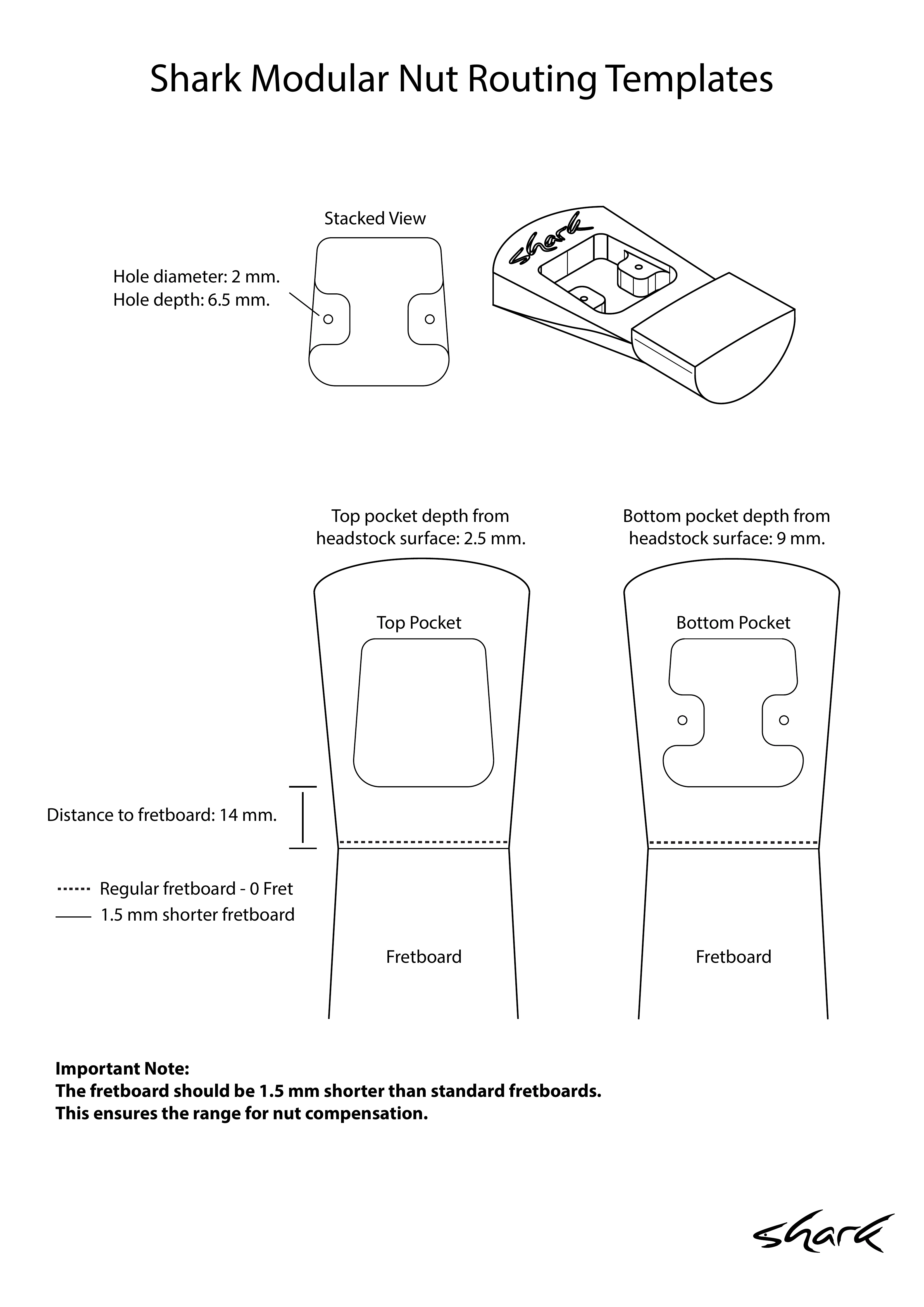
The fretboard must be 1.5 mm shorter than standard. This clearance is required for the nut's intonation compensation range. Applies to every nut variant below.
Cavities and holes are routed into the neck according to the provided 3D Solid models and DXF files. CNC routing recommended. A template is available for manual routing. Not required for the fixed (OEM) nut version, which mounts directly with screws.
The nut base is mounted to the neck with two wood screws. This provides the stable foundation for the saddle system and string alignment.
The saddle system is mounted to the base with two countersink screws. Per-string height and intonation adjustments are now accessible.
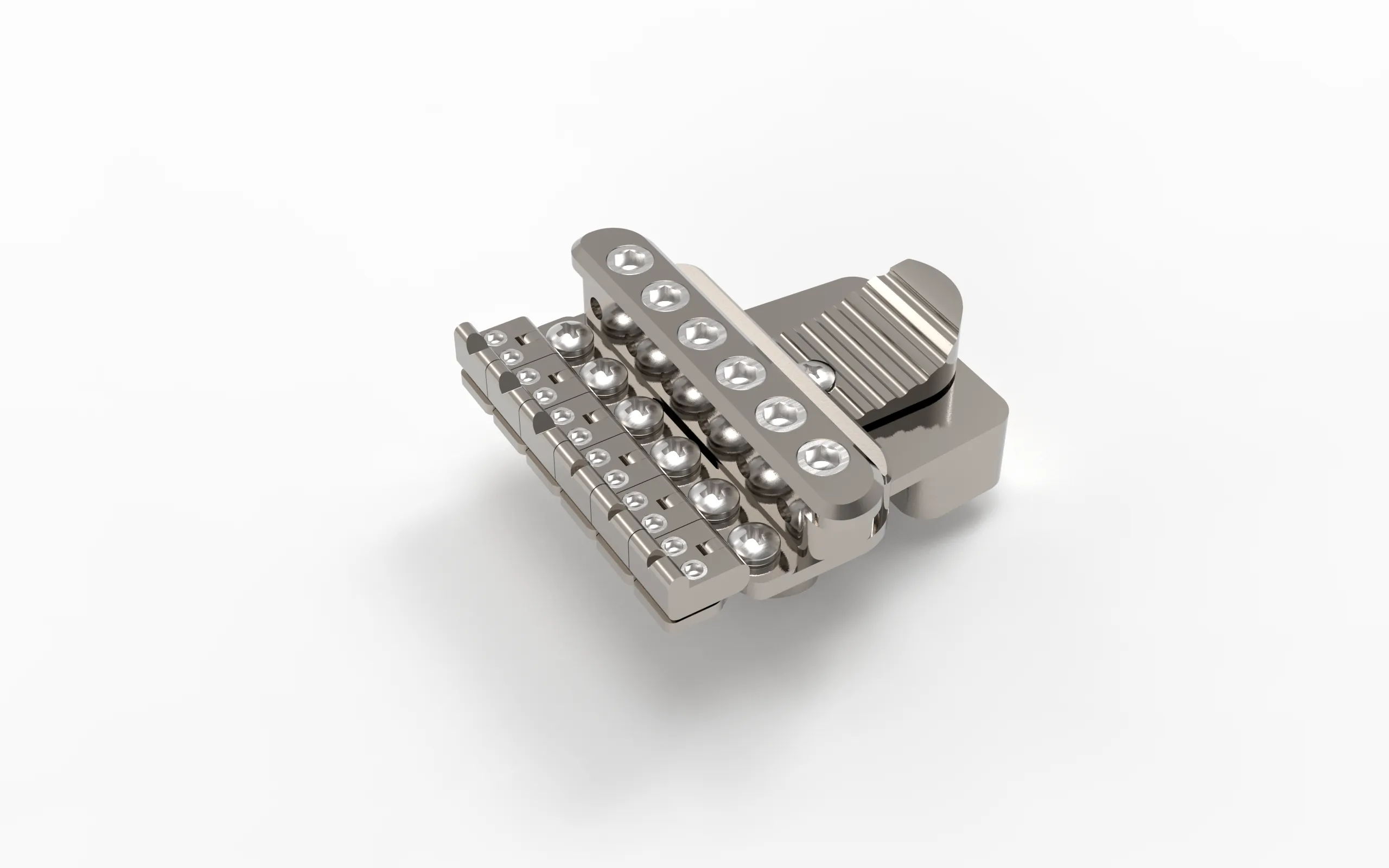
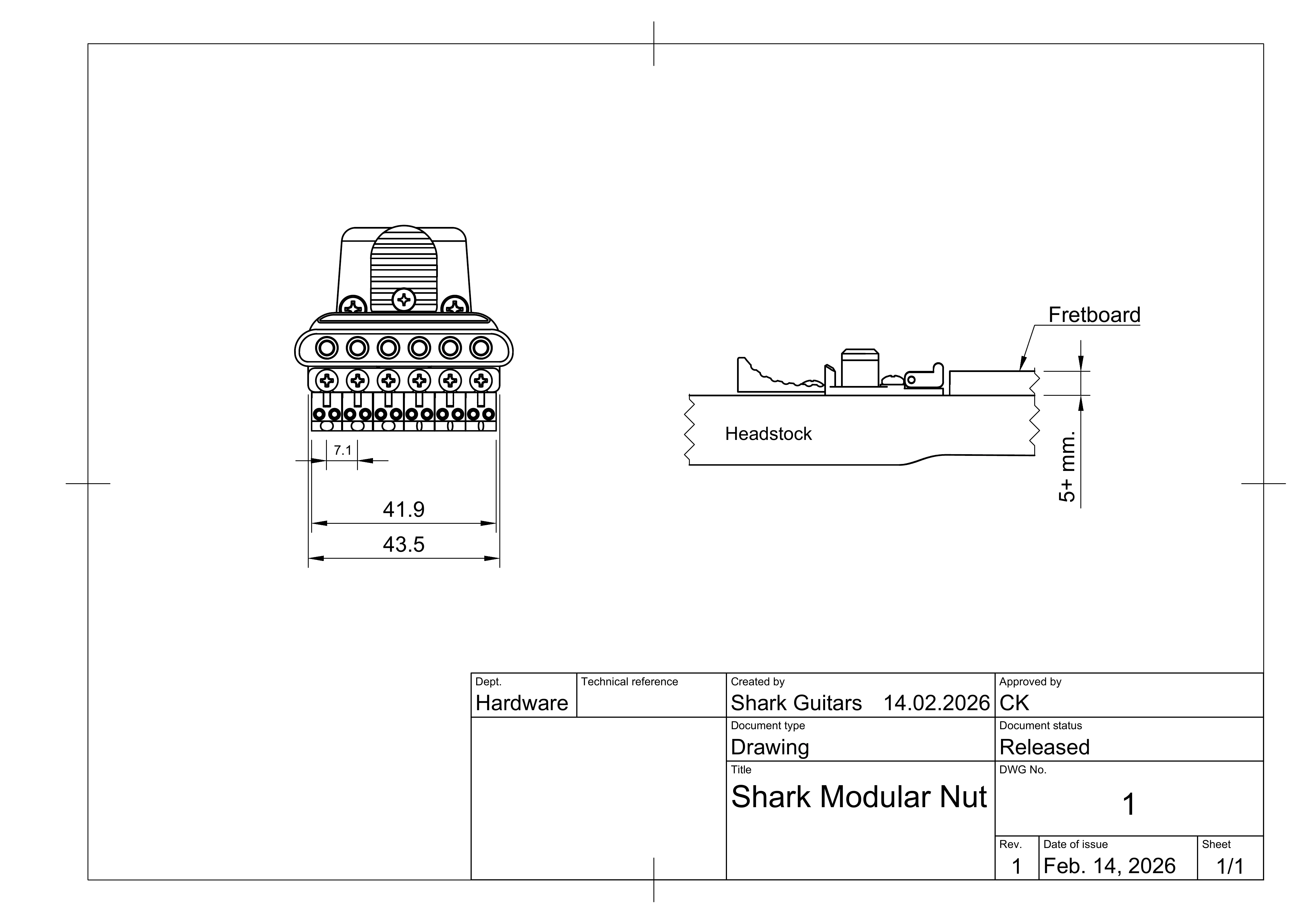
Standard 6-string modular nut. Two-piece system with removable string carrier. Requires a dual-level routed pocket. Per-string height and intonation adjustment. Width: 43.5 mm. Mounts directly into any standard nut pocket. Compatible with any neck construction.
| Parameter | Value |
|---|---|
| Installation | Dual-level routed pocket |
| Overall Body Width | 43.5 mm |
| String Spread Width | 41.9 mm |
| Cavity Width | 33.63 mm |
| Top Pocket Depth | 2.5 mm |
| Bottom Pocket Depth | 9 mm |
| Standard Corner Radii | R3.1 mm |
| Bottom Corner Radius | R6 mm |
| Mounting Holes | 2 × Ø2 mm, 6.5 mm deep |
| Hole Spacing | 13.25 mm center-to-center |
| Distance to Fretboard | 14 mm |
| Material | Grade 5 Titanium (Ti-6Al-4V) |
Full-resolution PDF drawings, STEP models, and DXF routing files provided with OEM orders.
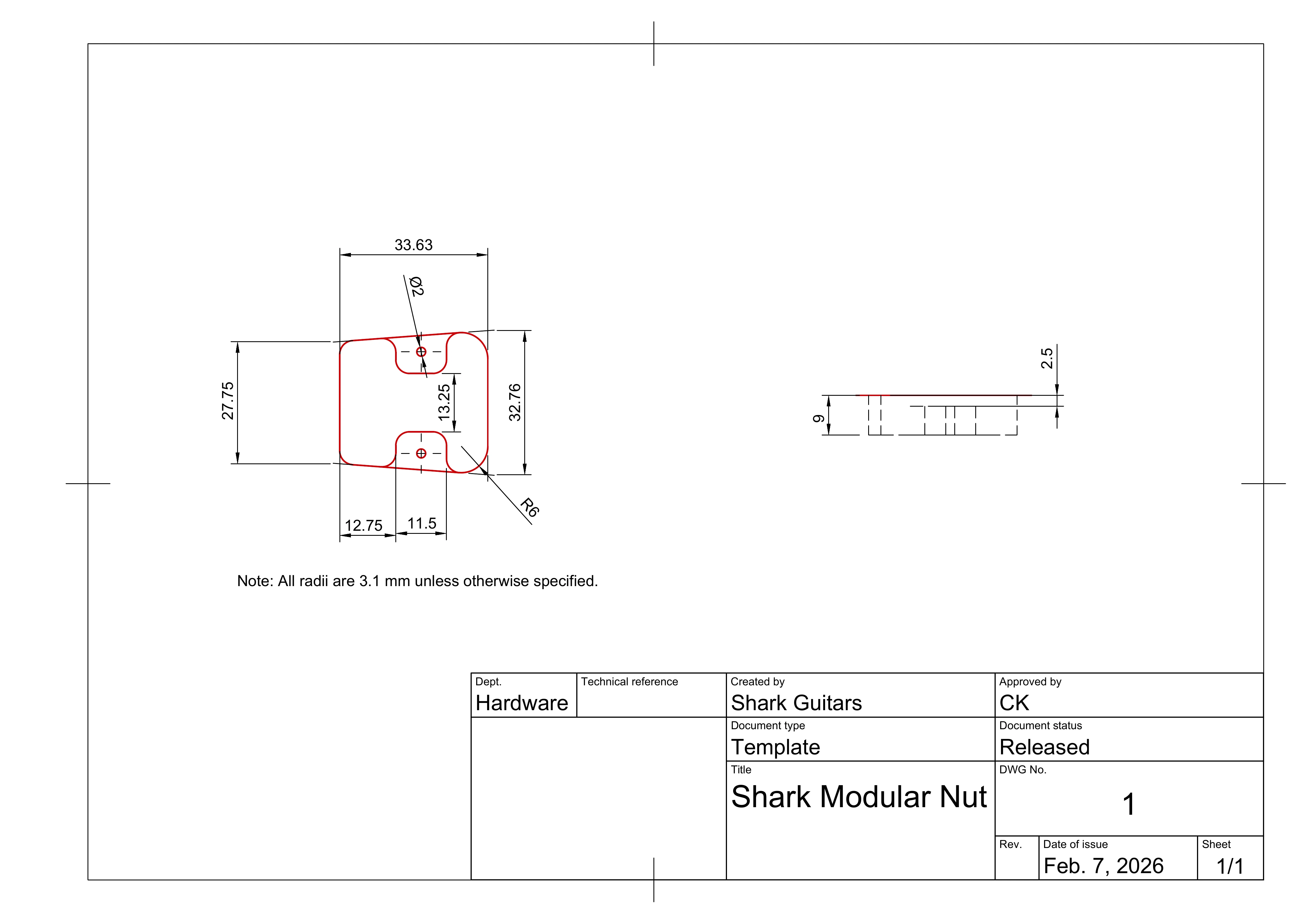
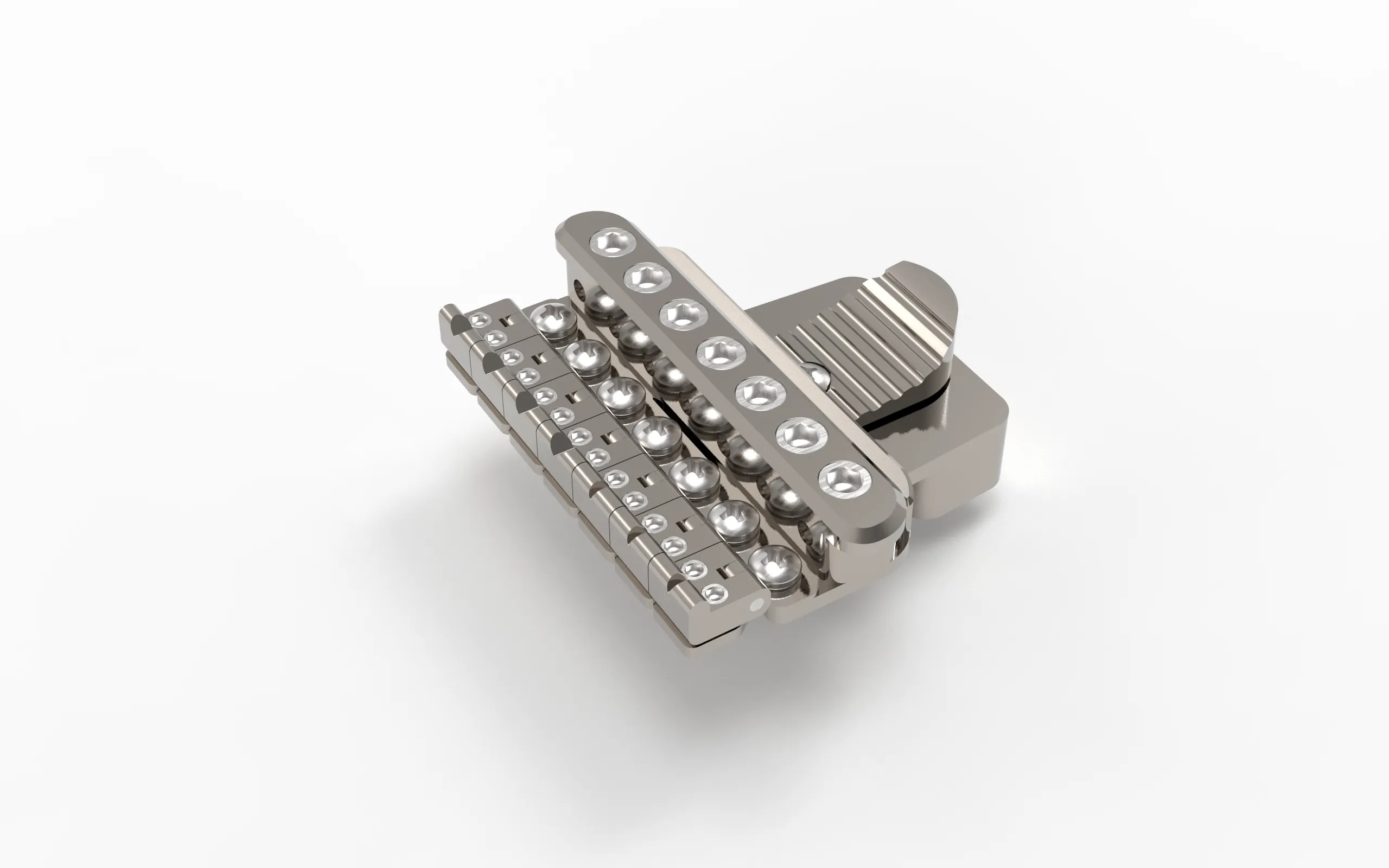
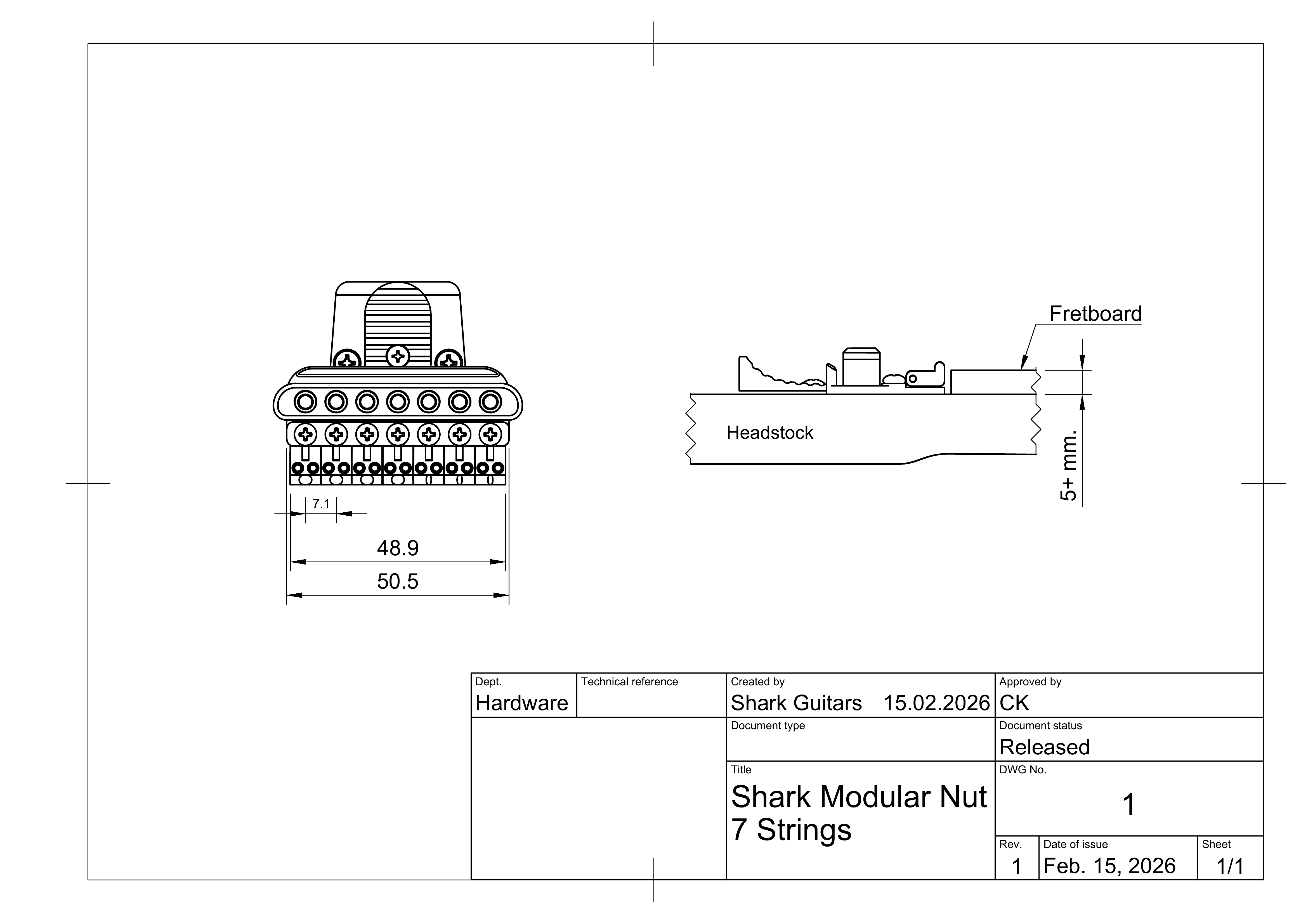
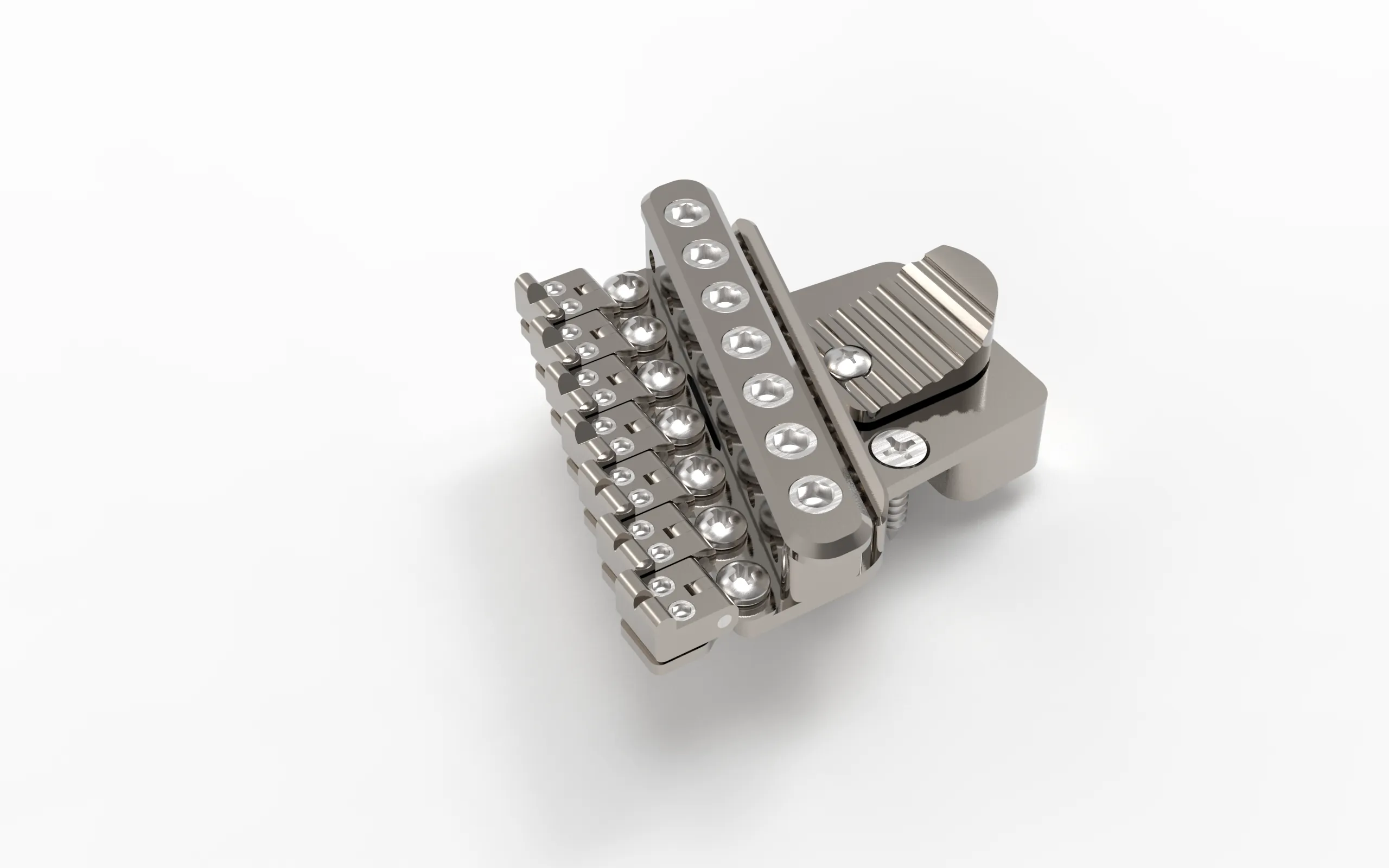
7-string modular nut. Wider body (50.5 mm) for 7 strings, but the routing pocket is identical to the 6-string version. If your line already routes for the 6-string modular nut, no changes to routing programs are required. Only ensure headstock width accommodates at least 50.5 mm.
| Parameter | Value |
|---|---|
| Installation | Dual-level routed pocket (same as 6-string) |
| Overall Body Width | 50.5 mm |
| String Spread Width | 48.9 mm |
| Cavity Width | 33.63 mm (same as 6-string) |
| Top Pocket Depth | 2.5 mm |
| Bottom Pocket Depth | 9 mm |
| Standard Corner Radii | R3.1 mm |
| Bottom Corner Radius | R6 mm |
| Mounting Holes | 2 × Ø2 mm, 6.5 mm deep |
| Hole Spacing | 13.25 mm center-to-center |
| Distance to Fretboard | 14 mm |
| Material | Grade 5 Titanium (Ti-6Al-4V) |
The routing pocket is identical to the 6-string version. The wider nut body overhangs the pocket on both sides. Only the nut unit itself is wider (50.5 mm vs 43.5 mm). No CNC changes needed.
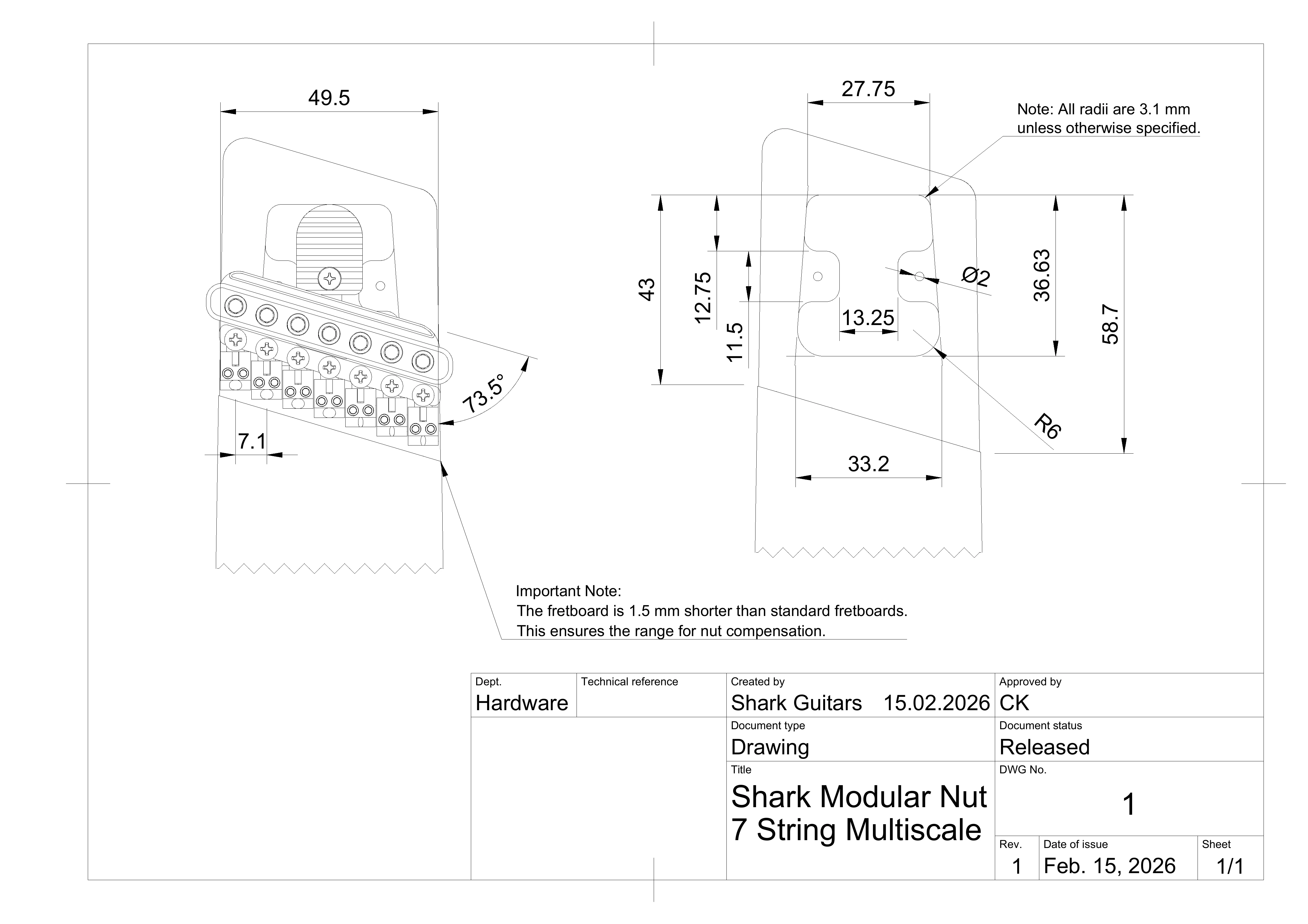
7-string multiscale (fanned fret) modular nut. 73.5-degree fan angle. Width: 49.5 mm. This routing pocket is different from the standard 6-string and 7-string pocket. It is taller and asymmetric to accommodate the angled nut body. The fan angle must match your instrument's multiscale geometry.
| Parameter | Value |
|---|---|
| Installation | Dedicated dual-level pocket |
| Overall Body Width | 49.5 mm |
| Fan Angle | 73.5° |
| Cavity Height (left) | 43 mm |
| Cavity Height (right inner) | 36.63 mm |
| Cavity Height (right full) | 58.7 mm |
| Bottom Width | 33.2 mm |
| Top Pocket Depth | 2.5 mm |
| Bottom Pocket Depth | 9 mm |
| Mounting Holes | 2 × Ø2 mm, 6.5 mm deep |
| Hole Spacing | 13.25 mm center-to-center |
| Material | Grade 5 Titanium (Ti-6Al-4V) |
This routing pocket is not compatible with the standard 6/7-string pocket. The 73.5° fan angle requires its own cavity geometry.
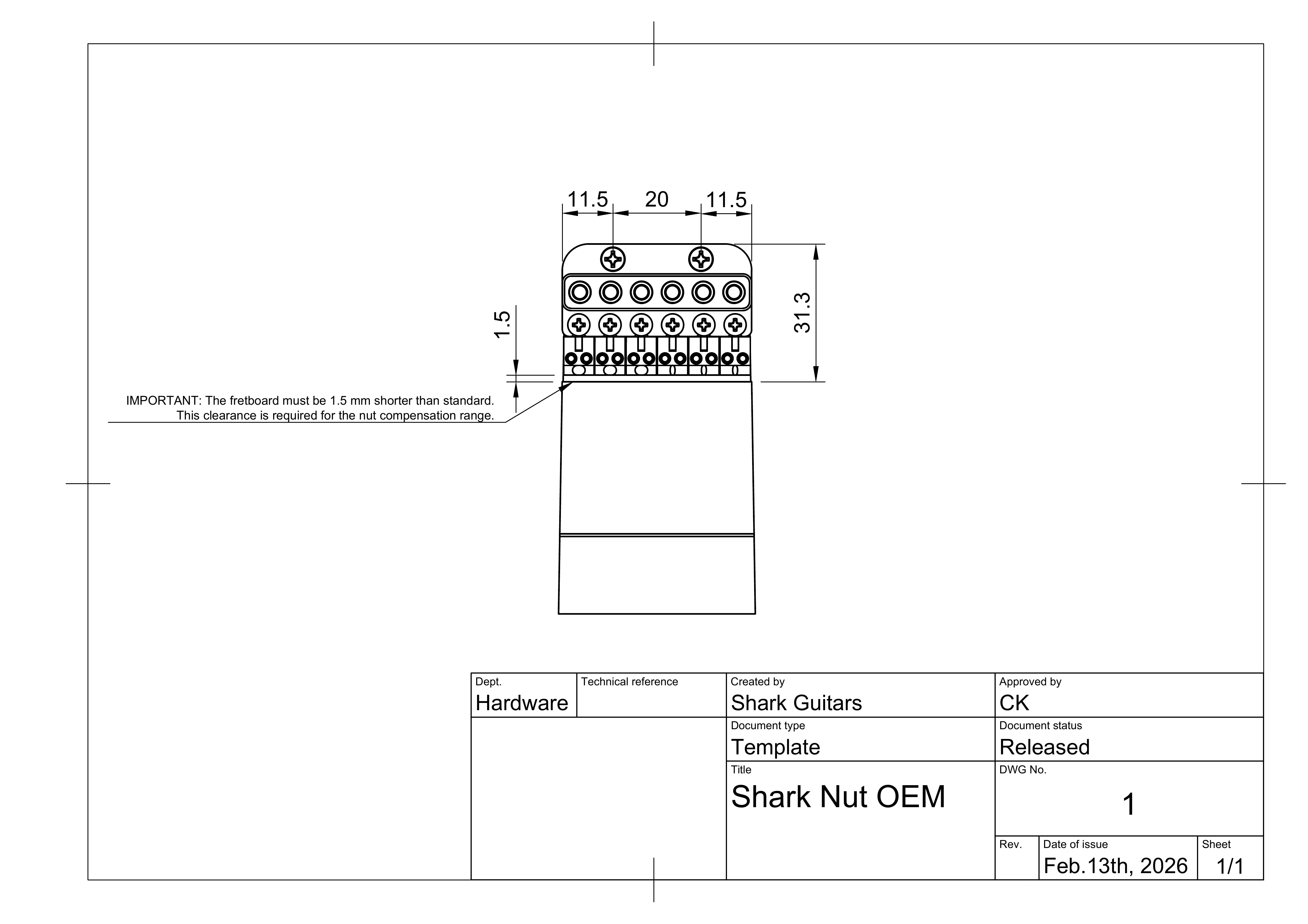
Standard 6-string fixed nut. Surface-mount with screws only. No pocket routing required. The simplest Shark nut variant to integrate. Width: 43 mm. A direct upgrade for any conventional build, providing per-string height and intonation adjustment at the nut position.
| Parameter | Value |
|---|---|
| Installation | Screw mounting only, no pocket required |
| Total Width | 43 mm |
| Body Height | 31.3 mm |
| Screw Spacing | 20 mm center-to-center |
| Left Screw Inset | 11.5 mm |
| Fretboard Gap | 1.5 mm |
| Material | Grade 5 Titanium (Ti-6Al-4V) |
Only two screw pilot holes needed. No routing, no pocket, no cavity. Compatible with every radius by design.
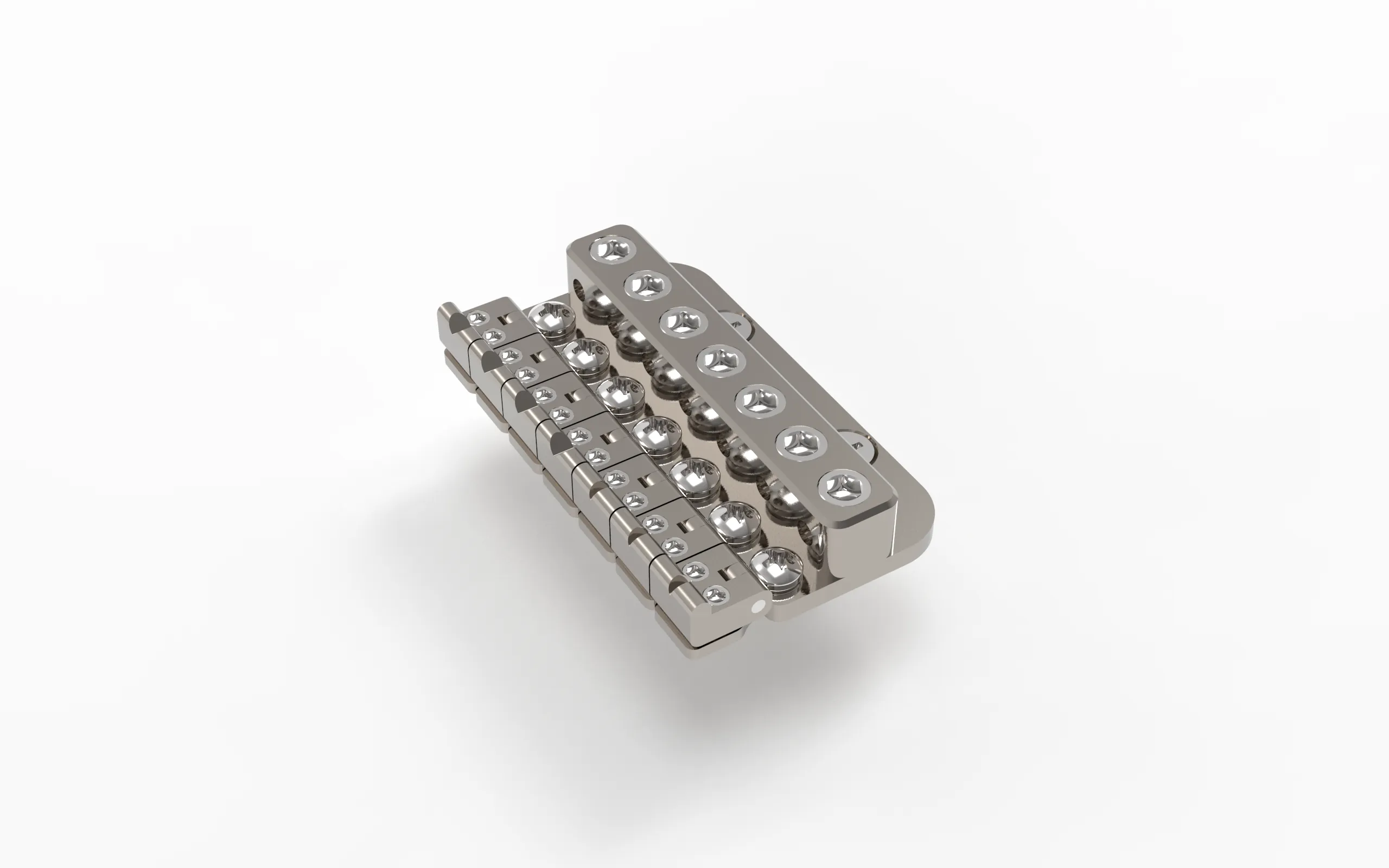
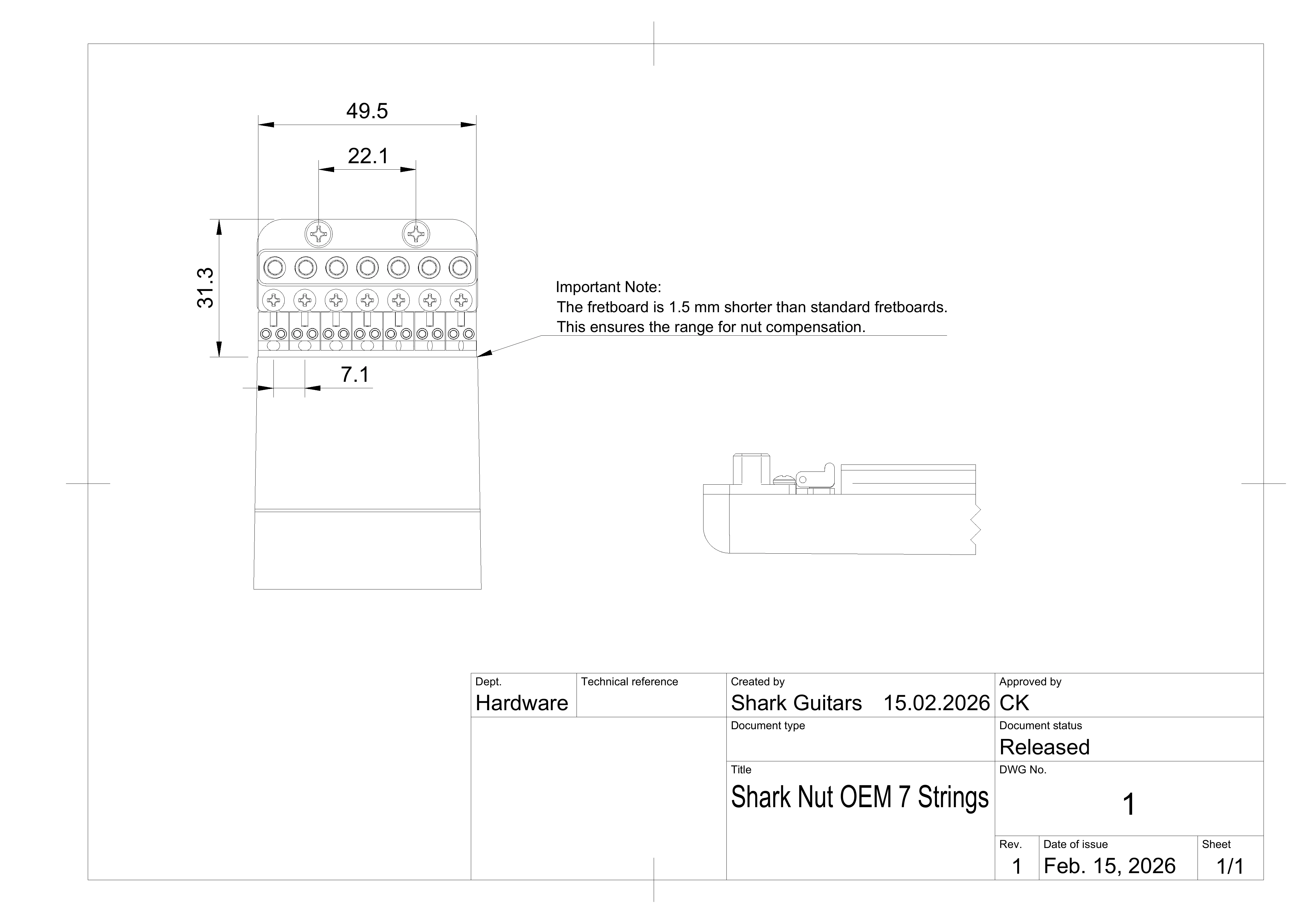
7-string fixed nut. Wider body (49.5 mm) with increased screw spacing (22.1 mm). Surface-mount installation, no routing required. Ensure headstock width accommodates at least 49.5 mm at the nut position.
| Parameter | Value |
|---|---|
| Installation | Screw mounting only, no pocket required |
| Overall Body Width | 49.5 mm |
| Body Height | 31.3 mm |
| Screw Spacing | 22.1 mm center-to-center |
| Mounting Tab Overhang | 7.1 mm |
| Fretboard Gap | 1.5 mm |
| Material | Grade 5 Titanium (Ti-6Al-4V) |
Wider body (49.5 mm vs 43 mm). Screw spacing increases to 22.1 mm (vs. 20 mm on 6-string). Body depth remains 31.3 mm. Still surface-mount, no routing required.
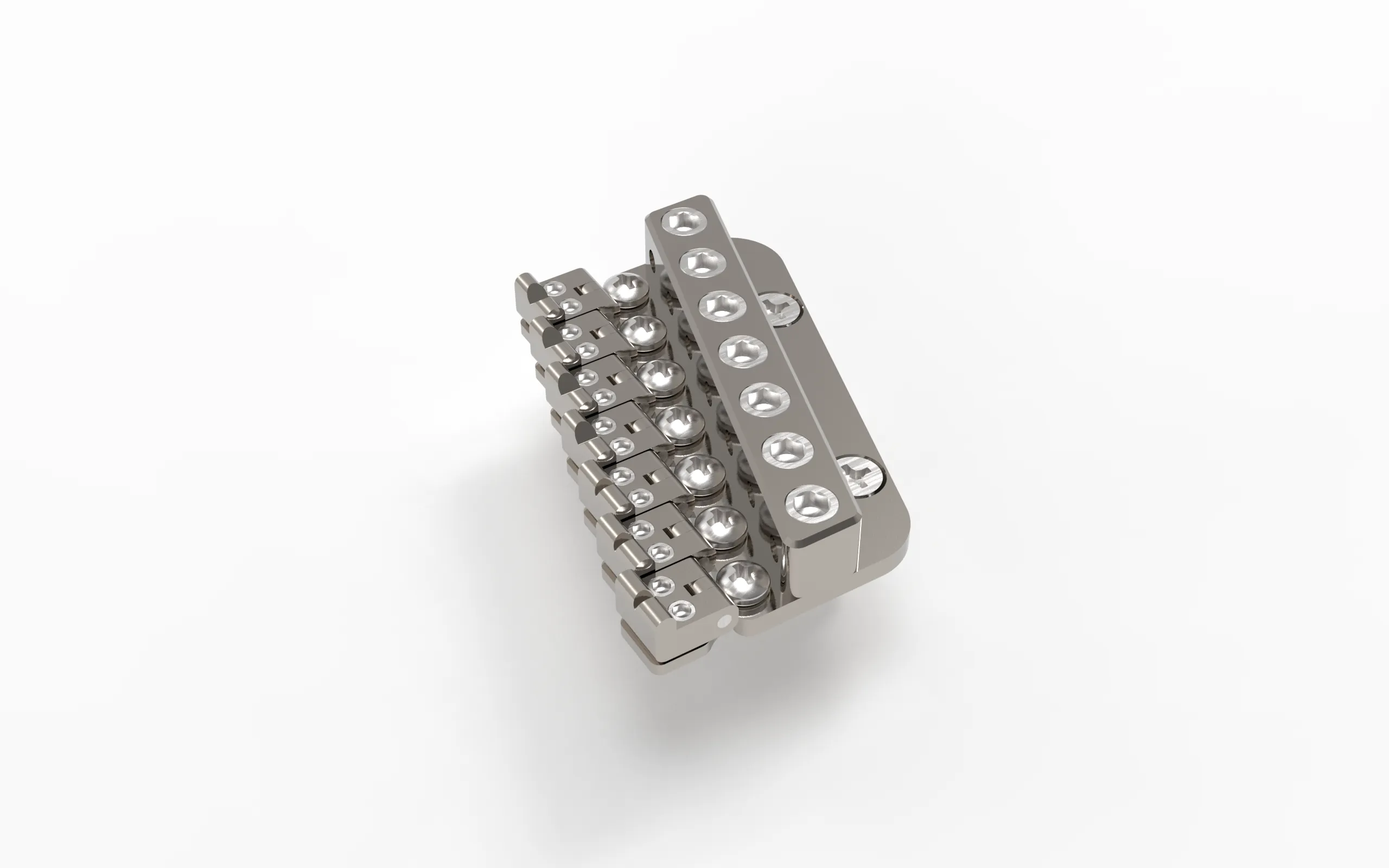
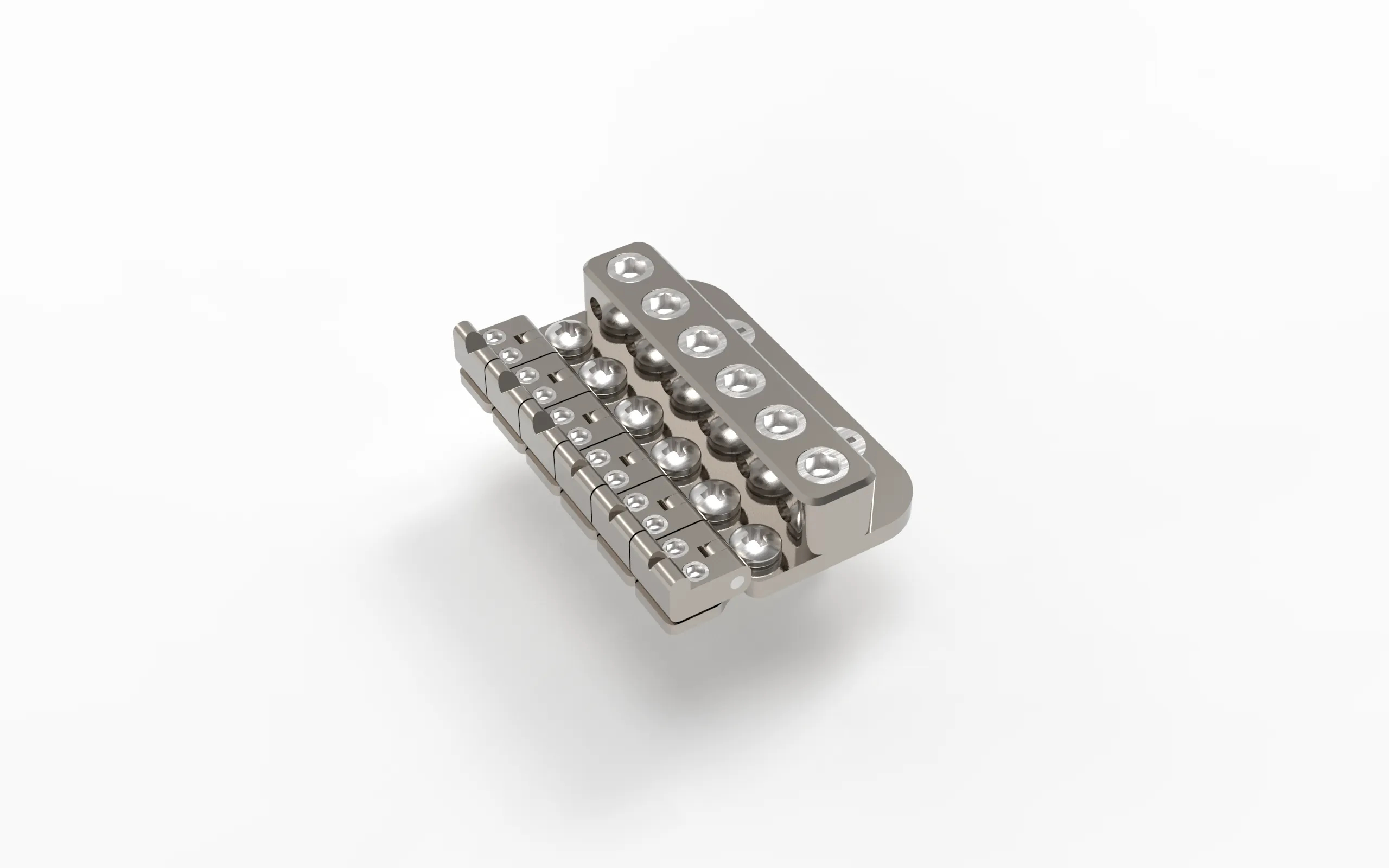
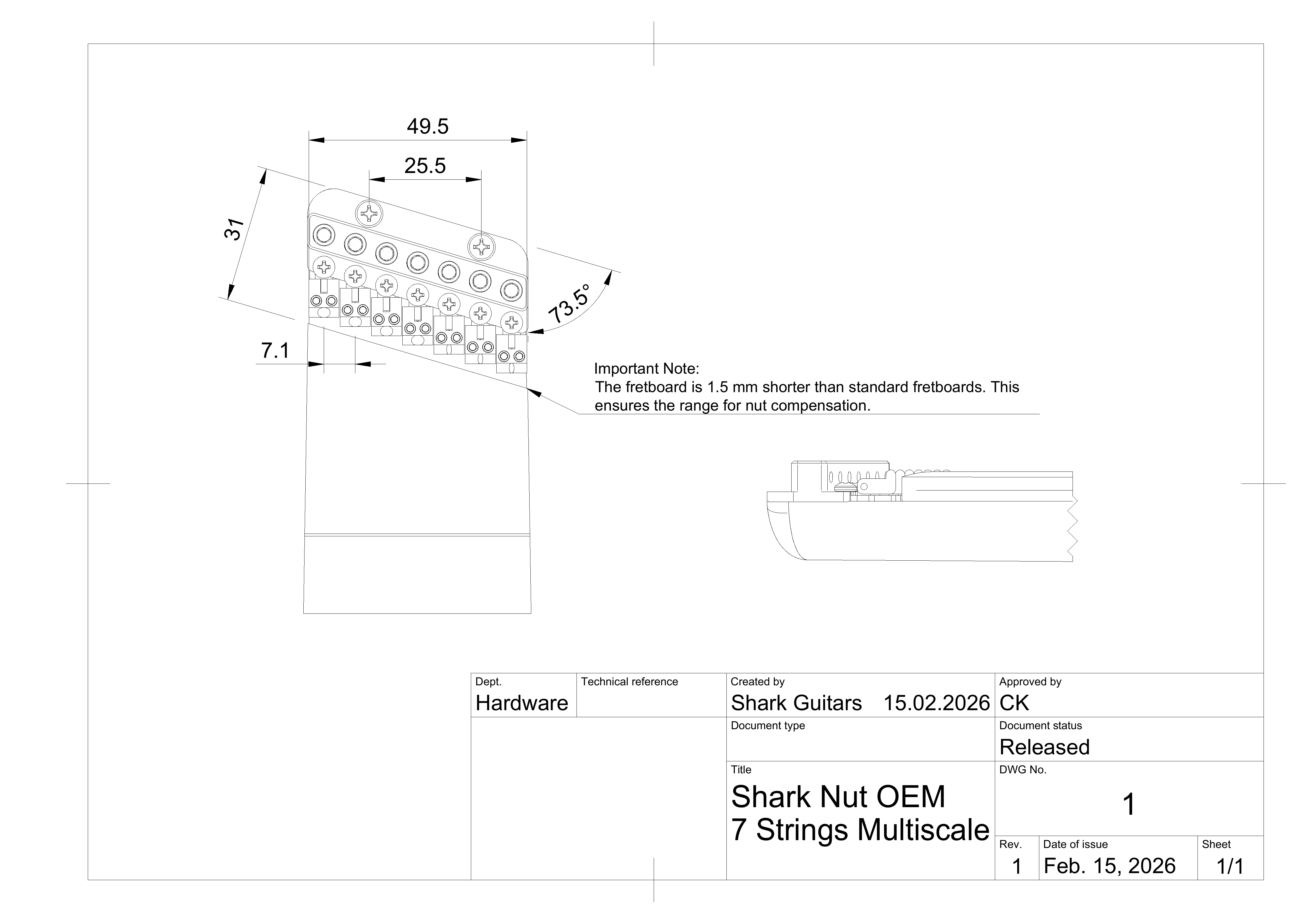
7-string multiscale fixed nut. 73.5-degree fan angle. Width: 49.5 mm. Surface-mount installation with screws only. The nut footprint is not perpendicular to the neck center line. Screw positions must account for the angular offset.
| Parameter | Value |
|---|---|
| Installation | Screw mounting only, no pocket required |
| Overall Body Width | 49.5 mm |
| Body Height | 31 mm |
| Top Reference Width | 25.5 mm |
| Fan Angle | 73.5° |
| Mounting Tab Overhang | 7.1 mm |
| Fretboard Gap | 1.5 mm |
| Material | Grade 5 Titanium (Ti-6Al-4V) |
The 73.5° fan angle means the nut footprint is angled. Screw pilot hole positions must account for this angular offset relative to the neck center line.
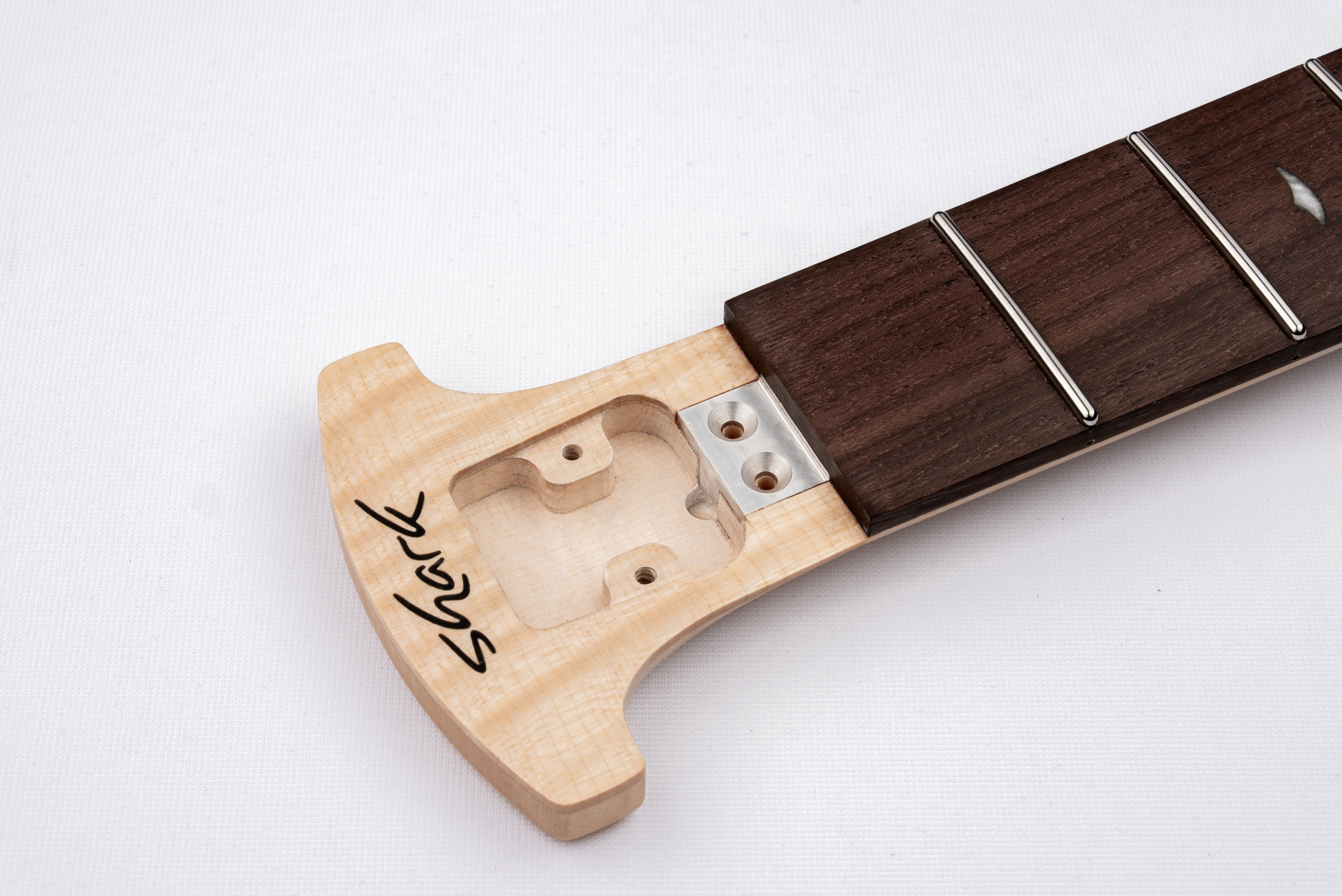
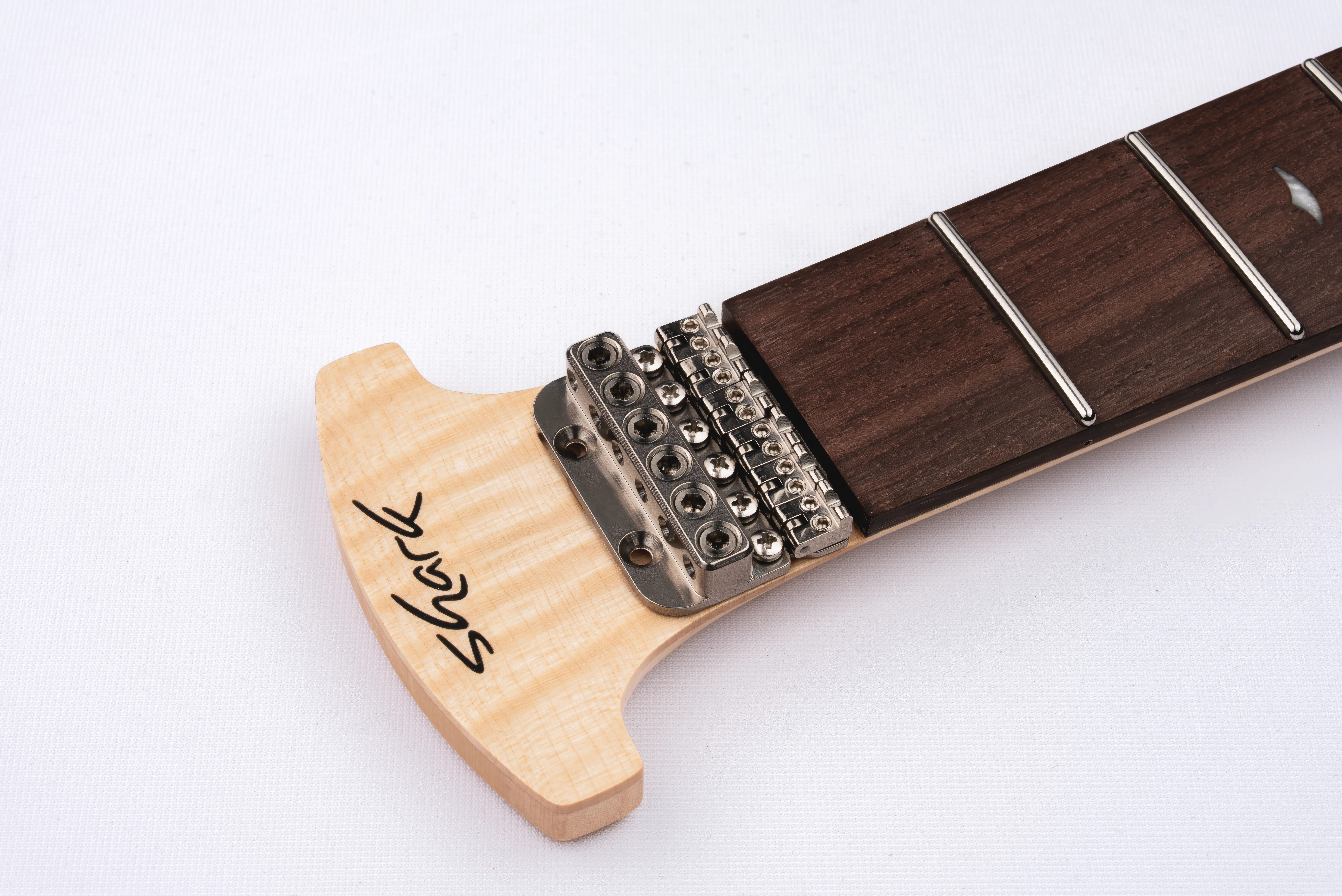
Differentiates your product with genuine per-string adjustment at the nut position. Paired with bridge-side control, your instruments offer complete two-end string alignment that no conventional nut can match. The fixed nut integrates with screws only, compatible with every radius. The full system version requires a dedicated nut pocket. Both require a fretboard 1.5 mm shorter than standard. Engineering consultation included with OEM orders.
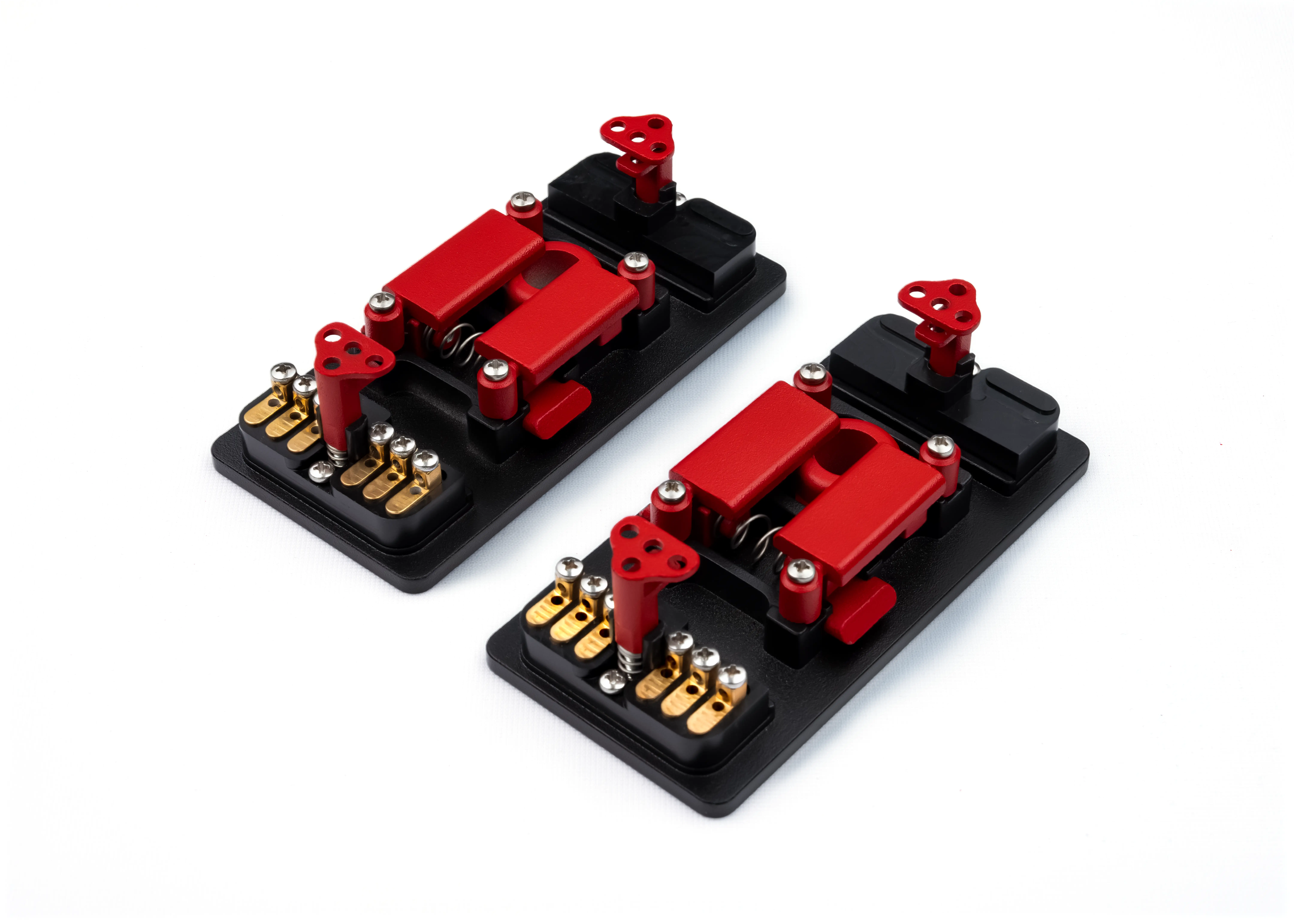
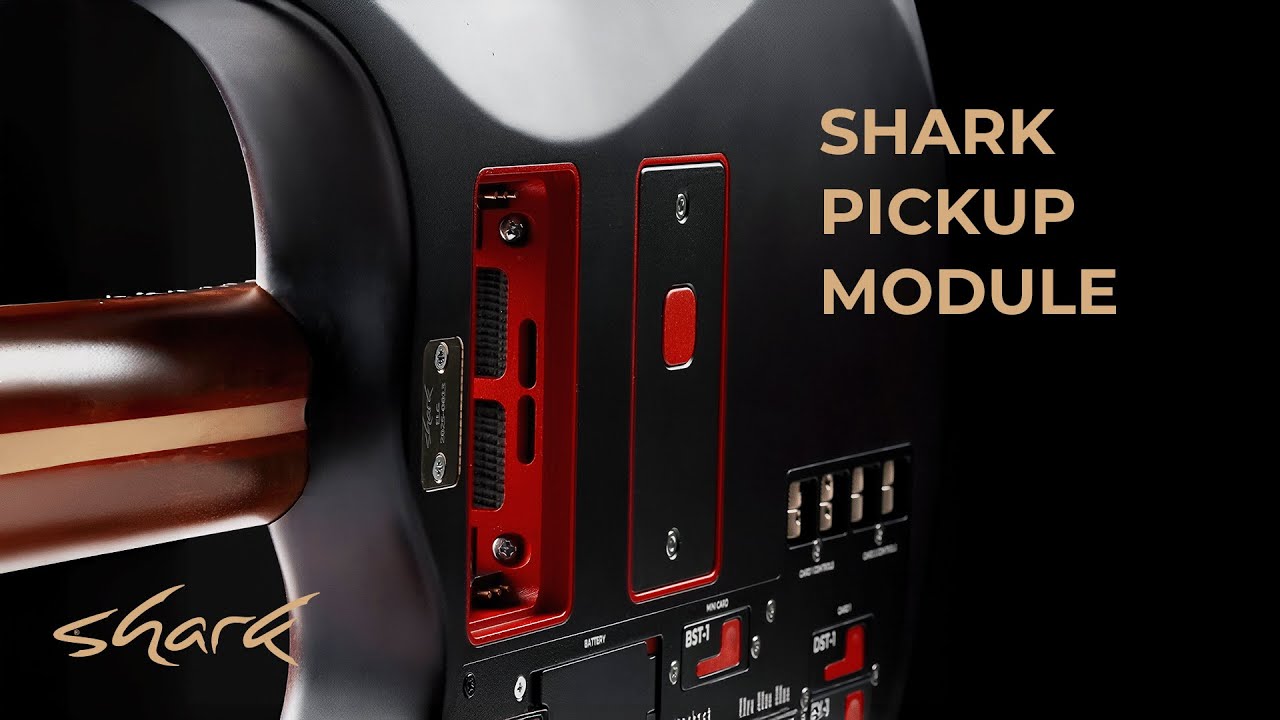
A solderless pickup carrier system that lets you switch pickups in seconds, at the push of a button. Simple, fast, and compatible with any industry-standard pickup.
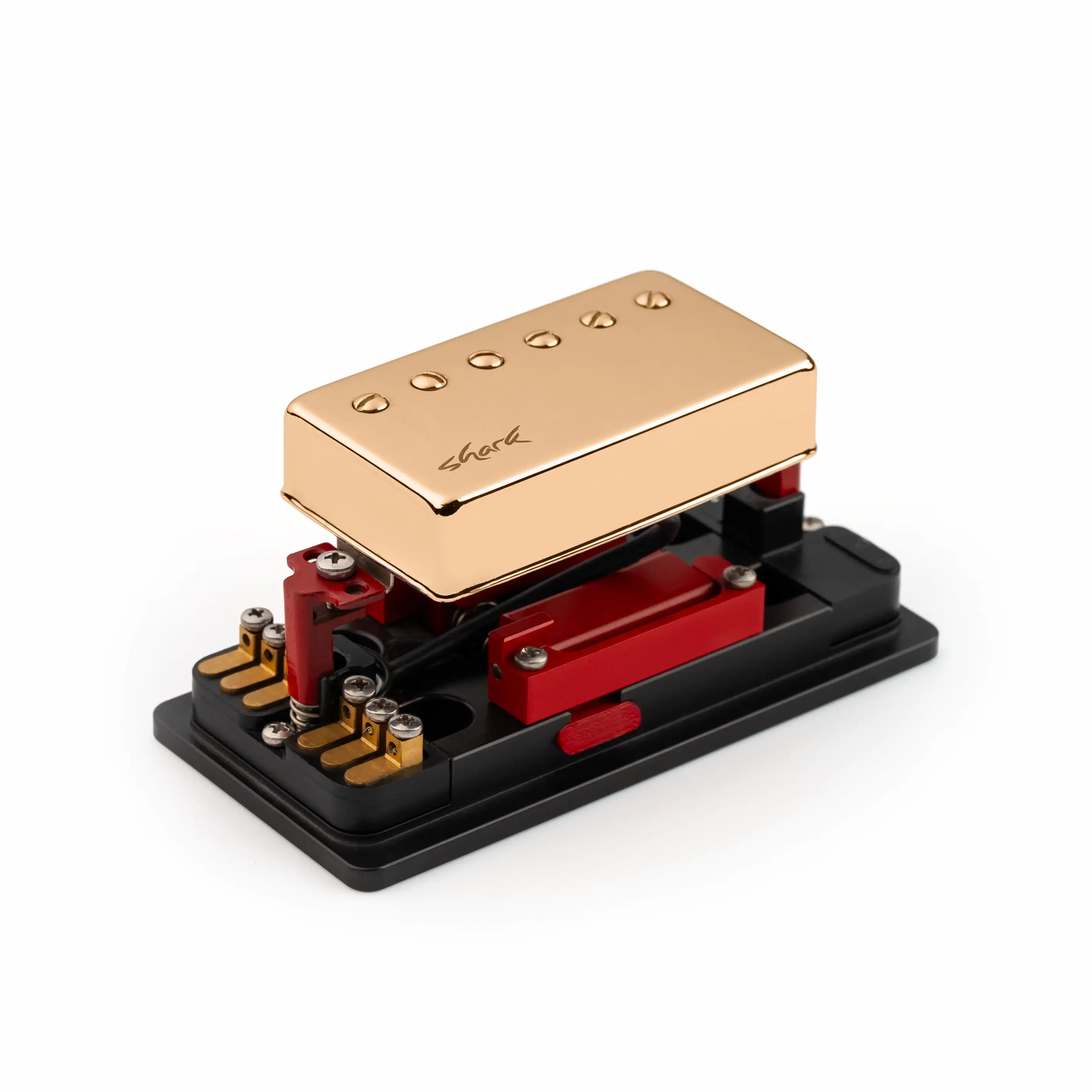
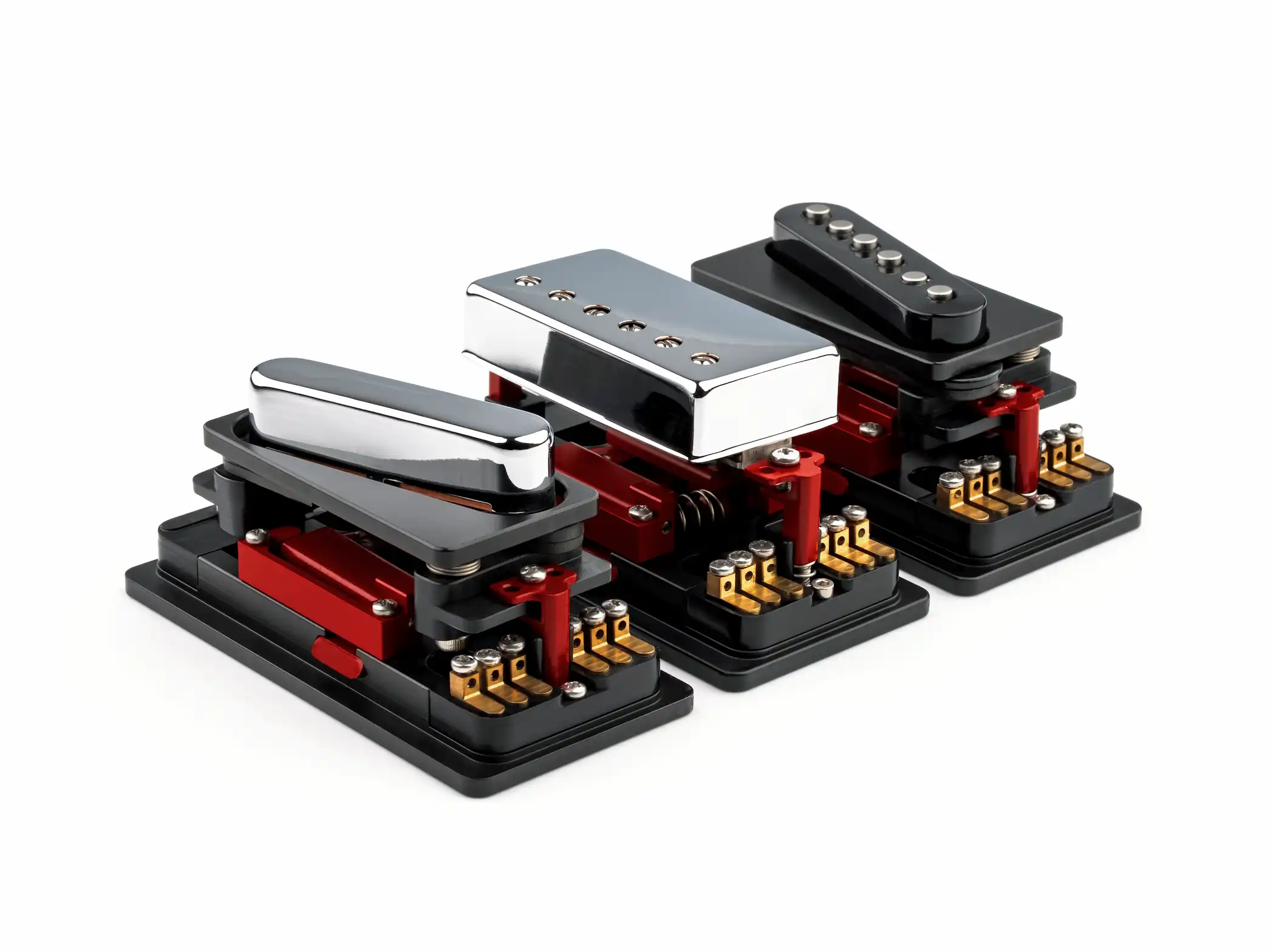
To change pickups: press the red button on the back. This releases the module from the guitar. Push in another one, and it clicks into place. Connected and ready to play. Same module fits both neck and bridge positions.
The Shark Pickup Module accepts industry-standard pickups. Single coils, humbuckers, passive and active. With 6-contact connectors for advanced pickups with additional wiring. All the pickups you already own can be installed on the module without soldering.
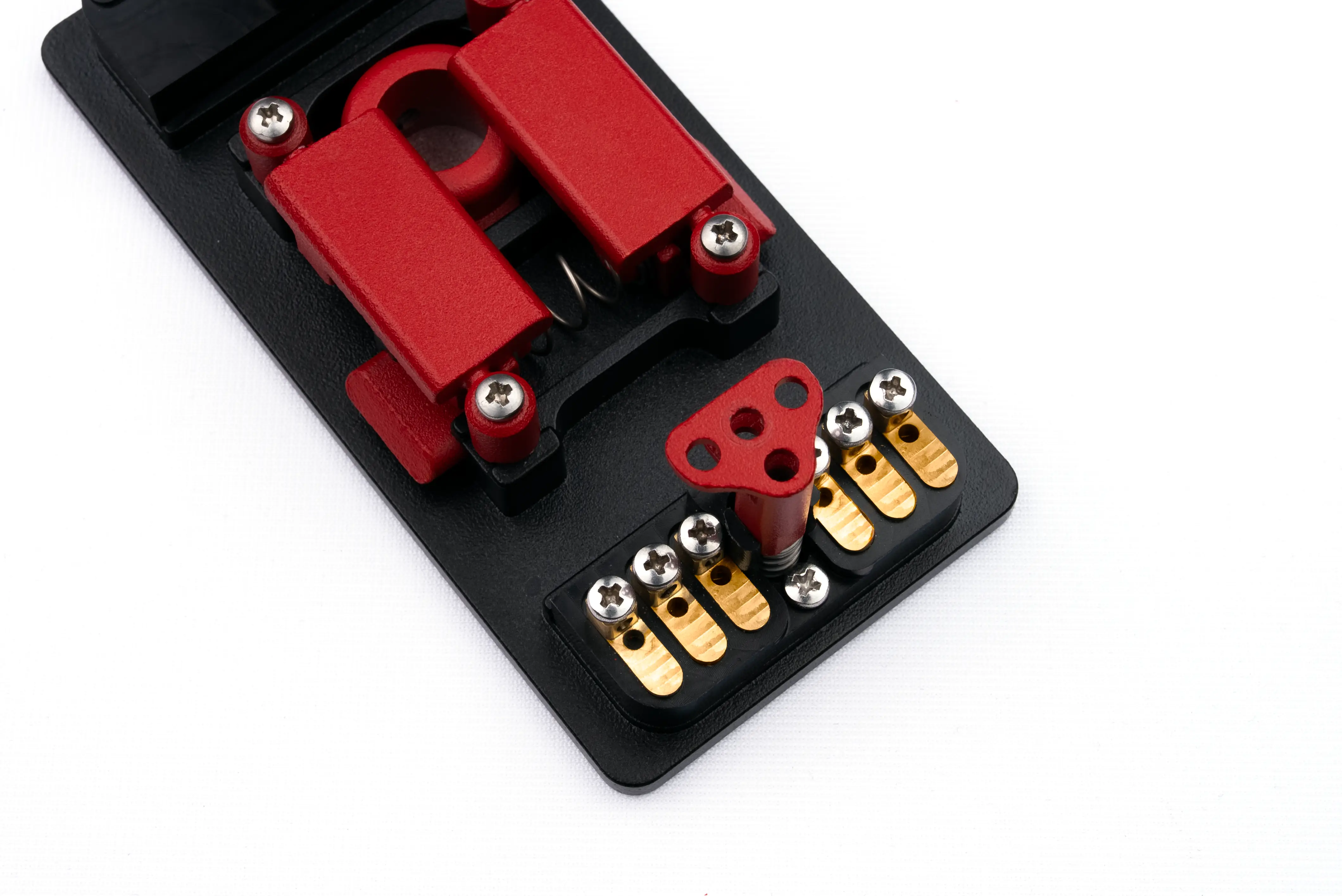
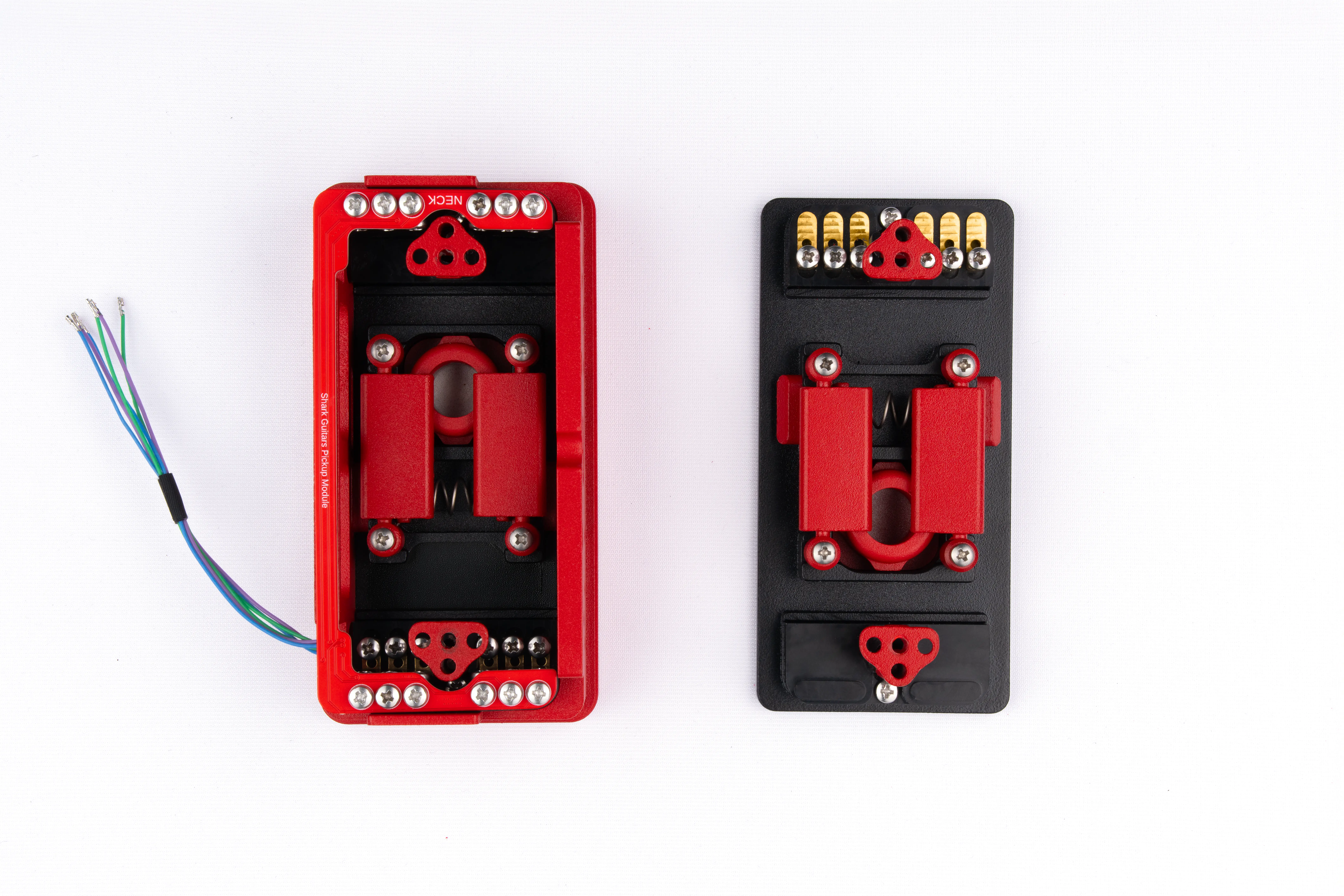
Insert the pickup wires into the contact terminals. Tighten the screws to lock them in place. Secure the pickup to the frame. Ready to use. No soldering required for the pickup installation itself. Screw terminals replace solder joints at the pickup stage - faster assembly and zero cold-solder failures on pickup connections.
Pickup height adjustable with a hex key. Two hex bolts at the back of the module set height per pickup, independent of the module frame.
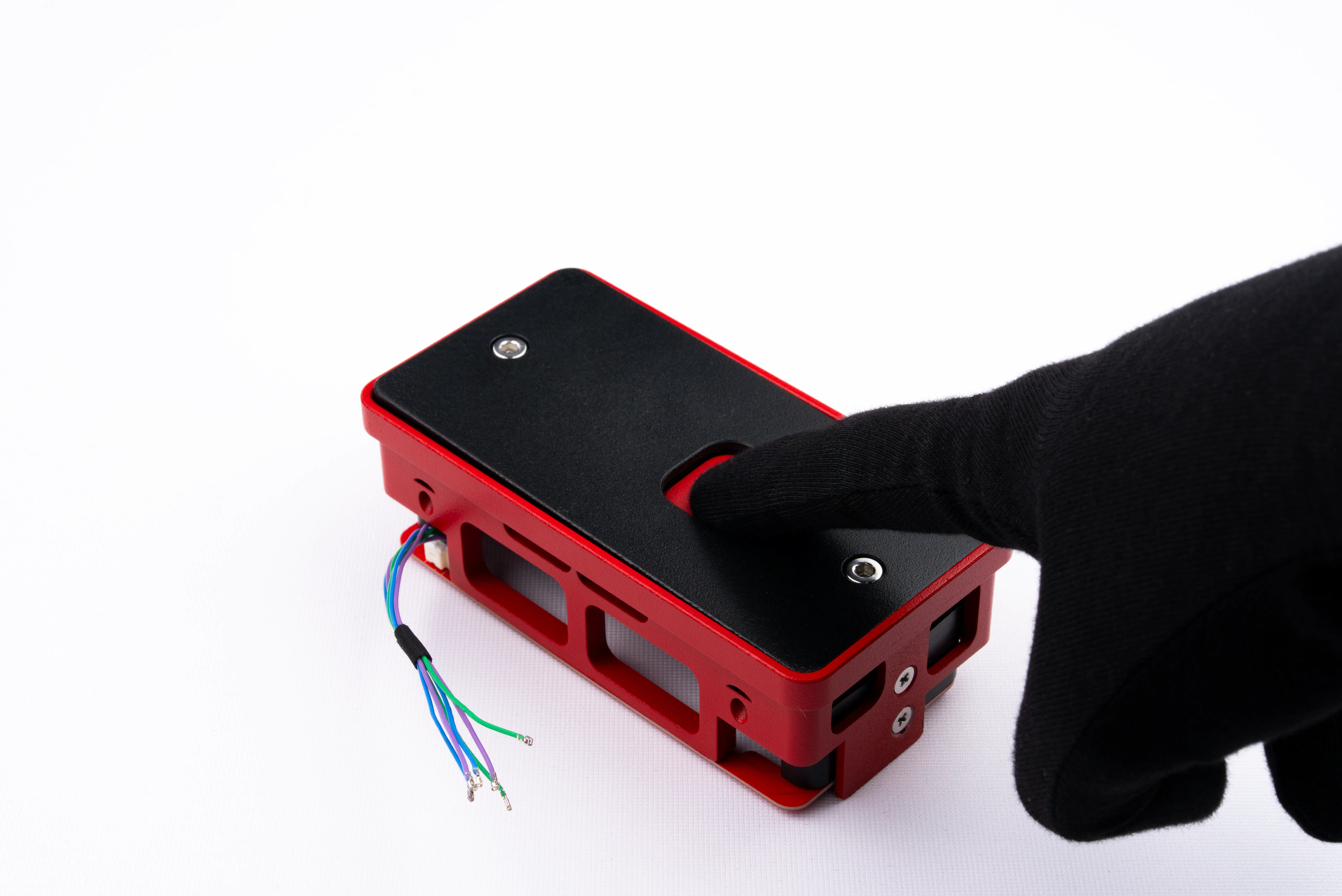
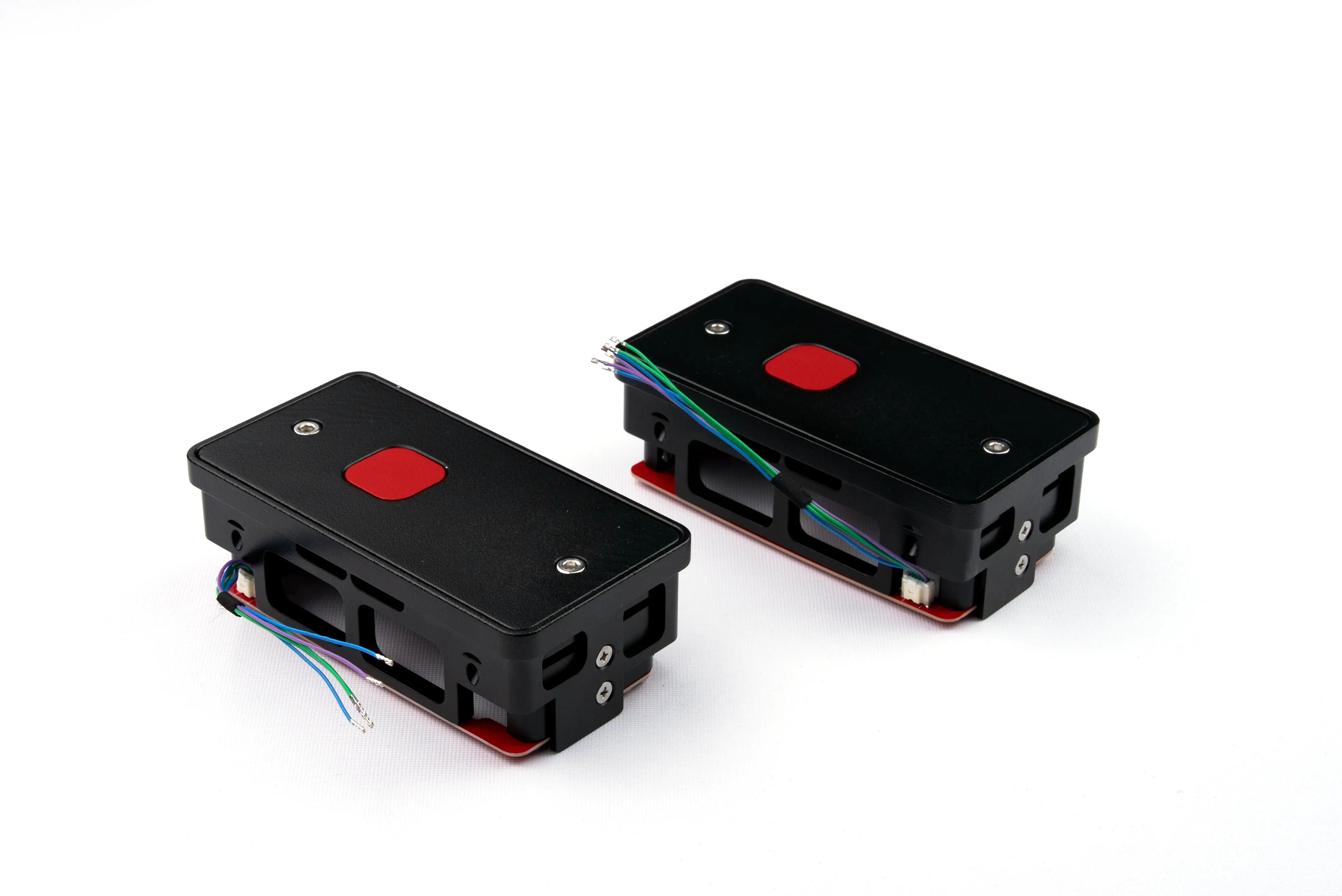
Because pickup height is set on the module itself, each pre-loaded module retains its own calibration. A player can build a collection of modules, each with a different pickup and height setting dialed in, and swap between them without re-adjusting anything. At a gig, in the studio, or between songs. The module carries the full pickup setup with it.
The body frame sits permanently in the guitar's pickup cavity. Gold-plated contact pins make the electrical connection automatically when a module is inserted. The connector wires run from the frame to the guitar's electronics. Modules click in and out; the frame and wiring stay in place.
Shark Pickup Modules connect directly to traditional guitar electronics through standard wiring. Any manufacturer can integrate the module system with their existing pickup selector, volume/tone pots, and output jack wiring. The module replaces only the pickup mounting method, not your signal chain.
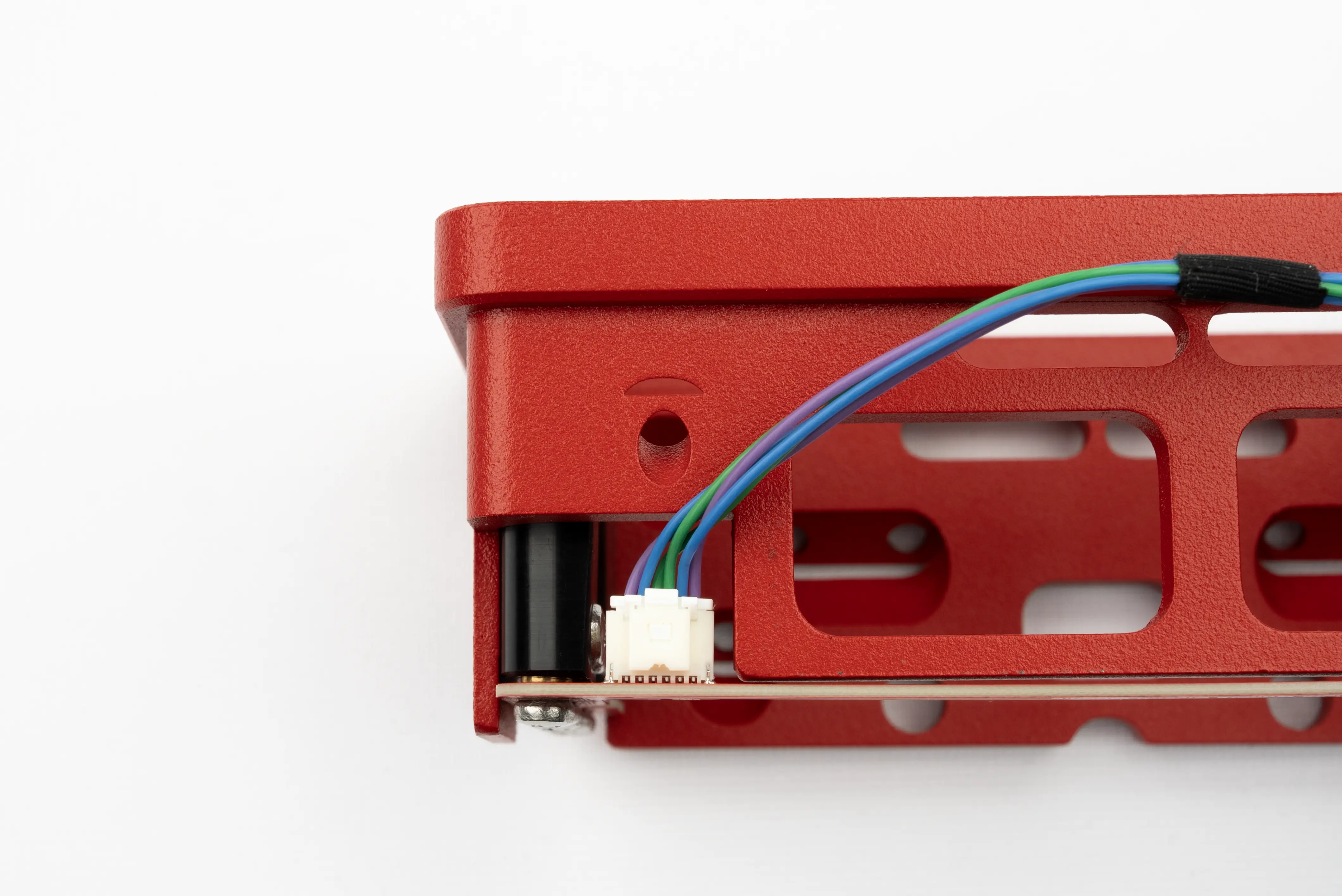
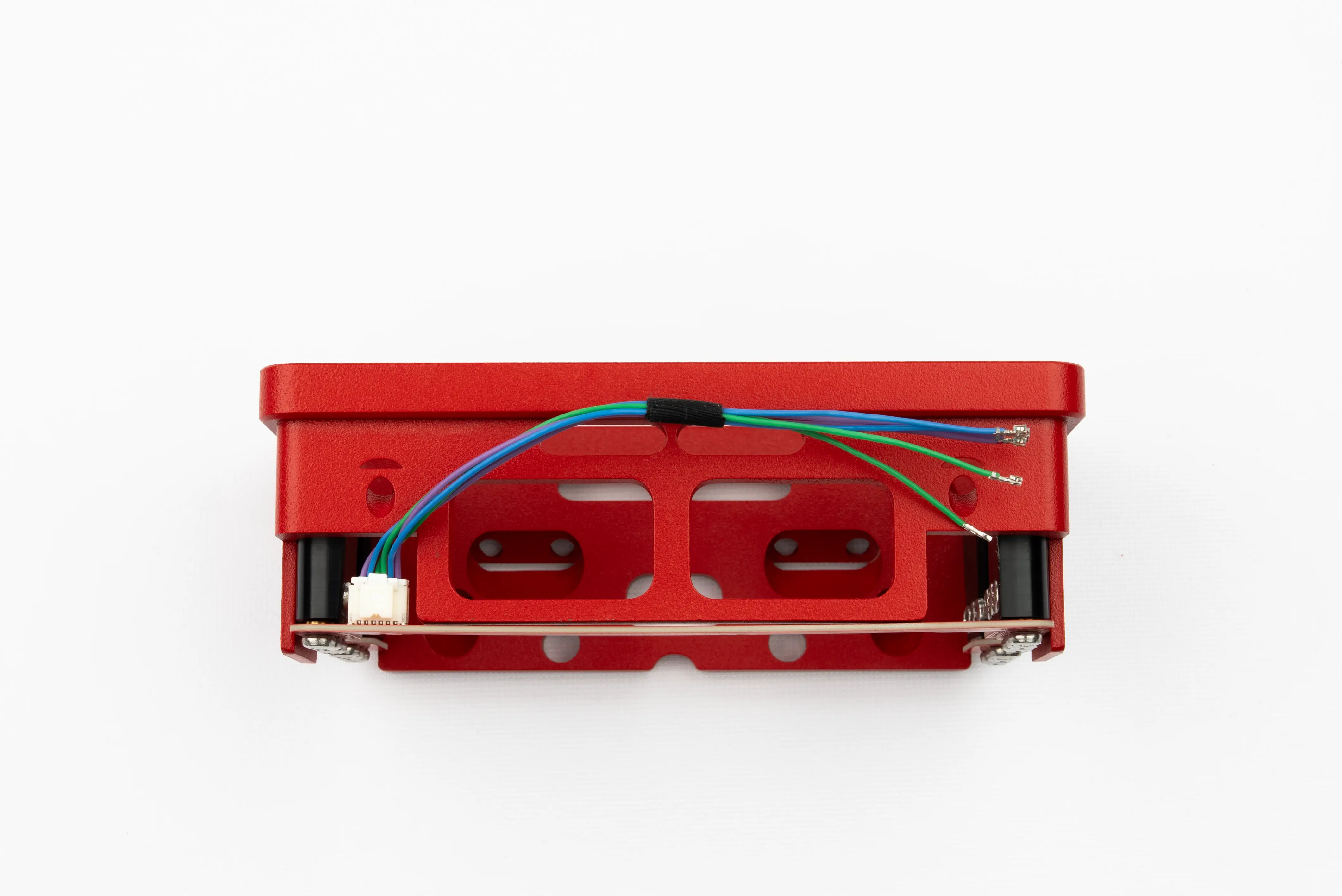
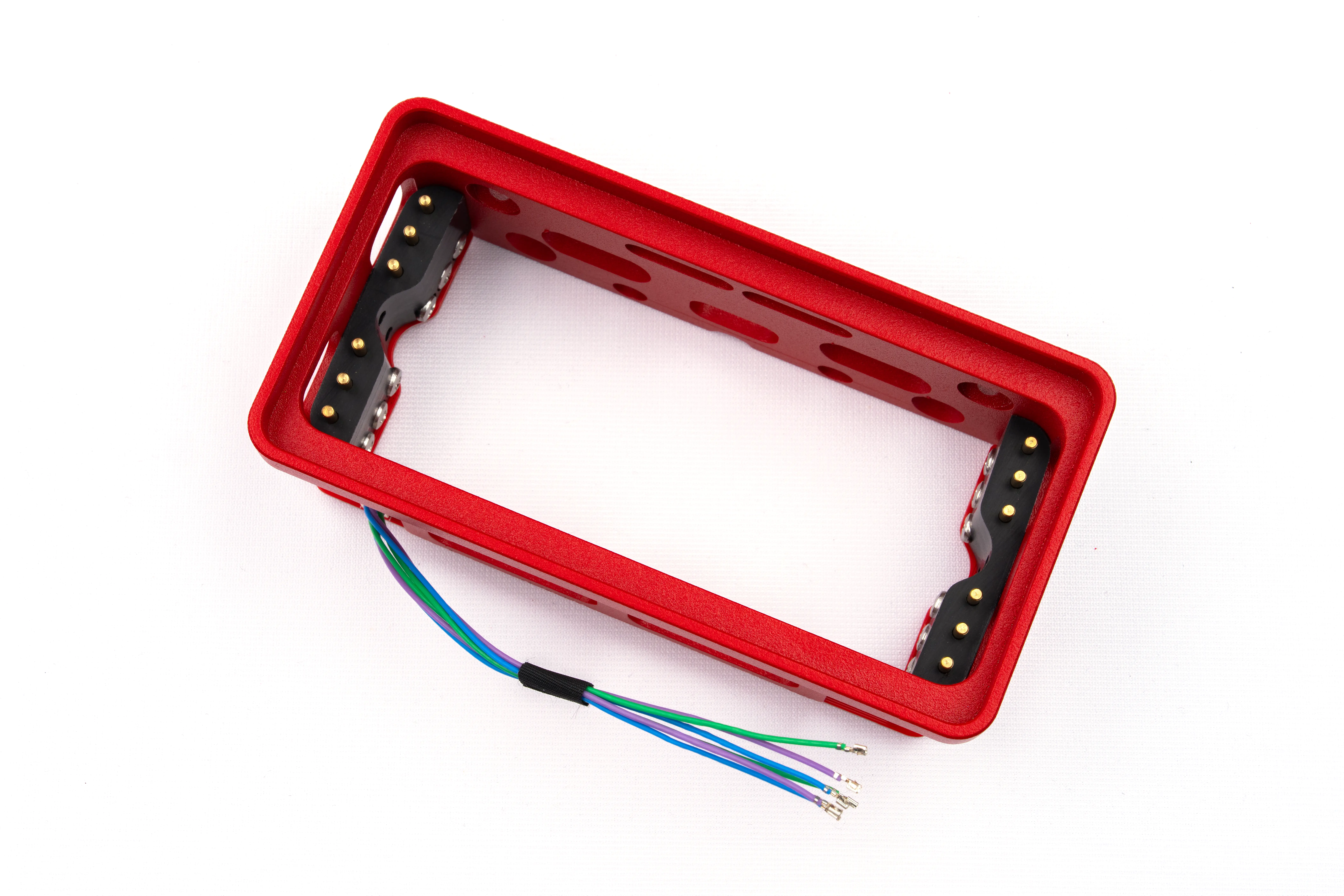
Two steps to install the Shark Pickup Module bays. Shark provides 3D Solid models and DXF files customized to the client's parameters. For builders without CNC machines, a template is available for manual routing.
Pickup bay cavities and angled side-wall holes are routed into the body according to the provided 3D Solid models and DXF files. CNC routing recommended. A template is available for manual routing.
Pickup modules are placed into the bays and mounted to the side wall through angled holes using wood screws. No soldering, no wiring harness. Modules seat and connect mechanically.
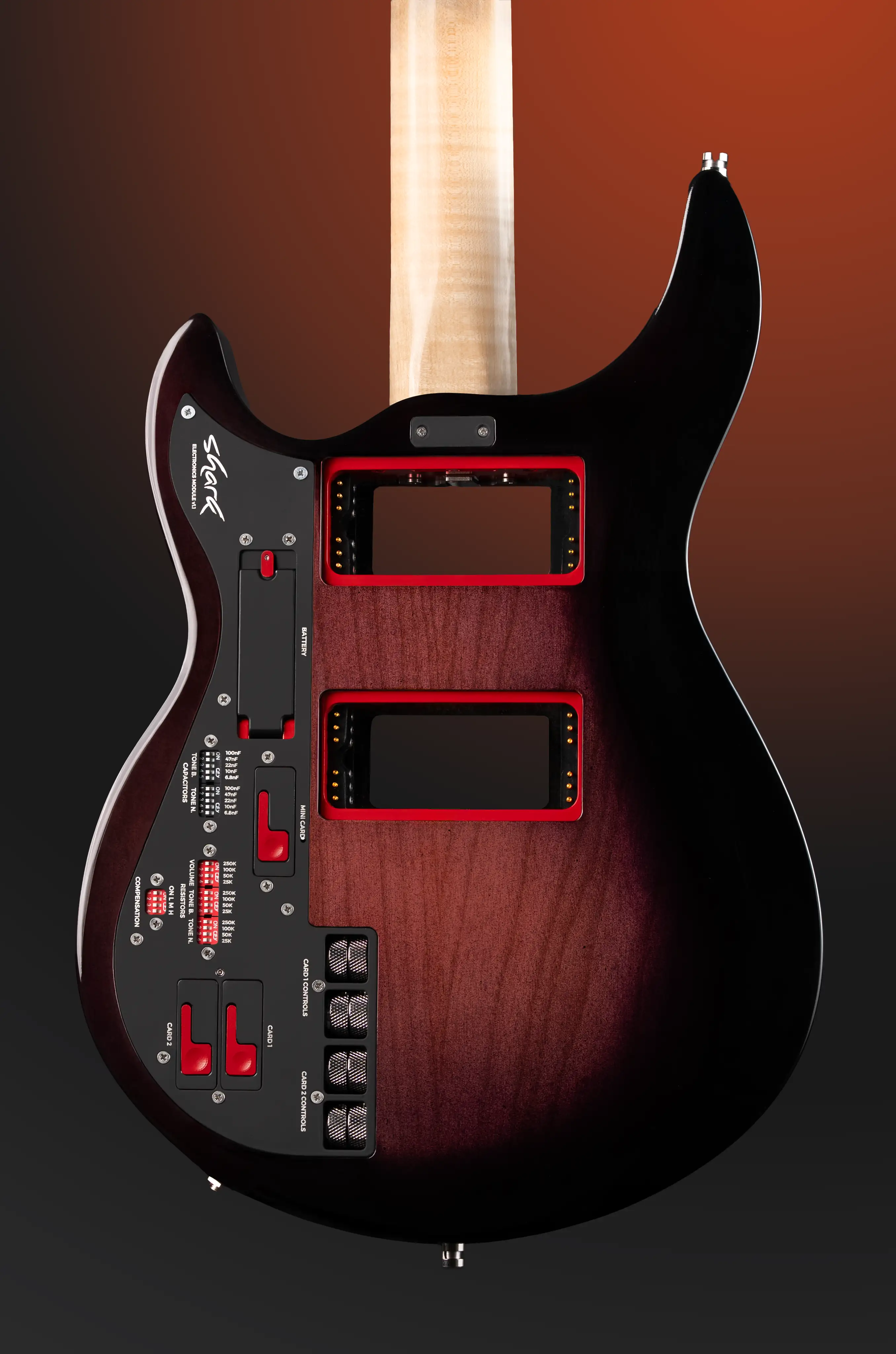
The guitar body needs a precision-routed cavity shaped to the exact profile of the module frame. This is a full cutout, not a standard pickup route. Guide surfaces inside the bay align the module on insertion. A contact block at the module base makes the electrical connection automatically. When installed, the module becomes the back cover of the cavity.
The original body frame comes in red. For easier integration into a wider range of guitar designs, we also offer it in black.
.webp)
.webp)
.webp)
.webp)
Eliminates soldering from the pickup installation step. Screw terminals mean faster pickup assembly and zero cold-solder failures on pickup connections. The machined contact interface ensures consistent connection across production runs. Universal pickup compatibility means perceived instrument value goes up without additional SKUs. Every pickup a customer already owns becomes compatible. CNC routing templates for module bay cavities provided with OEM orders.
Every structural part is Grade 5 Titanium (Ti-6Al-4V). Lightweight, corrosion-resistant, and scratch-resistant without any coating or surface treatment. CNC-machined in-house to sub-0.01 mm tolerances with no soft or mixed materials in the core structure.
.webp)
.webp)
Titanium does not creep, sag, or absorb energy. Instead of damping the string, it reflects energy back into the string and the body. The result is strong sustain and a clear, focused note attack. Because there is no coating to add thickness, machined contact surfaces hold their tolerances exactly as designed.
Titanium is roughly 40% lighter than steel while matching or exceeding its structural rigidity. Hardware does not weigh down the instrument. Parts hold their tolerances across production runs with no hand-fitting and no batch variation. What comes off the machine is what goes into the product.
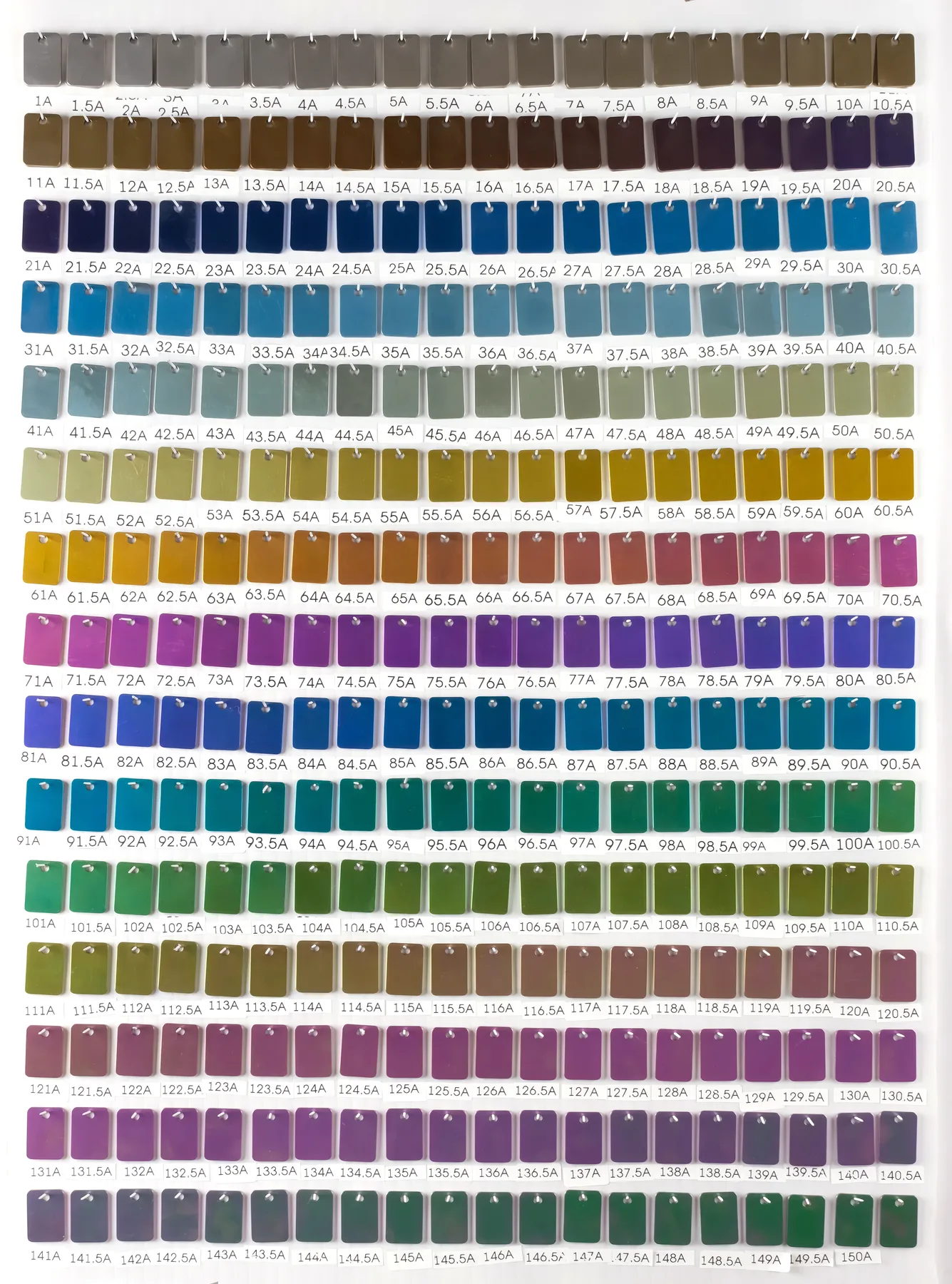
Over 300 anodized color options produced through controlled voltage application to the titanium surface. The color you see is not paint, dye, or coating. It is a transparent titanium oxide layer grown directly on the metal surface. As voltage increases, the oxide layer thickens, and the wavelength of light it reflects changes. The result is structural color, the same principle behind the iridescence of oil films, soap bubbles, and butterfly wings.
Because the color layer is integral to the titanium itself, there is nothing to chip, peel, or flake. The surface retains the dimensional accuracy of the machined part beneath it. Tolerances stay tight even after finishing.
Type 2 (Color Anodizing): Produces the full spectrum of 300+ colors. The oxide layer is thinner and translucent, creating vivid iridescent tones that shift subtly with viewing angle. Used for bridges, nuts, frets, and hardware where visual identity matters.
Type 3 (Hard Anodizing): Produces a thicker, denser oxide layer in matte grey. Higher scratch and wear resistance. Used on high-contact and high-wear surfaces such as neck joints, spine contact areas, and internal structural parts.
These are 24 designated colors from our palette. There are many additional tones between each step, as anodization color is a continuous spectrum controlled by voltage. Any intermediate value can be targeted.
Drag to rotate, scroll to zoom. Each color is rendered using physically-based iridescence values from our anodizing process. As voltage increases, the oxide layer thickens and the reflected wavelength shifts.
The colors shift subtly with viewing angle. This is a physical property of the oxide layer. The preview is a close approximation; actual appearance depends on surface finish and lighting conditions.
All titanium components can be anodized to your brand colors. Custom engraving and marking is possible through our laser systems upon request. Color-matched hardware sets can be supplied across bridge, nut, frets, and pickup modules. Any color from the 300+ palette can be specified per component, per order. Consistent color reproduction across production batches.
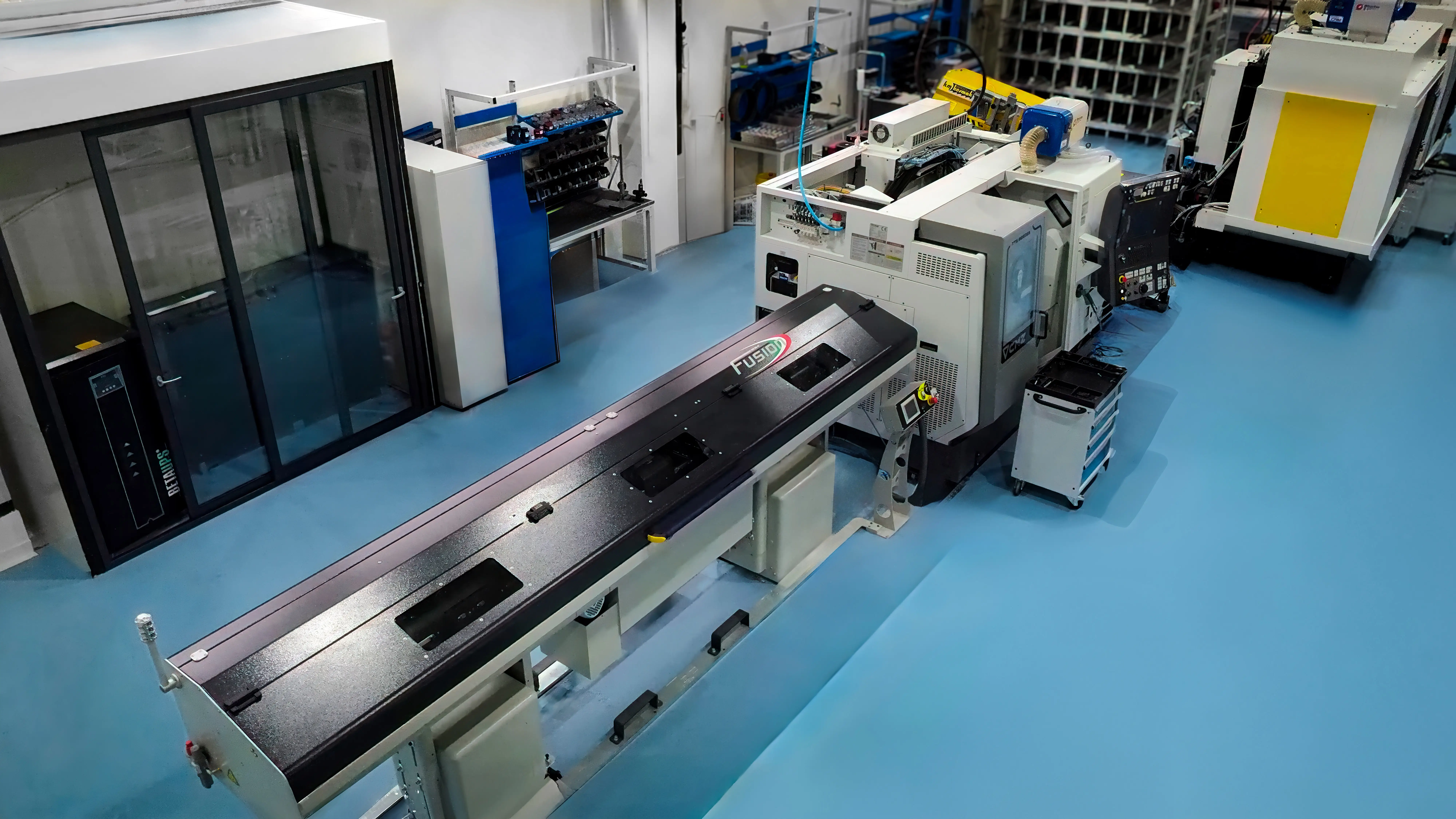
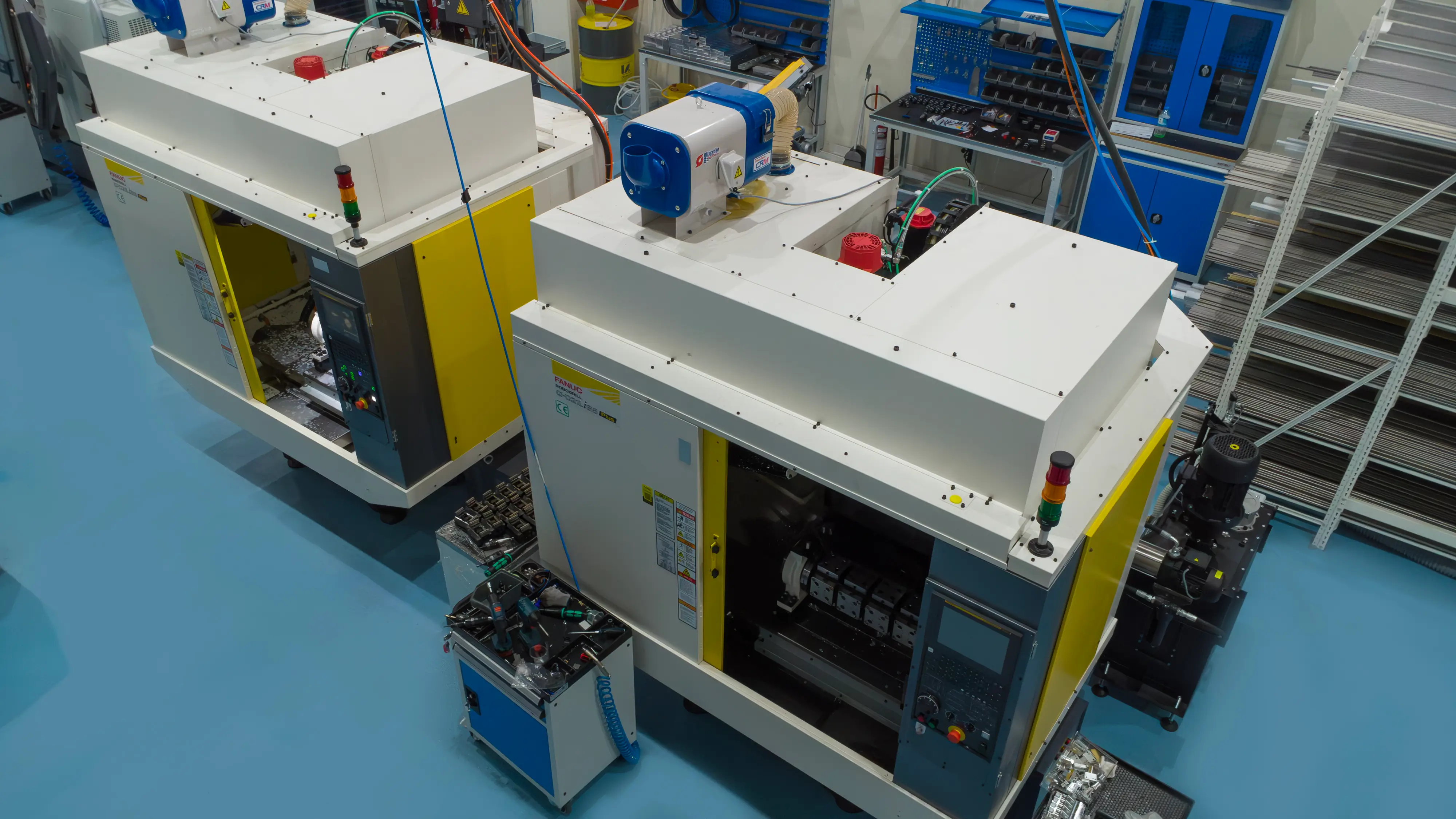
1,600 m² dedicated facility in Antalya, Turkey. Everything produced in-house, from raw titanium bar stock to finished, anodized components. 35 team members. Titanium's dimensional stability, corrosion resistance, and strength-to-weight ratio allow us to engineer components to a level of precision that softer or less stable metals simply cannot sustain over time.
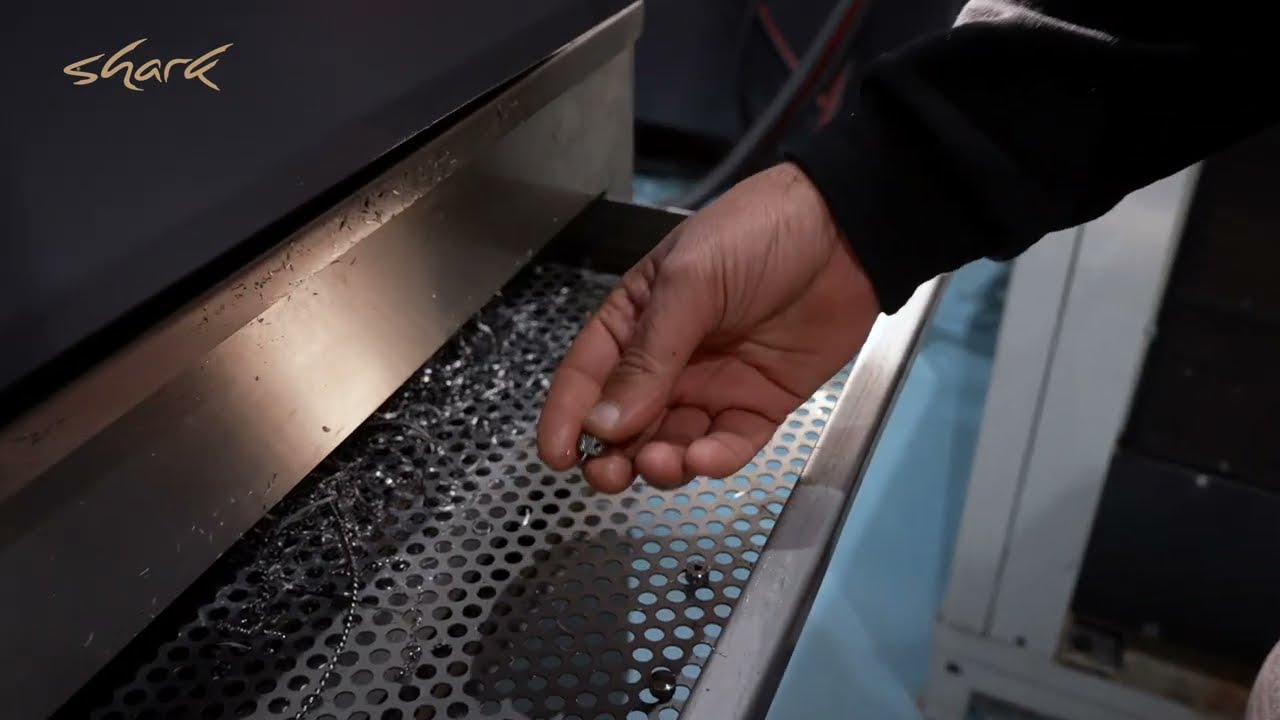
Modern CNC machining centers fabricate every titanium component to sub-0.01 mm (micrometer-level) tolerance. Because titanium does not creep, corrode, or warp, these tolerances hold permanently. The material lets us push hardware design into a new generation of stability and precision, producing components that maintain their exact specifications throughout the lifetime of the instrument. No hand-fitting, no batch variation, no degradation over time.
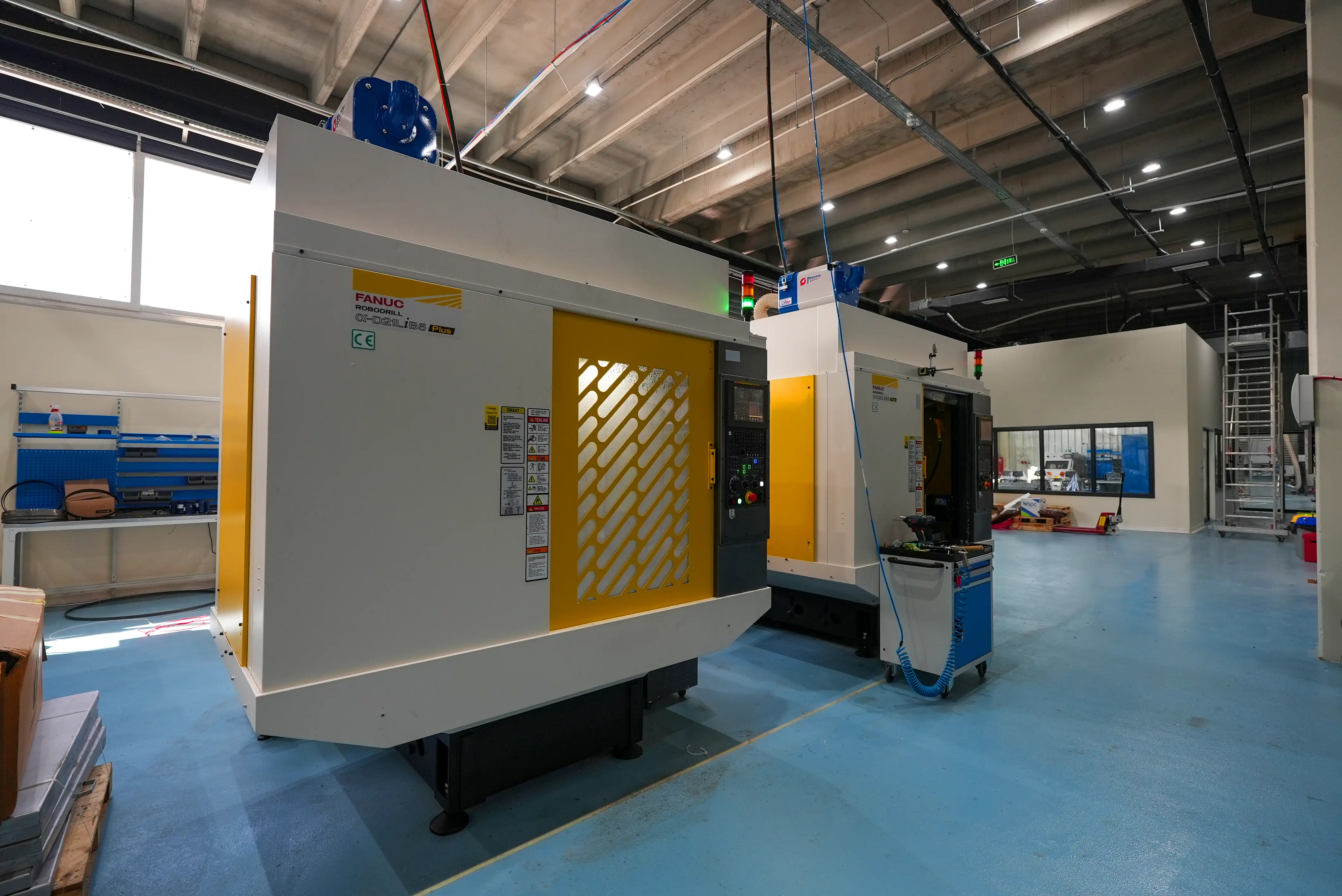
Aerospace-grade Grade 5 Ti-6Al-4V machined to sub-0.01 mm across every component: bridge, nut, T-Form Titanium Truss Rod, frets, and all hardware. Advanced tumble polishing machines prepare each part for surface finishing. The result is fully interchangeable hardware where any component fits any instrument in the platform, every time.
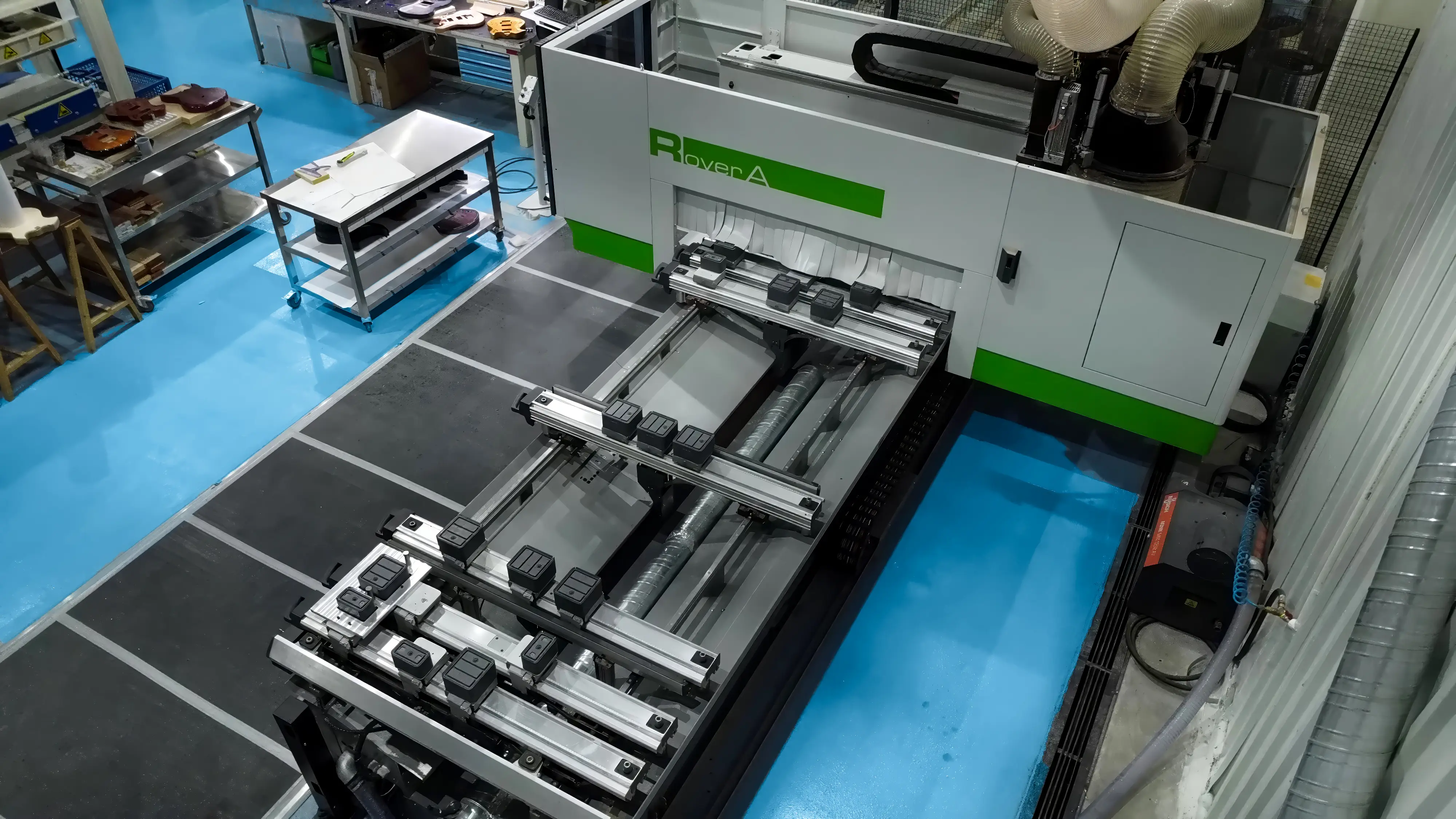
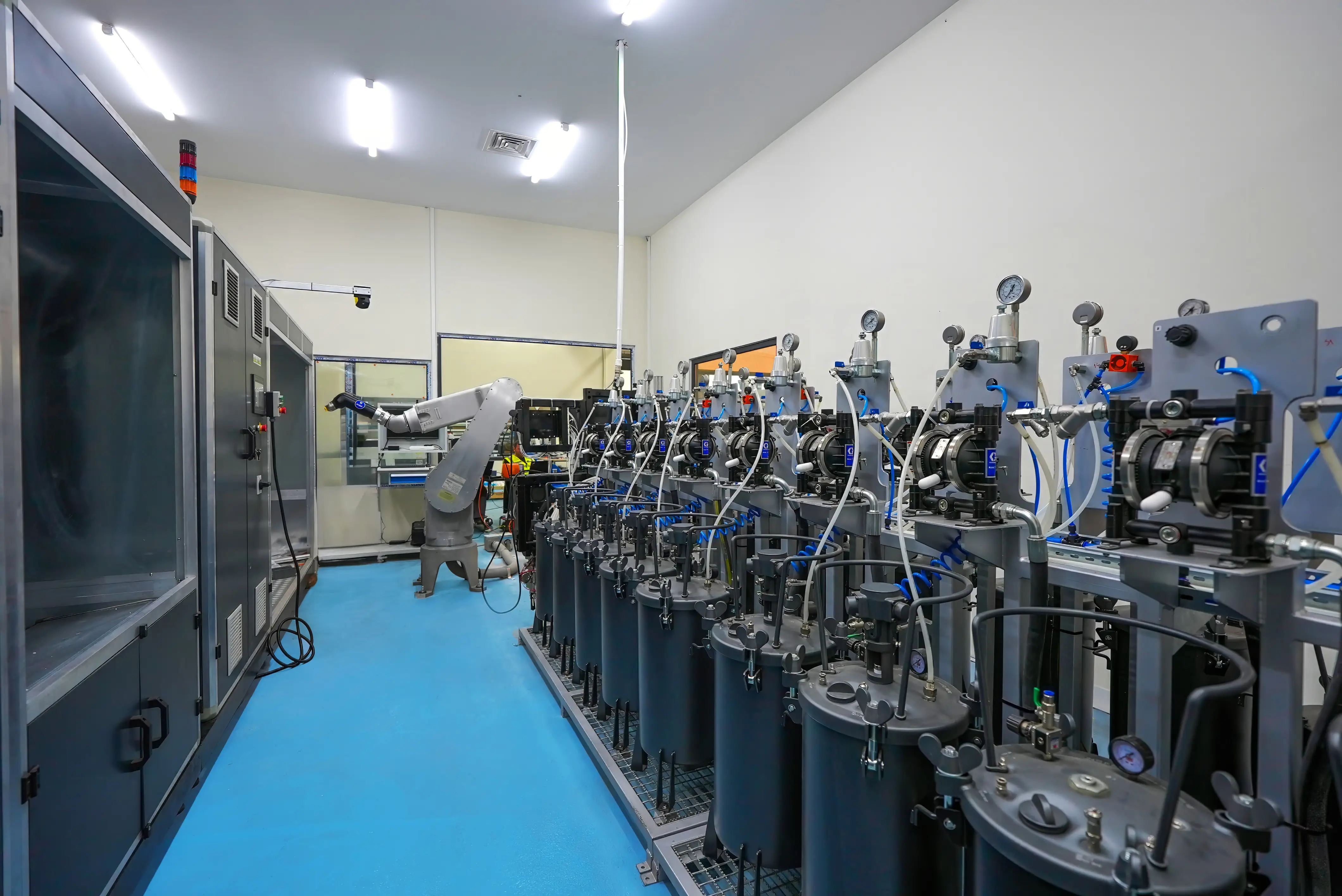
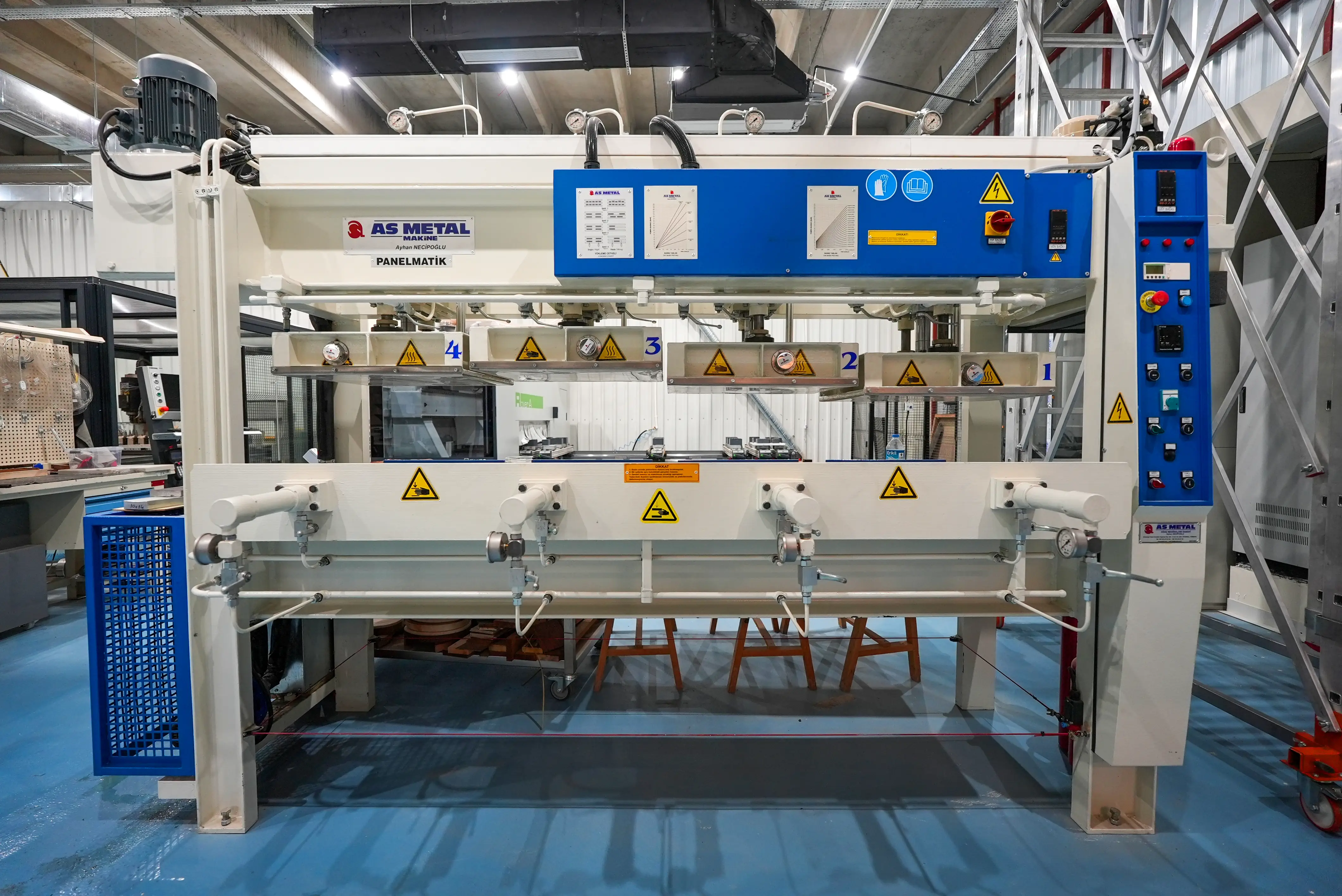
Advanced multi-axis Biesse CNC machines for precise cutting and shaping of all wooden components. Bodies, necks, and fretboards are machined to 0.1 mm tolerance. Every neck pocket, pickup route, and contour matches the specification exactly. Press equipment handles lamination for topped bodies and bookmatched wood selections.
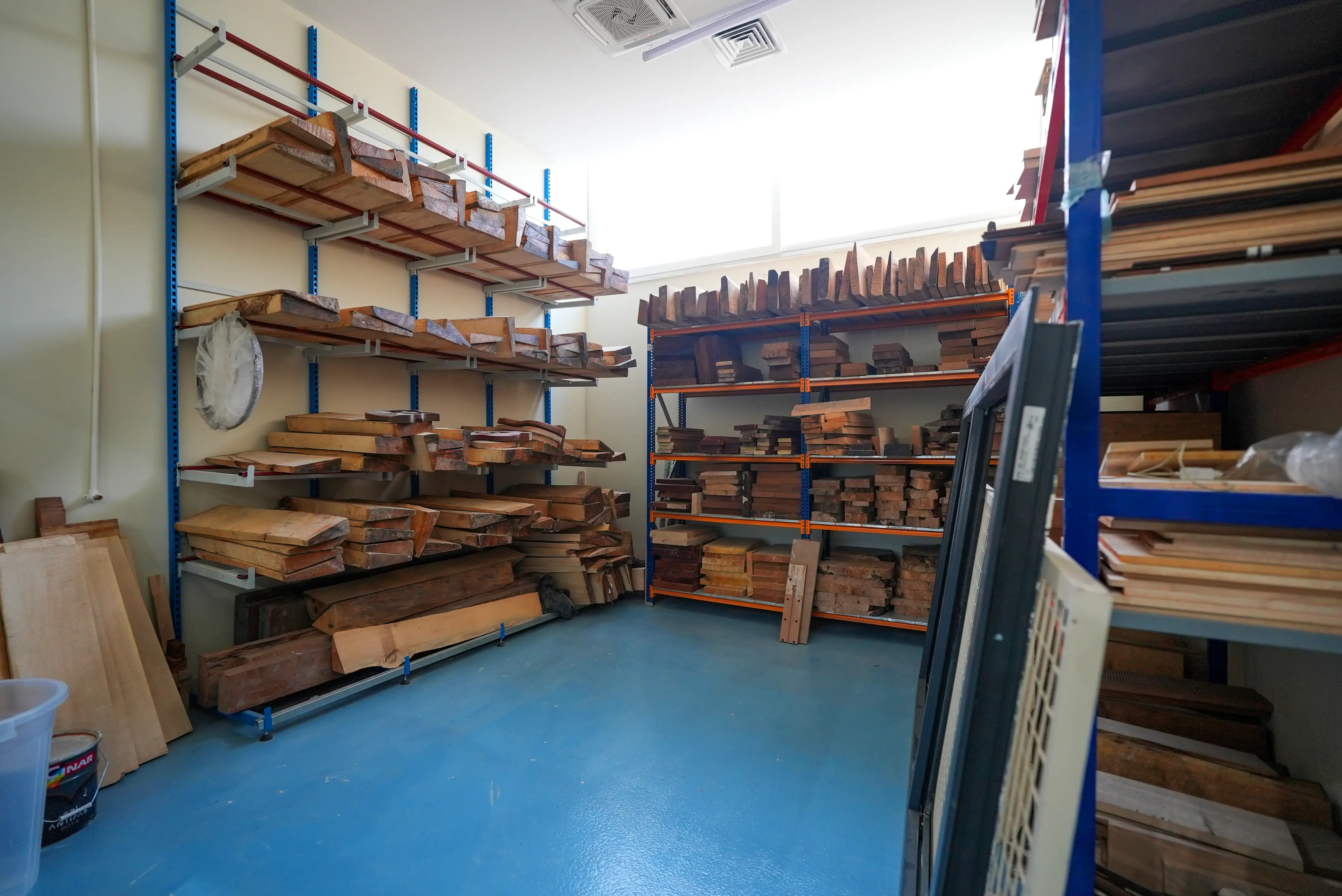
Purpose-built drying and curing ovens maintain optimal moisture content. Atmosphere-regulated stock rooms keep tonewoods stable before machining. Rigorous inspection of all tonewoods before processing ensures material consistency from intake to finished component.
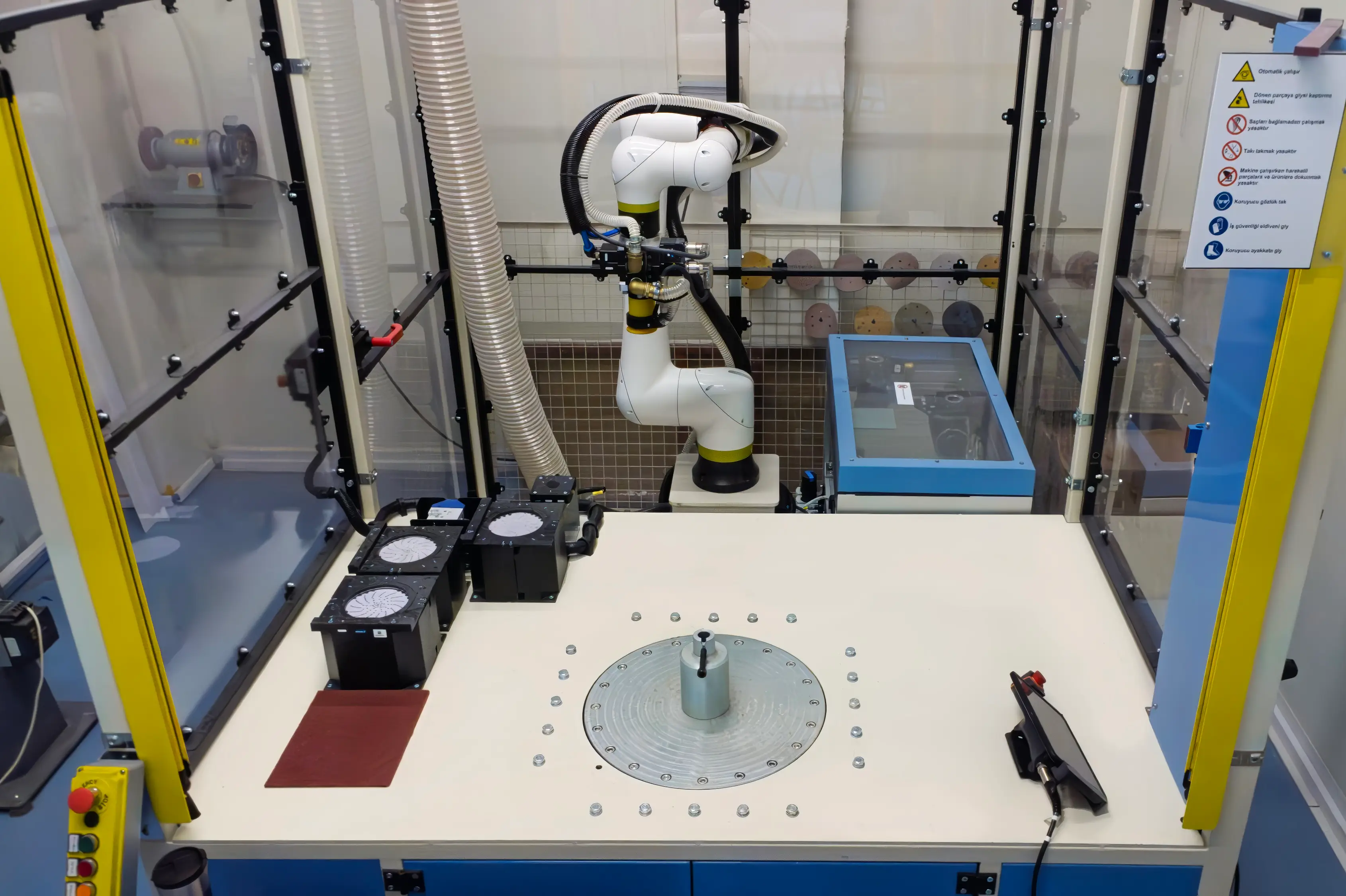
Fanuc sanding robot with highly sensitive pressure sensors. Uses lead-through programming technology: an expert luthier's hand movements are physically recorded, then combined with coded process planning to create optimized robotic routines. The robot freezes human craftsmanship into repeatable actions while refining through software. Every body receives the same master-builder quality surface preparation.
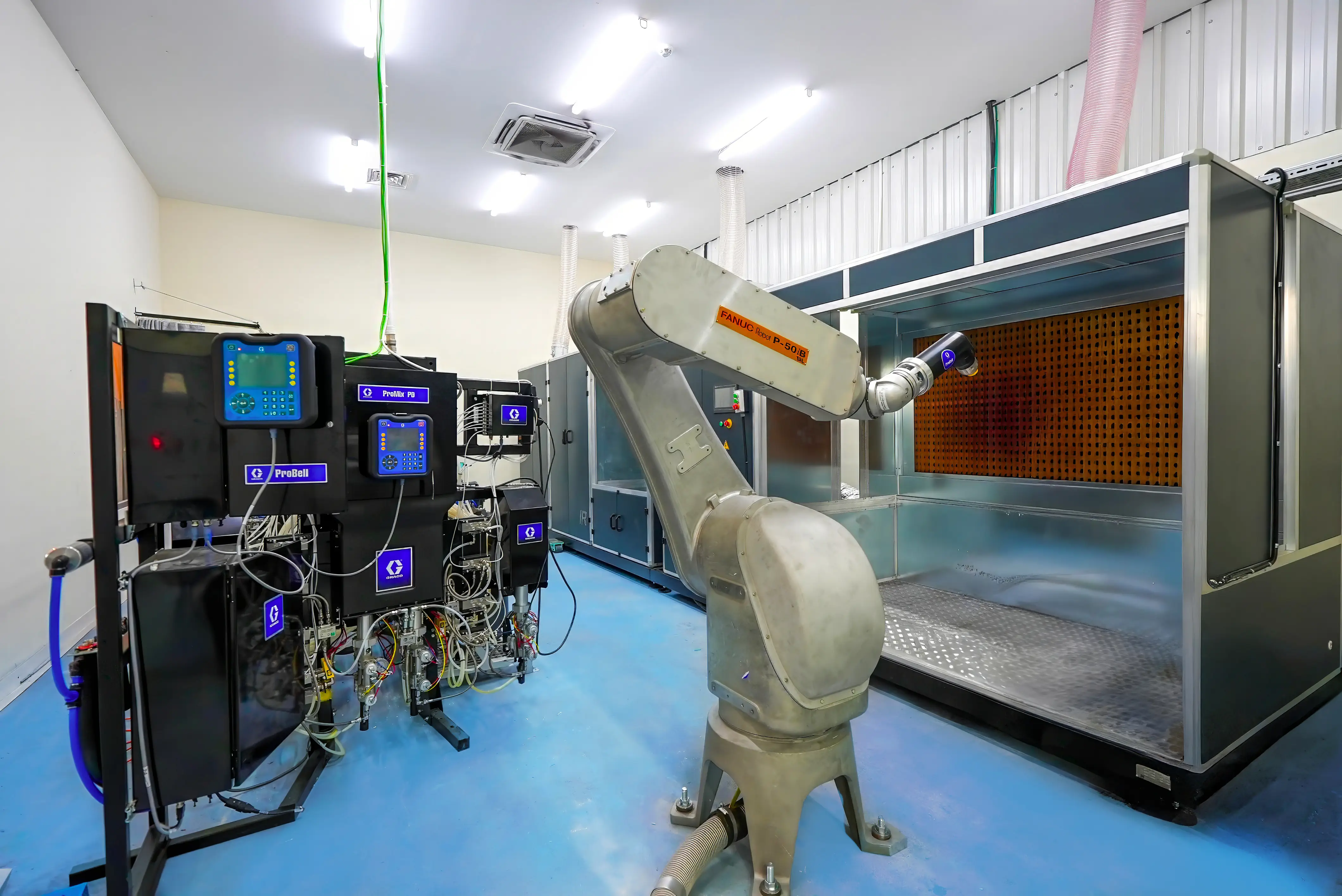
The spray painting line uses the same lead-through programming approach. Advanced diffuser nozzles and electrostatic techniques deliver professional-grade, uniform finishes on every unit. The system captures expert spray patterns and replicates them precisely, ensuring consistent coat thickness and coverage across production runs.
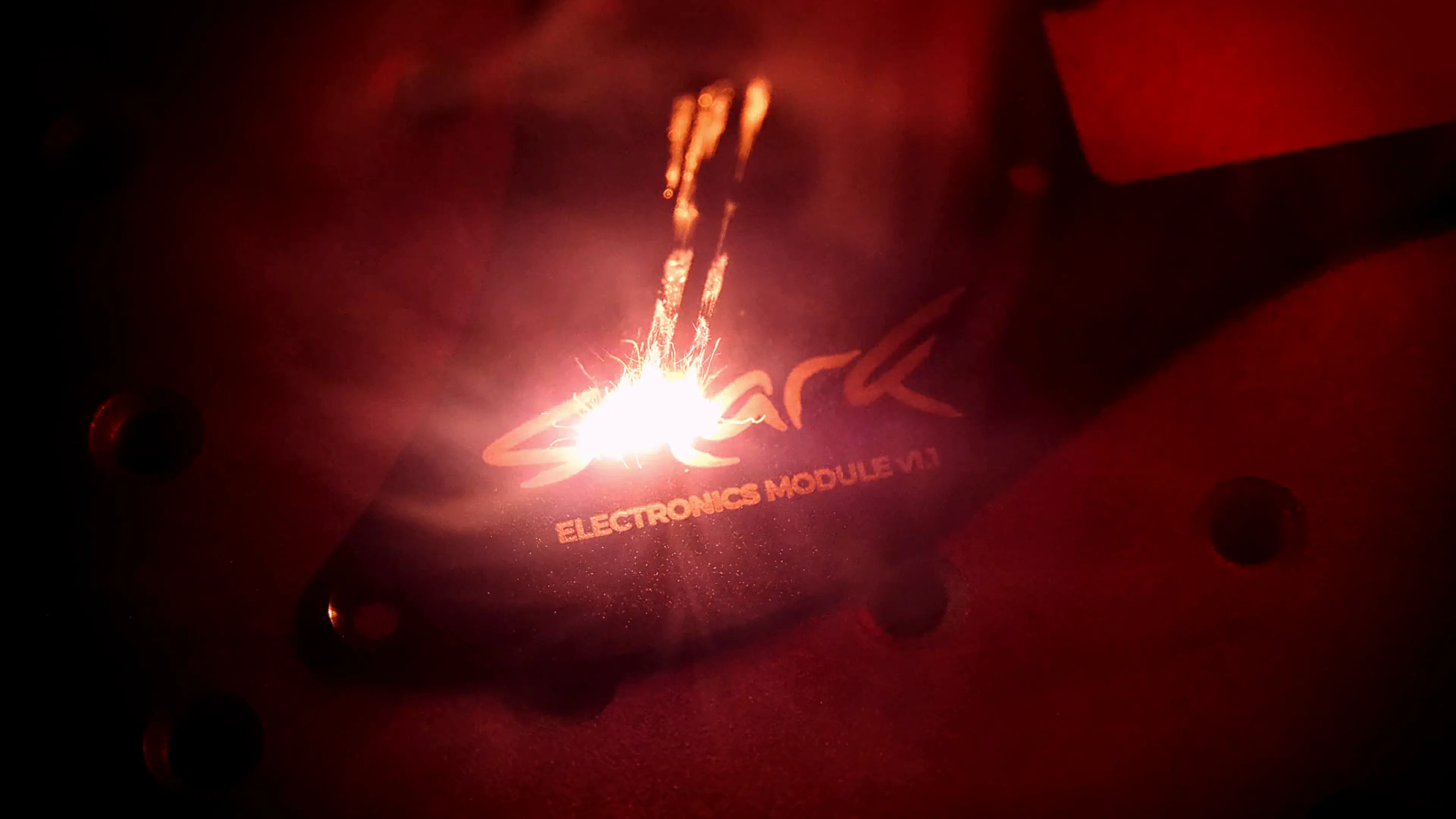
Three tiers of laser systems integrated into the production pipeline. Heavy-duty systems handle metal cutting and marking on titanium hardware. Medium-tier systems create precision wood inlays, epoxy-filled graphics, and fretboard designs. Light-tier systems manage delicate typography, serial numbers, and custom engraving on components and electronics modules.
All three tiers feed from the same ERP data, so every engraving, marking, and serial number is traceable to the specific instrument and production run.
Dedicated in-house titanium anodizing station. Type 3 anodizing produces 300+ distinct color variations. Type 2 anodizing delivers a durable matte grey finish with enhanced scratch resistance and corrosion protection. Color is integral to the titanium oxide layer, not a coating that wears off. All surface processing is performed on-site under direct quality control.
Dedicated environment for all electronic components. Prime and Supreme electronics configurations assembled and tested in-house. Every signal processing circuit and control interface is produced internally. Full functional testing on all units before integration into instruments.
The factory was designed and built from the ground up to deliver micrometer-level precision across every department. But precision manufacturing alone is only half the picture. What connects design to production is a fully integrated ERP system that eliminates the gap between what a customer specifies and what the machines execute.
When a customer finalizes a design in the Shark 3D Designer or purchases from the Shark Store, specifications feed directly into the factory's Enterprise Resource Planning system. Every parameter for a specific guitar updates automatically across all production departments. No manual reprogramming. No human error in transcription.
The exact configuration on screen becomes the exact configuration the machines execute. Wood species, neck profile, pickup configuration, bridge color, fret material, inlay design, anodization color. Every parameter flows from the digital specification directly into the CNC programs, laser settings, and anodizing parameters. Nothing lost in translation, nothing approximated.
Every unit is tracked through the full process from intake to shipping. Each component carries its production data, tolerances, and quality checkpoints. Dust and chip collection systems, precise temperature regulation, uninterruptible power supply systems, and comprehensive safety measures maintain production integrity at every stage.
The same integrated pipeline that produces Shark instruments supports OEM component orders with documented specifications and traceable production. Your order enters the ERP, machines receive programs directly, and every unit is tracked through the full process.
Eight production departments work in sequence: Woodworks, Metalworks, Metal Surface Processing, Robotic Sanding, Robotic Painting, Laser Engraving, Electronics Assembly, and Final Assembly. Each department receives its instructions from the same ERP data. The result is a vertically integrated facility where raw materials enter at one end, and finished, tested, quality-assured components leave at the other.
Ocean Environment technologies were demonstrated at NAMM 2026 to industry professionals, custom shops, and production builders. The response has been strong across every product category.
Interest has come from custom shops, production manufacturers, and extended range specialists. Professional artists have tested the system and endorsed the approach. The Adjustable Fret System generated the highest volume of inquiries - for every other product request, there is a fret system inquiry. Demand for bass, 7-string, and multiscale configurations has been consistent and clear.
Public reception on social media has been overwhelmingly positive. Across audience feedback, over 96% of responses are positive or curious. The technical community in particular has recognized that these are genuine engineering solutions, not marketing features.
We are excited about what Ocean Environment can do for your instruments and we would like to share it with you.
Request the full OEM integration package: routing files, technical drawings, sample components, and direct engineering consultation.
Interested in Shark OEM components for your instruments? Get in touch and our team will help you with specifications, available products, quantities, and integration.