
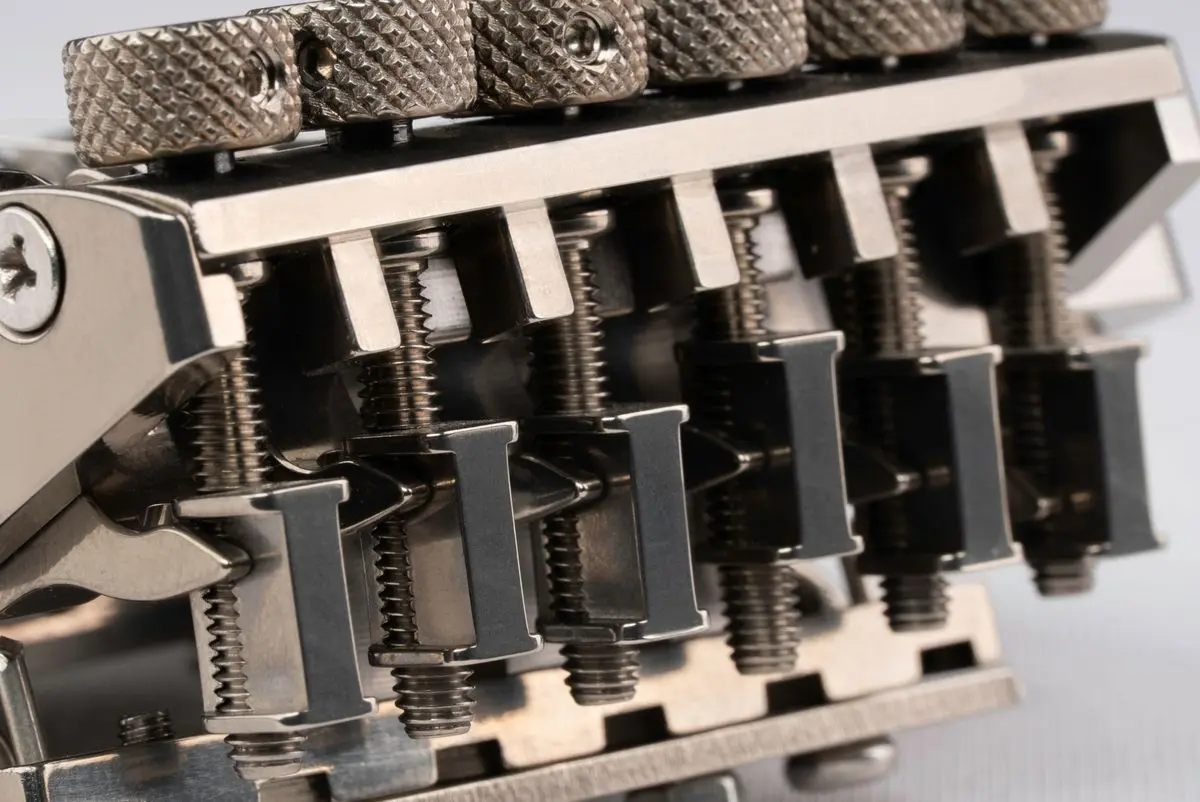
Full Range Precision Tuners
Features
Full Range Precision Tuners
On a Shark guitar, tuning happens at the bridge. Tuning knobs built into the Shark Convertible Bridge do the whole job that machine heads do on a conventional headstock.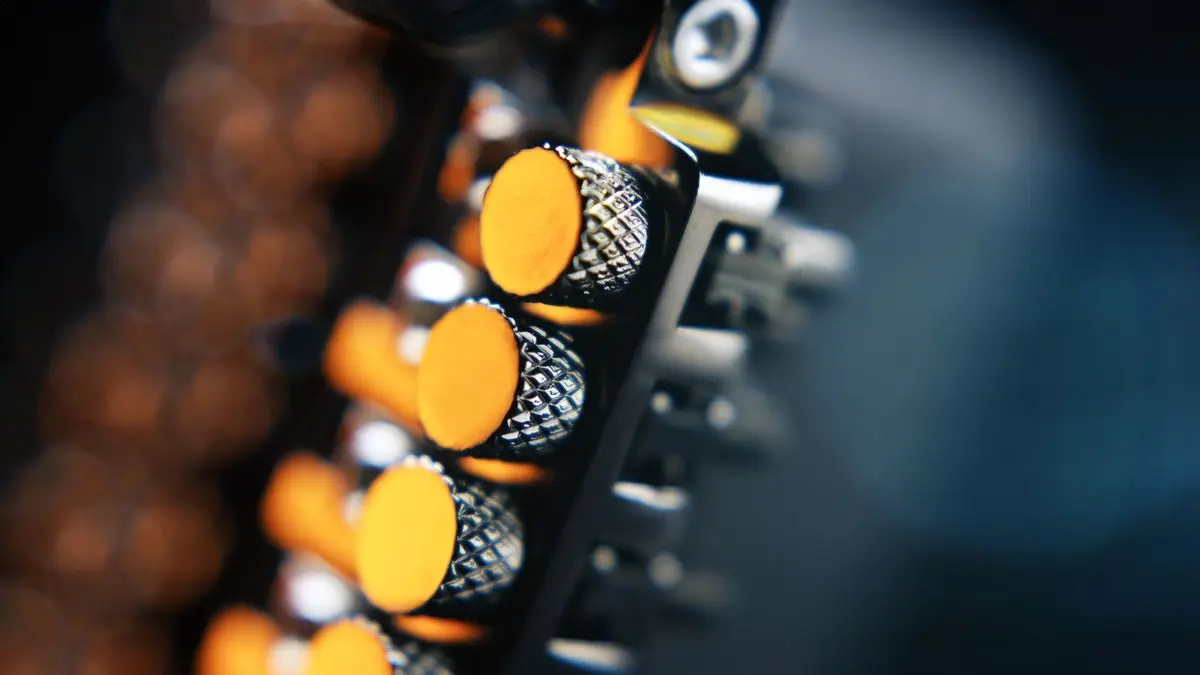
The Short Version
- Where they are: along the outer edge of the Shark Convertible Bridge, in place of machine heads.
- Full range: roughly 16 semitones per string, depending on string gauge and type. Standard, drop and open tunings are all within reach.
- Precision: fine control, and a self-locking action that holds a string at pitch.
- What they make possible: a nut designed around string action, quick neck changes and headless designs.
The rest of this is what each of those means in practice.
Tuning Where the String Is Held
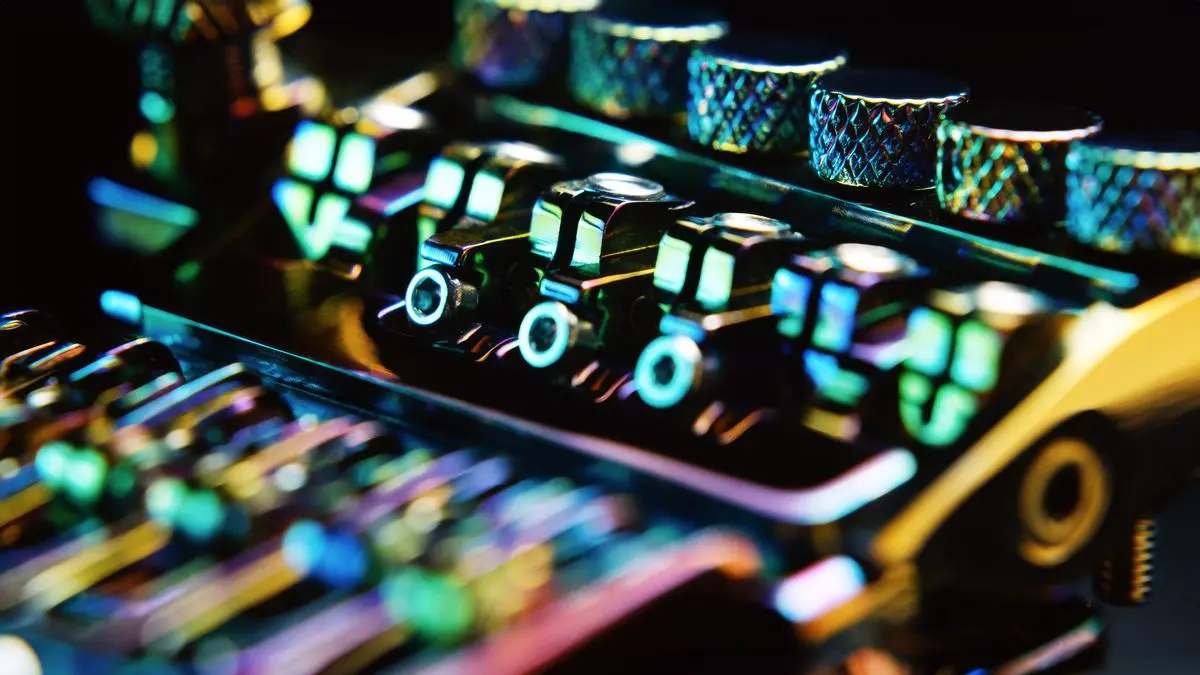
On a Shark, each string is clamped by a set screw at both ends, at the nut and at the bridge. Nothing winds around a post. You use a standard electric string set and cut the ball ends off, since the set screws do the holding.
The tuners sit at the bridge end and share one titanium structure with the string anchors. You tune right where the string is held, with no give between separate parts.
Between the two anchors, the string runs over rollers on ball bearings at the bridge. Fixed anchor points at both ends and zero friction between them are what keep the tuning stable.
What Full Range Means
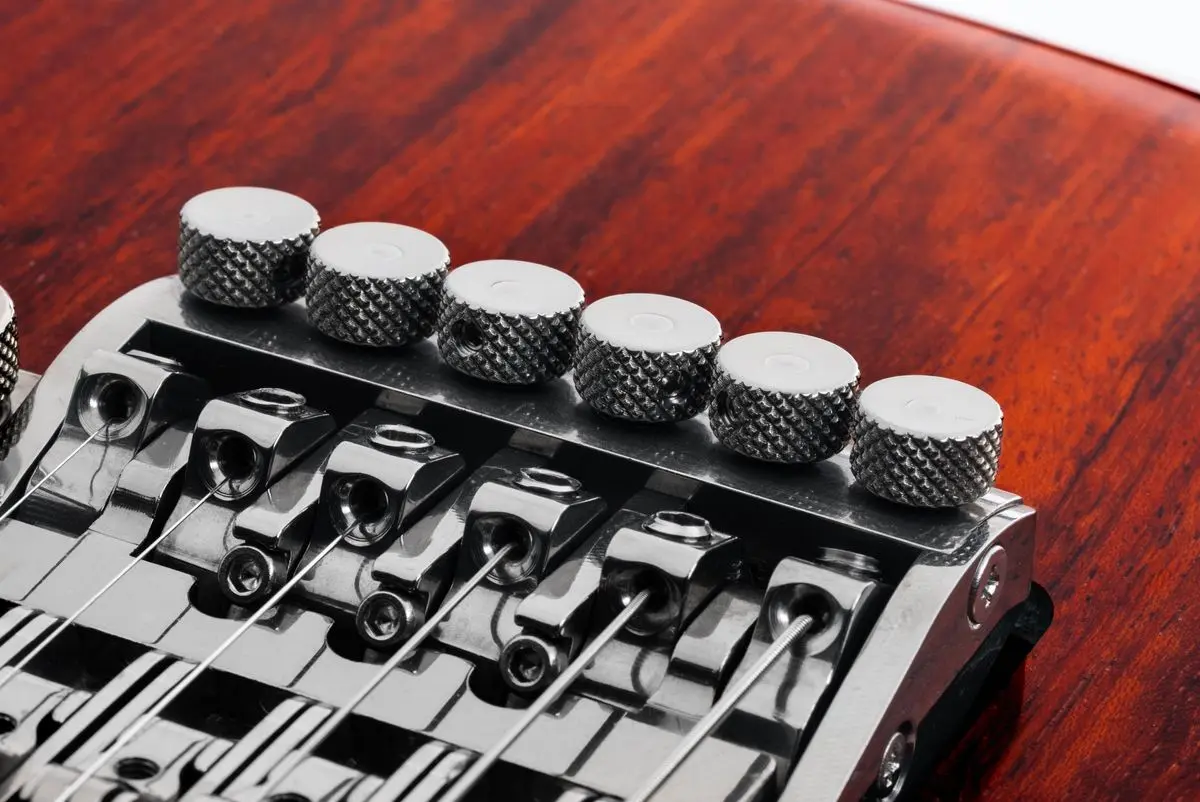
Fine tuners on a bridge are a familiar idea. They have a short reach and are there to touch up pitch after the main tuning is done.
Shark's tuners do the main tuning. Each one gives roughly 16 semitones of range, depending on string gauge and type. That covers standard tuning, a half step down, drop tunings and open tunings. Going from standard to a drop tuning takes seconds.
Every string has its own full-range tuner, so the bridge supports any combination of string pitches rather than one fixed layout.
Very low tunings still call for a heavier string set, as on any guitar.
What Precision Means
Precision here covers two things: setting pitch finely, and keeping it.
The knobs give fine, direct control over each string. Their self-locking action holds a string once it reaches pitch. In Tremolo Mode, the bridge returns to its zero point after you use the arm, so the pitch you set comes back with it.
All the tuners sit together on the bridge, in view and within easy reach. With everything in one place, you get to pitch quickly.
Like the rest of the bridge, the knobs are anodized, and their color is one of your choices in the 3D Designer.
What Tuning at the Bridge Frees Up
Taking the tuners off the headstock changes more than tuning.
The nut. With no tuning posts behind it, the nut no longer has to guide strings toward them. Shark designed it around string action instead, with its own height and intonation adjustment for every string.
The neck. The neck carries no tuning hardware, which is part of what lets it come off quickly. For a neck change, Maintenance Mode takes the tension off at the bridge, so no tuner has to be loosened. Every tuner stays where you set it. On a neck of the same scale length, the strings come back close to pitch, usually needing little or no fine tuning.
The headstock. With no tuners to carry, the headstock becomes a design choice rather than a mechanical one. A Shark can have a headed shape or go headless, and tuning works the same either way. The bridge was designed with headless builds in mind from the start.
Living With Them
Our How to Tune Your Shark Guitar guide covers tuning step by step. A few things are good to know alongside it.
- New strings stretch. Give them a few tuning passes over their first sessions while they settle.
- Staying in a drop tuning for a while? Fixed Bridge Mode keeps it simplest. The bridge is locked, so it cannot move as the tension changes. Switching back to Tremolo Mode afterwards calls for a quick touch-up.
- Restringing. Start with every tuning knob at its starting position. The new string then has the whole range ahead of it.
- A new string gauge is a setup change. The bridge springs balance against string tension, so a heavier or lighter set means resetting them to match.
On Another Guitar
The Shark Convertible Bridge is also sold on its own. Fitted to another guitar, it works with a conventional nut and headstock tuners as well. There, the integrated tuners are an option rather than a requirement.
The Bottom Line
Putting the tuners on the bridge is one decision with a long reach. Pitch is set and held where the string is anchored. The range covers the tunings you play. And the nut, the neck and the headstock are each free to do their own job.
Date Edited: 07-10-2026
Date Created: 07-10-2026
TAGSBridge