
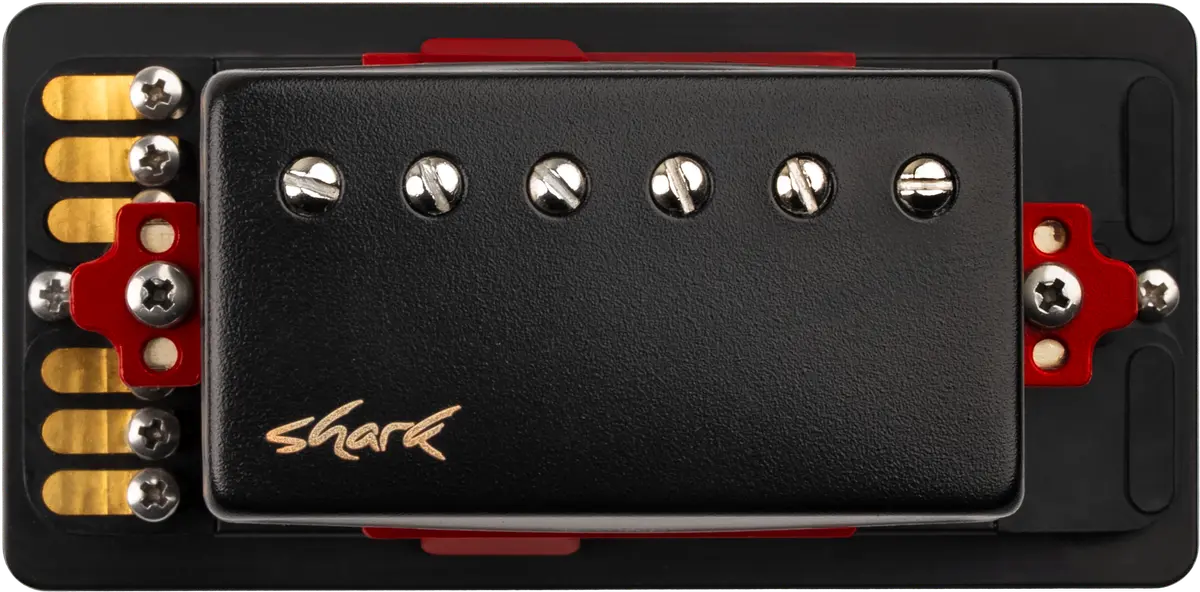
Shark Pickups
Features
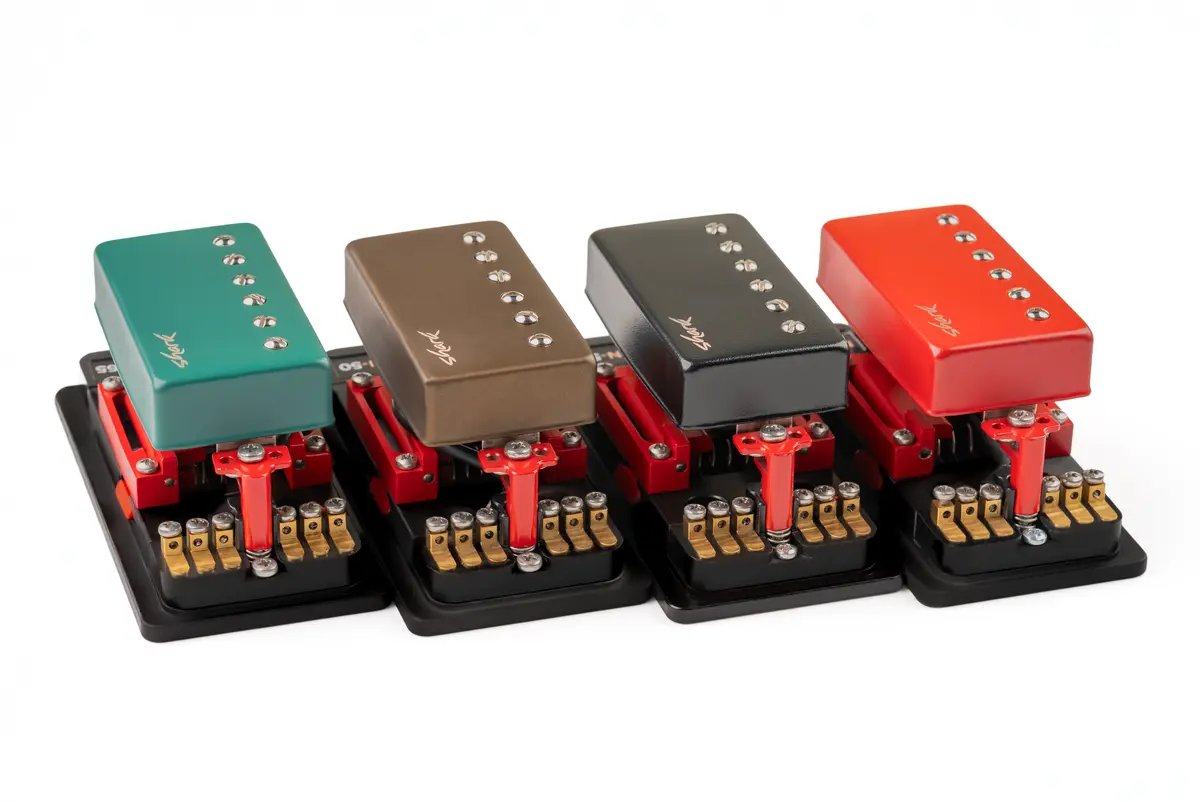 Shark makes its own range of pickups, for Shark guitars and for any other guitar. The range is organized in two ways: the series sets the character, and the output level sets how hard the pickup pushes.
Every model comes in two versions, one voiced for the neck and one for the bridge.
The Short Version
- Red Flame: Alnico V magnets. Warm, vocal and responsive to your touch.
- Blue Flame: ceramic magnets. Tight, punchy and precise.
- Anomaly: intentionally mismatched coils for a richer, more complex harmonic voice, with no cover by design.
- Active: very few windings and a differential preamp circuit, for an open sound with low noise.
- Output levels run from vintage through medium and hot to extreme.
The rest of this is how to read the range and where to start.
Red Flame and Blue Flame
Red Flame and Blue Flame are Shark’s two humbucker families. Red Flame uses Alnico V magnets, Blue Flame uses ceramic.
Red Flame (Alnico V) gives warmer, more organic lows, a vocal midrange and smoother highs. It responds strongly to how hard you pick. Under gain, notes bloom and sustain.
- Ember (vintage): balanced mids and sparkling highs, clean and articulate, with a smooth breakup.
- Flare (medium): warm and woody with balanced lows. The all-round workhorse.
- Blaze (hot): high output with vocal mids for fluid soloing.
- Inferno (extreme): the most output in the family, keeping deep lows and clear highs.
Blue Flame (ceramic) gives tighter, more controlled lows, a punchy midrange and more bite up top. Its response is more consistent. Under gain, notes pop with an immediate attack.
- Spark (vintage): a modern take on classic blues tone, clean and responsive with extra bite.
- ARC (medium): classic warmth with a ceramic edge.
- Plasma (hot): beefy mids, biting treble and a punchy low end.
- Thunderbolt (extreme): very high output with a tight, balanced tone.
Anomaly: Built Unbalanced on Purpose
A standard humbucker is balanced: its two coils match. Anomaly pickups are built with intentionally mismatched coils. The result is extra harmonic overtones and a more complex voice than a balanced humbucker gives.
- Enigma (Alnico V, hot): a hot humbucker with a shimmering layer of harmonics on top.
- Chaos (ceramic, hot): built for the most harmonic complexity in the range.
Anomaly pickups have no cover. The asymmetric coils are the design, so they stay in view, in black.
They suit progressive, ambient and experimental playing.
Active: Vector and Pulsar
The Active series takes a different route. Its coils use very few windings, and a differential preamp circuit builds and shapes the signal. The result is an open, airy sound with the low noise and consistency of active electronics, while keeping more of a passive pickup’s dynamics.
- Vector (Alnico V): open and airy, with Alnico warmth and touch response. It suits studio work and clean tones.
- Pulsar (ceramic): tight lows, punchy mids and crisp highs. It suits modern metal and precise, technical playing.
On both, the neck version adds a switchable treble control, from bright to warm. On a Shark guitar, active pickups are powered by the onboard battery, so there is nothing external to add.
What the Output Level Changes
Lower-output models keep more dynamics. They respond to your touch and clean up when you roll back the volume knob.
Higher-output models push the amp harder. They keep their clarity under heavy gain and hold together in low tunings.
Neck and Bridge
Neck and bridge pickups are chosen separately, in the 3D Designer and in the Store. You can pair Red Flame, Blue Flame and Anomaly models freely.
One useful pattern is a hotter pickup in the bridge for drive. Pair it with a lower-output neck pickup that stays clear when you play clean.
Through Shark Electronics, Shark’s humbuckers can also be split to a single-coil sound, which widens what each pickup can do.
Where to Start
If you are unsure, start with Red Flame. It is the more forgiving and familiar of the two families. As a quick rule, Red Flame is for warmth and feel, Blue Flame for tightness and precision. Both work across styles; the choice comes down to the character you prefer.
Then pick the output level by how you play: lower for dynamics and clean tones, higher for drive and heavy gain. Reach for Anomaly when you want something a standard humbucker does not give.
Your First Choice Is Not Final
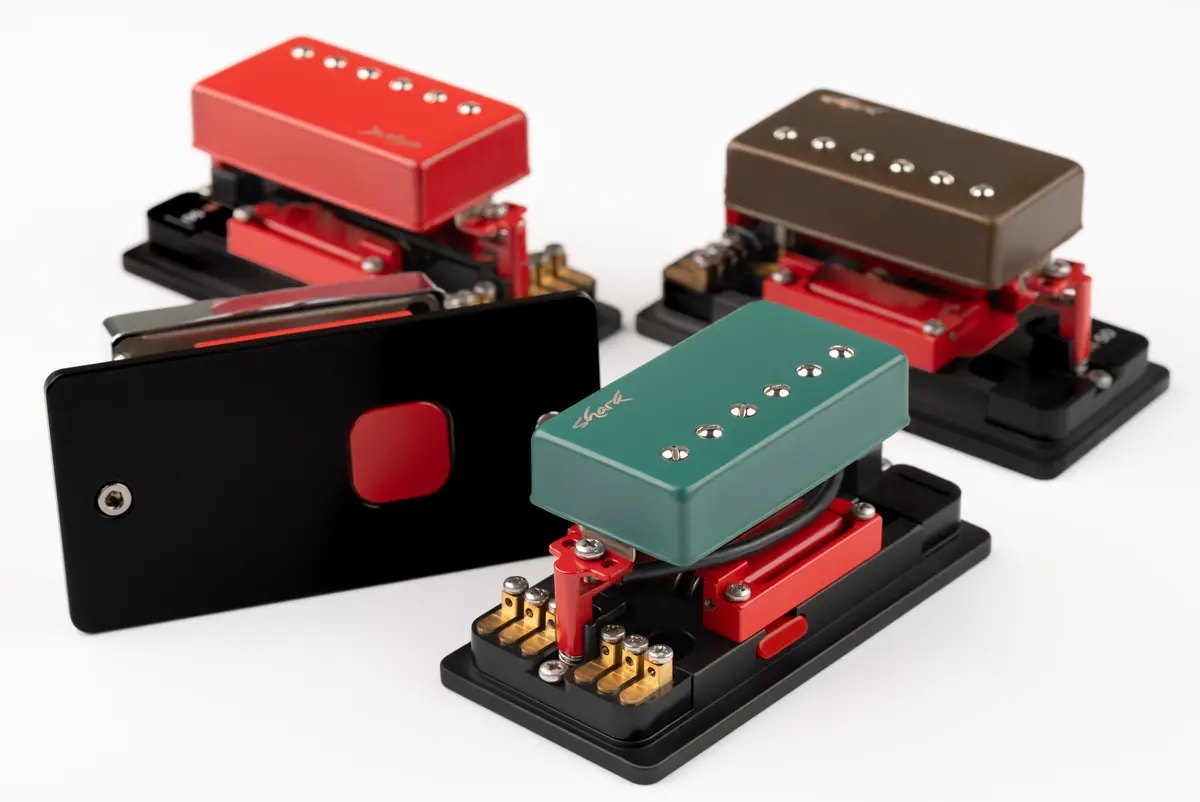 On a Shark guitar, every pickup sits on its own Shark Pickup Module, so moving to another model means changing modules, not soldering. Keep the ones you like and compare them back to back. Each module also keeps its own height setting, so a pickup comes back the way you set it.
Shark pickups are also sold on their own in the Store, with the module available separately.
The Look
Apart from Anomaly, every Shark pickup takes a cover, and you choose its color from a wide range, whether you buy the pickup on its own or build a guitar in the 3D Designer.
The titanium frame around each pickup on the body is a separate color choice.
The Bottom Line
Choose the family for its character, the output level for how you play, and each position on its own. And on a Shark guitar, every pickup sits on its own module, so the choice can grow with your playing.
Date Edited: 13-10-2026
Date Created: 13-10-2026
TAGSElectronics, Pickups