
How to: Engage Maintenance Mode on the Shark Bridge
SHARK OWNER'S GUIDE
The Shark Convertible Bridge system has three modes: tremolo, fixed-bridge, and maintenance mode.
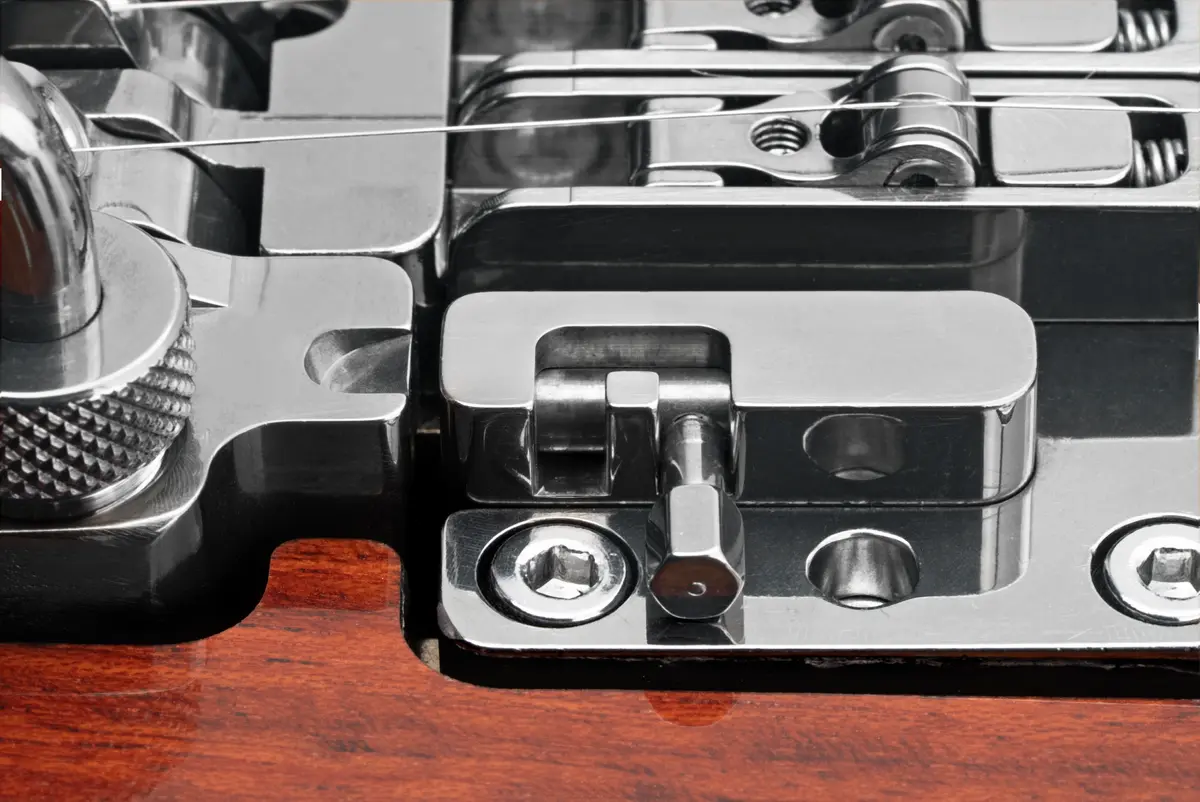
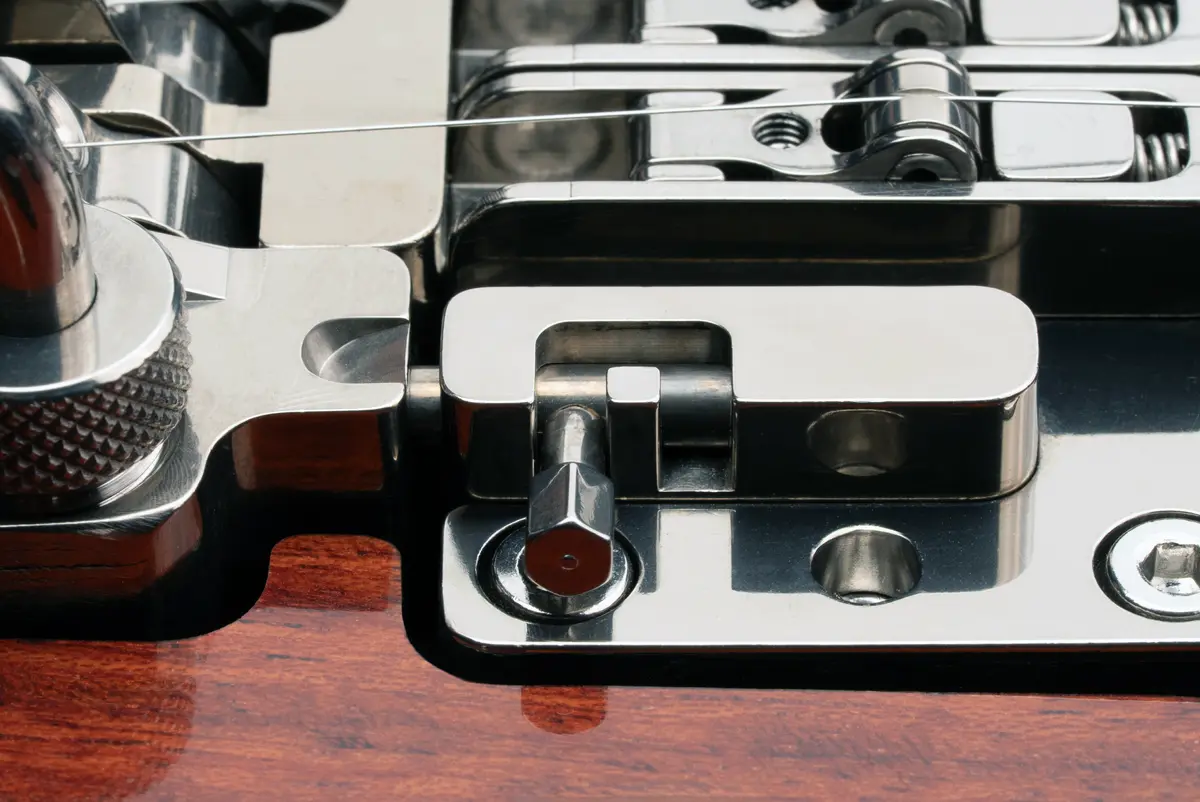
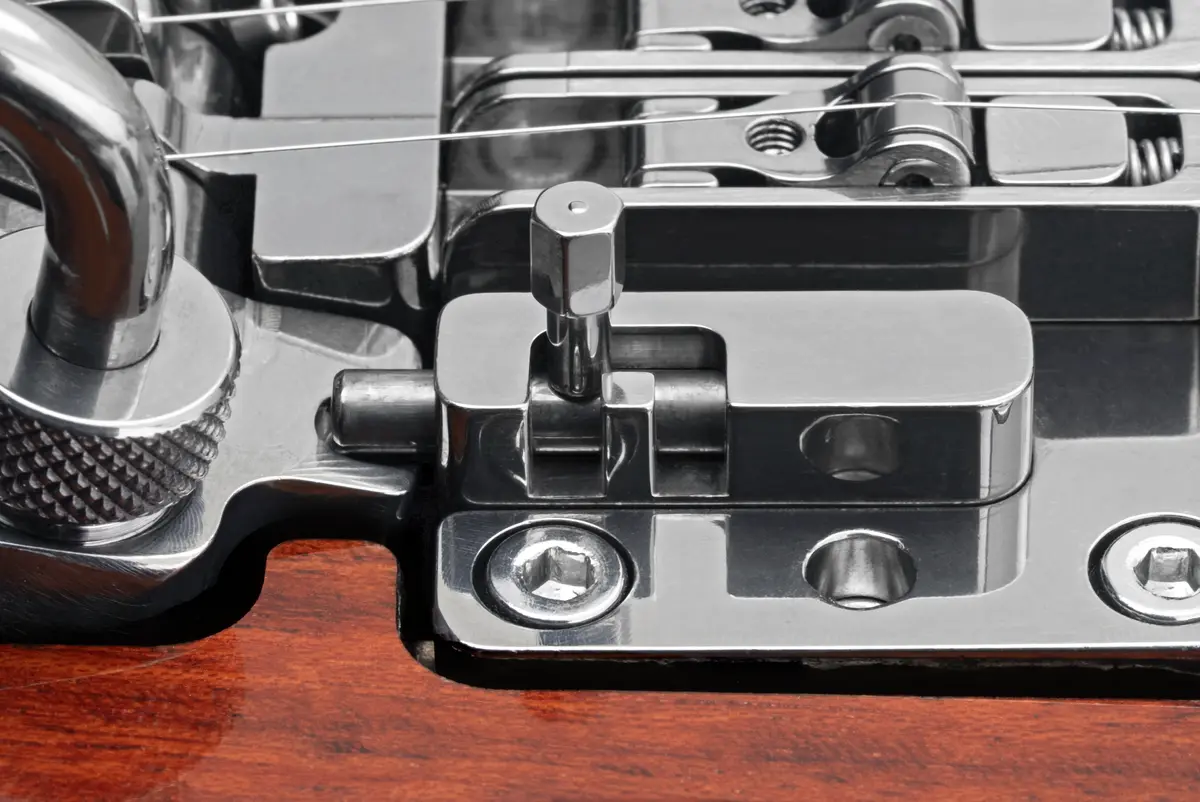
Maintenance mode is a third lock position that lets you service the guitar without removing the strings. It’s used for neck changes, travel packing, and fretboard cleaning. String tension is taken up by locking the tremolo in its maximum dive position, which leaves the strings slack while they stay attached at both ends.
All three modes are controlled through the small lock mechanism beside the saddles. The slide lock has three positions: tremolo mode (disengaged), fixed-bridge mode (lower socket), and maintenance mode (upper position, above the fixed-mode socket). The lock mechanism is spring-loaded and catches automatically when positioned correctly.
Step-by-Step Process
1. Prepare Your Workspace Place your guitar on a flat, smooth, safe surface. A padded workbench or guitar mat works well.
2. Verify Starting Mode is Tremolo Important: Always start from tremolo mode when engaging maintenance mode. If the bridge is currently in fixed-bridge mode, pull the slide lock out from its socket before proceeding. Attempting to move the tremolo arm while the lock is engaged in fixed-bridge mode risks damaging the bridge or guitar body.
3. Rotate the Tremolo Arm Rotate the tremolo arm to the opposite side of the strings; toward the outside edge of the guitar body, away from the neck. This position gives you clear working space and the correct leverage angle for the next step.
4. Lift the Tremolo Arm Gently place one hand on the guitar body to stabilize it. With your other hand, lift the tremolo arm upward toward the pickup side of the guitar. As you lift the arm, the moving section of the bridge tilts towards the pickups and takes up the string load, leaving the strings slack.
5. Engage the Lock There is a second lock groove above the lock socket for the raised position. While holding the tremolo arm lifted, slide the lock up until it catches. The lock is spring-loaded. You can give it a small flick as you lift the tremolo arm, and it will automatically click into position when the moving section reaches the correct height. You'll feel and hear the lock engage with a distinct click.
6. Verify Engagement Once locked, the strings should lose tension and you can release the whammy bar. They will feel loose but remain in position at both the nut and bridge. The bridge now holds the load that was previously carried by string tension. Test the tension while gently strumming the strings. They should be slack.
You can remove the nut (Blog), change necks (Blog), pack your guitar to fit in a backpack or luggage (blog).
Exiting Maintenance Mode
When you're done and want to return the bridge to active use, you must control the release to prevent damage:
-
Place one hand on the guitar body to stabilize it.
-
Grasp the tremolo arm with your other hand.
-
Lift the tremolo arm slightly upward to take pressure off the lock.
-
While holding the arm lifted, push the slide lock back to disengage it from the maintenance position.
-
With the lock disengaged, gently and slowly lower the tremolo arm back to its neutral position.
Critical: Do not simply disengage the lock without holding the tremolo arm. The stored tension will cause the bridge to powerfully snap back into place, potentially damaging your setup, strings, or guitar.
Once the arm is lowered, move the slide lock to either tremolo mode (fully disengaged) or fixed-bridge mode (engaged in the lower socket) depending on your playing preference. The guitar will typically return very close to pitch, provided the scale length or neck type is similar. A quick tuning pass is usually all that's needed.
Reiterating Important Safety Notes
-
Always start from tremolo mode: Do not attempt to engage maintenance mode while the bridge is in fixed-bridge mode. Pull the lock out first.
-
Control the release: When exiting maintenance mode, always hold the tremolo arm and lower it gently. Never disengage the lock without controlling the arm's descent.
-
Don't force the lock: The spring-loaded mechanism catches smoothly. If it doesn't engage, verify the tremolo section is lifted high enough and try again with a small flick motion.
Shark Convertible Bridge's locking system plays a big role in the versatility of the Ocean Environment and its ease of use. Saves on string budget, facilitates maintenance and gives you easy access to the guitar and portability.
For related information, see Shark Convertible Tremolo, Ocean Environment, How to Maintain Your Guitar blog articles.
Date Edited: 21-09-2026
Date Created: 18-12-2025
TAGSBridge, How-To