
Shark Pickup Modules
GUITAR v2.0: FEATURES
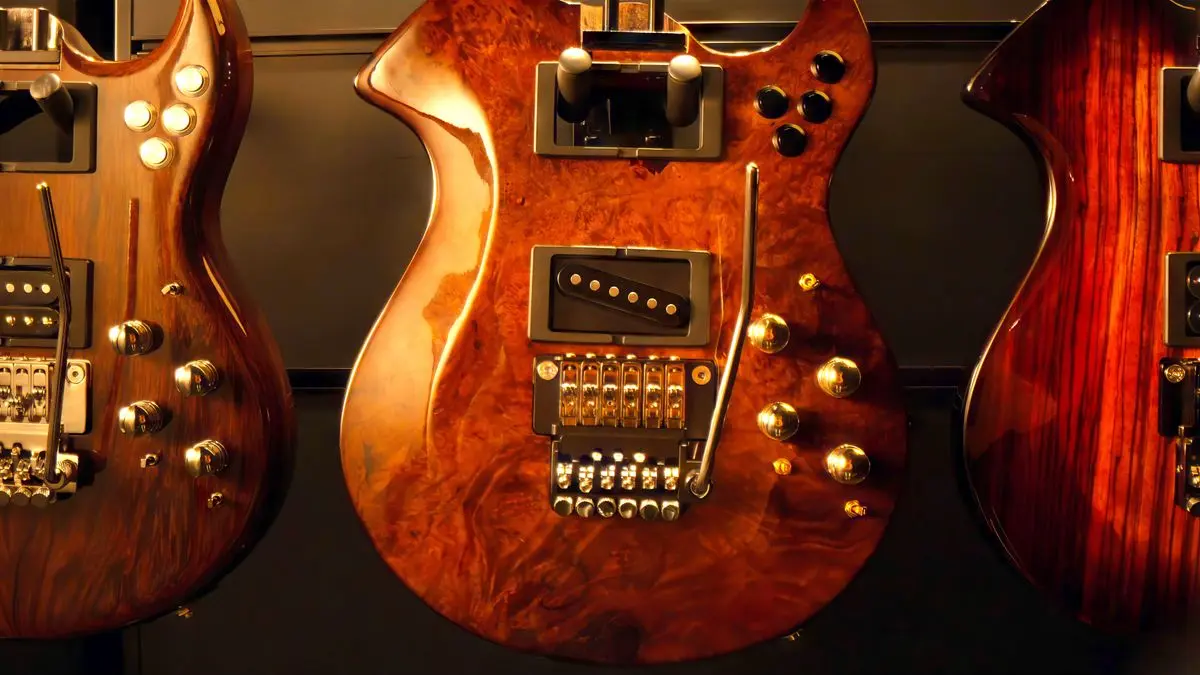
Universally Compatible Shark Pickup Frames
On a standard electric guitar, pickups are "permanent". They are soldered to a fixed harness and buried under the pickguard or finish. Swapping them means opening the guitar, heating solder joints, and hoping nothing goes wrong. It requires time, technical knowledge of electronics, and soldering tools.
A drawer of pickups stays on the shelf; impulsively bought "maybe later" pickups never leave their packages for months and years. Thinking of "should I use X pickup" always comes with a grueling soldering process.
For people who need several tone profiles in one session, there is no other choice but to pay for an additional guitar, which will also have its own static pickup combination, and the spiral continues.
Shark treats this as a long-standing design problem. A guitar should let you treat pickups like a set of sounds, not a one-time commitment. You should get the most of your tone woods and be able to craft distinct tones with just one guitar, without difficulties.
What Shark Pickup Modules Are
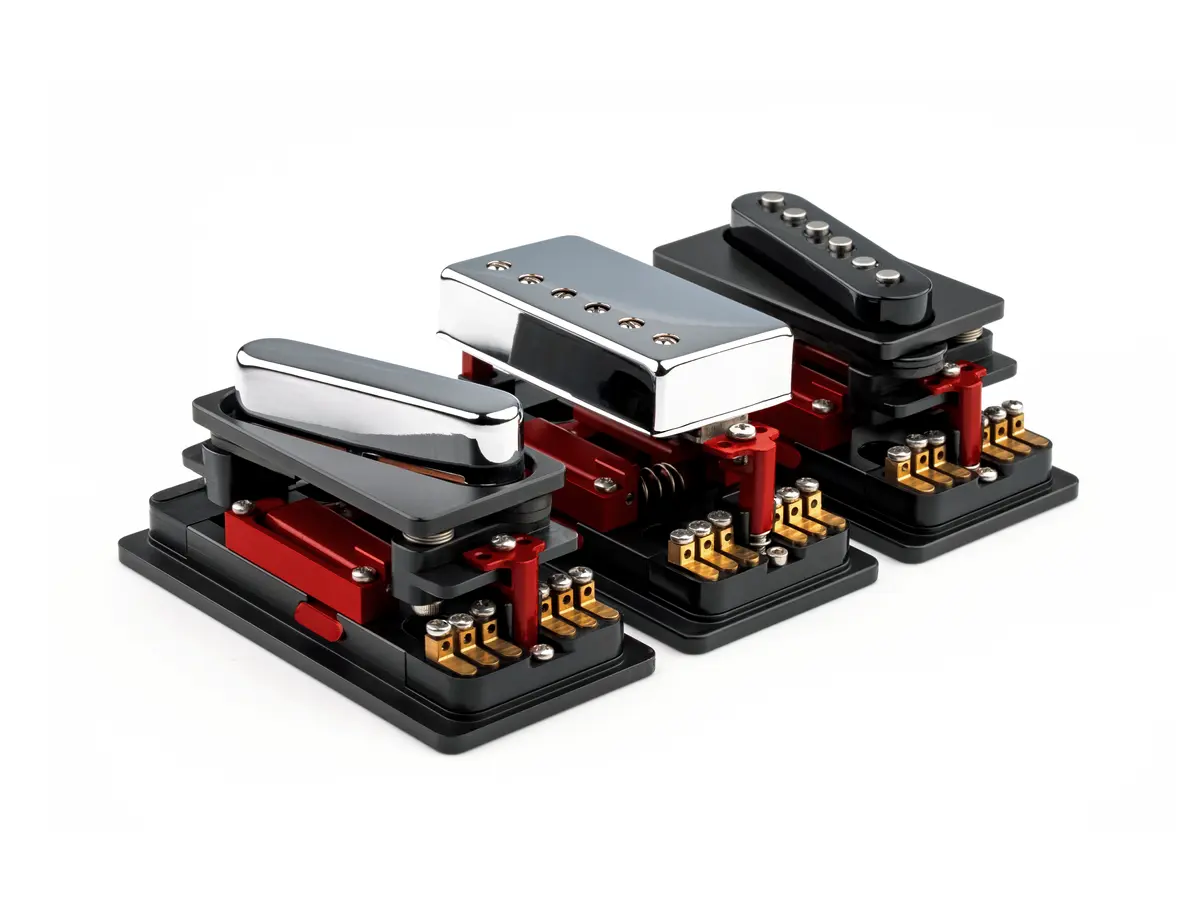
Shark Pickup Modules are universal, solder-free carriers that turn standard pickups into quick-swap modules.
Each module is a compact platform that:

-
Accepts industry-standard single coils, humbucker types, and many active pickup models.
-
Clamps the pickup in a rigid, machined housing with its own height screws and springs.
-
Provides screw terminals for hot and ground, allowing you to secure the pickup leads in seconds with no soldering.
-
Brings those connections out to a protected contact block that mates with the guitar.
-
Integrates directly with Shark Electronics for extensive tone control inside the guitar.
The pickup’s delicate coil wires stay safely inside the module. You handle only short, secured leads and mechanical screws, so the pickup can be moved, stored, and reused without ever reopening the guitar.
How Modules Attach to the Guitar

Pickup Bays on the back of the guitar are shaped around the module footprint. The same carrier fits neck and bridge positions.
To install a module, you slide it straight into the bay until it locks. Guide surfaces inside the bay align the base, and the Contact Block at the front of the module meets the matching contacts and Grounding Pads built into the bay. The pickup is physically supported and electrically connected in a single motion.
To remove a module, you press the red release button on the bottom of the module - the part that acts as the back cover of the Pickup Bay - and pull the unit out. There are no screws to undo and no wiring to disconnect.
The bottom of the module closes the cavity and shields the contacts. You can insert the module either way around to reverse pickup orientation without ever touching the wiring. You can swap pickups between songs, or even during a song if you're feeling adventurous.
Compatible With Every Pickup You Already Own
The carriers are sized and wired for the main pickup families players already use:
-
Standard, stacked, blade humbuckers
-
Strat-style single coils
-
Active pickups
That means a drawer of old favorites becomes a working library. Any pickup that fits the carrier can live on a dedicated module and go into the guitar in seconds.
One guitar can act as your main platform for whatever you play:
-
Cover a wide range of sounds without needing extra guitars.
-
Move between different projects or styles by swapping a few modules.
-
Travel with several tone options in a small case or backpack, still using the same guitar.
Swap To Any Pickup, Within Seconds
Pickup changes become part of normal use, not a "modification session."
Pickups are mounted to the modules once using the standard tools that ship with the guitar: 2 universal allen keys and a screwdriver. After that, there is no soldering and no taping exposed wires when you change sounds.
Modules slide out and in with a click, so you can:
-
Load different pickup sets and compare them back-to-back.
-
Keep pre-installed modules as your own pickup library to make use of all of your pickups.
-
Adjust pickup height for each module with an allen key to match output and feel.
This works well for producers, session players, touring musicians, and tone-focused players who want options without downtime. The time and commitment cost of a pickup swap drops to seconds and is fully reversible: press the release, put a different module in, and you are back to playing.
The guitar’s body, finish, and main wiring never see heat or repeated disassembly. Only the pickup bay and modules move, and they are built for that job.
Unprecedented Tone Control
Because Shark Pickup Modules plug into the Shark Electronics module, the guitar can adapt to each pickup set instead of forcing one fixed circuit on all of them.
Inside the guitar, Shark Electronics:

-
Recognizes whether a module carries a humbucker or a single coil and, when both types are on the guitar, keeps their loudness in the same range with zero compromise on the pickup's character.
-
Lets you choose capacitor and resistor options directly from the back of the guitar, allowing you to set how the volume and tone knobs respond for that pickup set using Shark’s tone-capping system.
-
Sits inside a shielded, Faraday cage enclosure that keeps noise and hum low, even with high-gain sounds.
You can treat a low-output single coil and a higher-output humbucker on the same guitar without sudden volume jumps when you switch between them, and you decide how the controls feel under your hand. The shielding and grounding layout keep the signal quiet, so the pickup character is heard rather than the noise around it.
For a deeper look at Shark Electronics, see the dedicated article.
Shark Pickup Module Gives You The Freedom To Choose
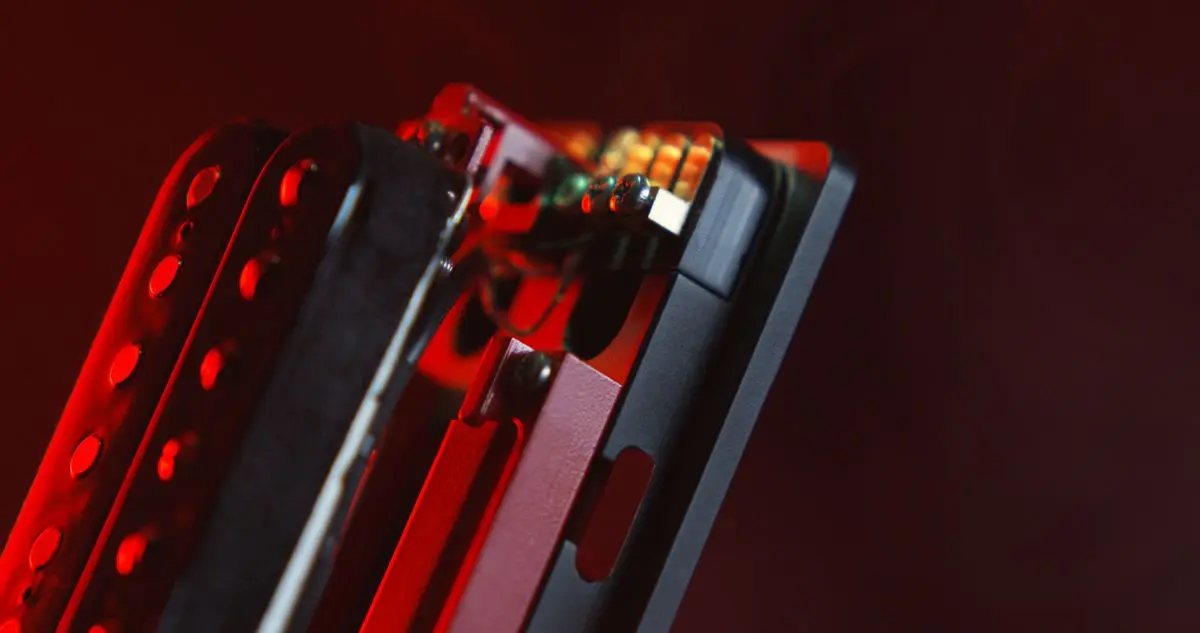
Most "interchangeable" pickup concepts are closed systems. They work with fixed cassettes or a small set of approved units, meaning you end up swapping between a handful of factory options. Your own pickups stay in a drawer.
Shark does the opposite. The guitar gives you a robust mechanical and electronic platform and lets you decide what lives on it. You can load Shark’s own powerful, punchy, rich Shark Pickups collection or any industry pickup you already love, mount each one on a module, and treat them all as part of the same library.
Your Shark guitar becomes the place where all of those sounds meet. No soldering, no routing, no second body needed.
Any constraint gets out of the way and lets you be as strict or as experimental as you want with tone.
That freedom is the point. Shark does not sell you a closed cassette; it gives you a way to use every pickup you own on the guitar you actually want to play.
Date Edited: 23-12-2025
Date Created: 02-12-2025
TAGSPickups