
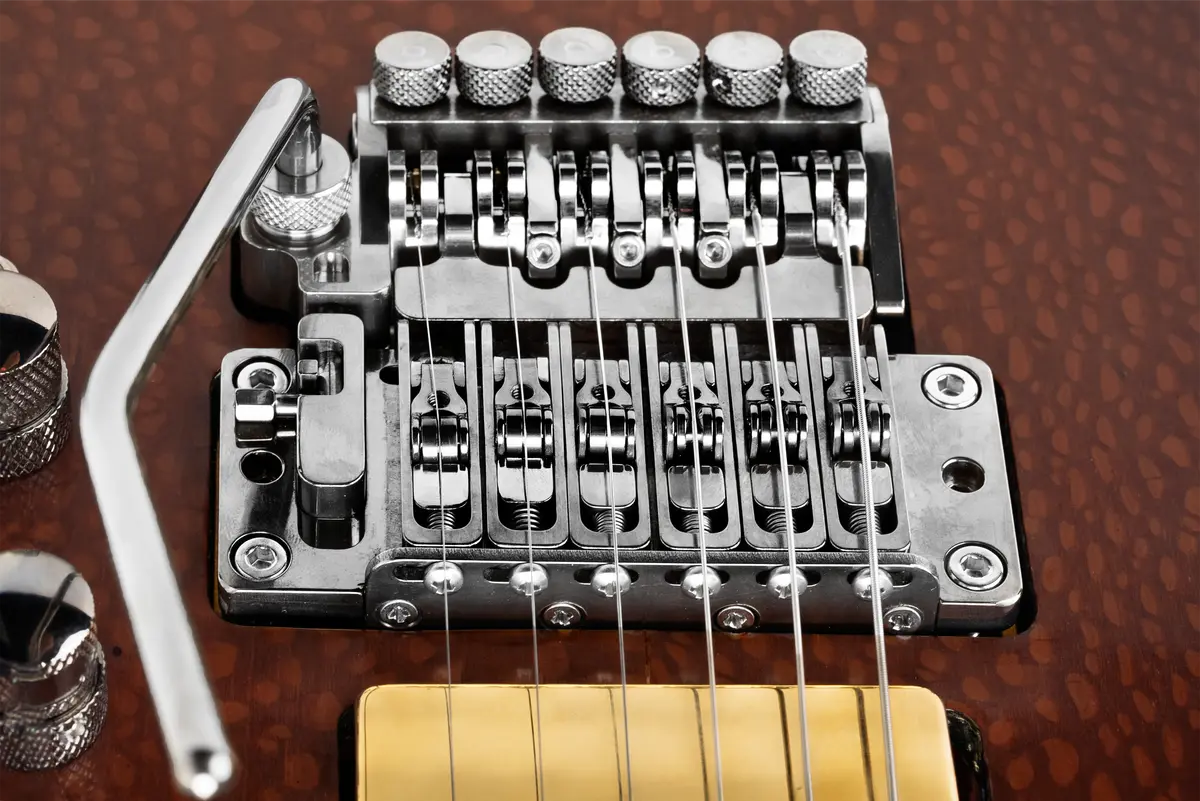
Shark Tremolo-Bridge
GUITAR v2.0: FEATURES
Ending a 70-Year Problem in Tremolo Design
Electric guitars with tremolo systems have always carried some degree of instability. Players learned to live with it and treated the flaw as part of the instrument. Many designs tried to soften the problem and pushed the classic layout as far as it could go, but the tradeoff stayed the same: if you wanted a tremolo, you accepted some instability.
Not anymore.
Shark removes that tradeoff entirely. It brings a perfected tremolo design with the stability of a fixed bridge with zero compromise.
This article looks at the Shark Tremolo in detail and what it actually changes for tremolo-equipped guitars.
Introducing Shark Convertible Bridge
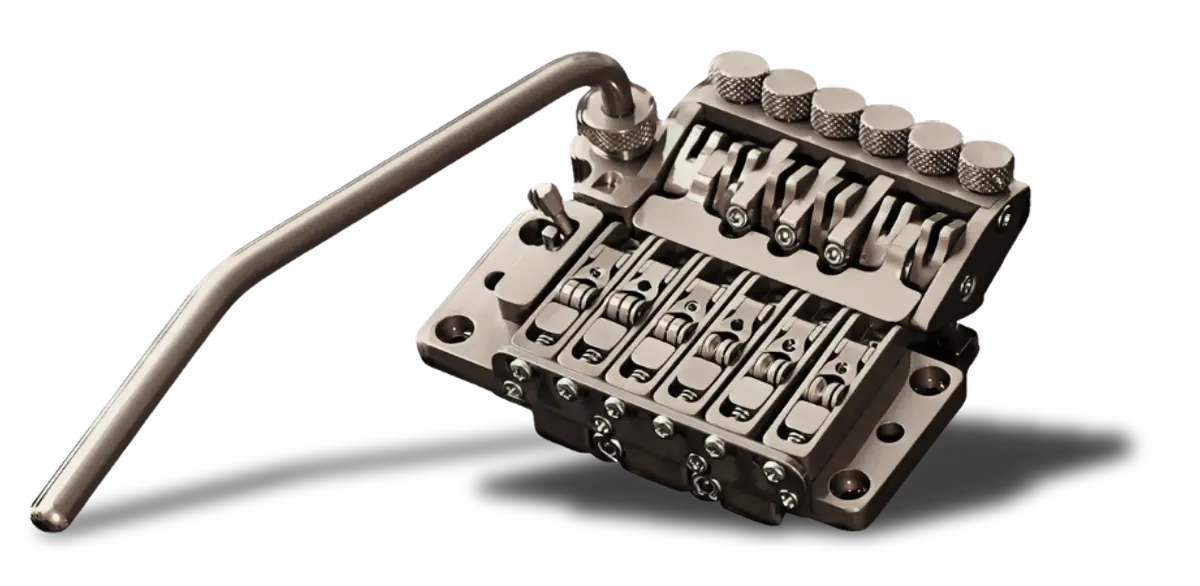
Shark Convertible Bridge is a multi-function, linear tremolo system with fixed-bridge stability, built entirely from aerospace-grade titanium.
It can be toggled between an active tremolo and a true fixed bridge, with full range precision locking tuners.
In design terms, it features:
-
100% Titanium, precision machined
-
Two-section linear design: fixed string bed with a pivoting rear section
-
No-friction micro-rollers under the strings
-
Full-range, self-locking precision tuners at the outer edge of the bridge
-
Three-axis string action adjustment (height, intonation, spacing) from both tremolo and nut
-
A fixed-bridge / tremolo slider that locks the system on demand
The rest of this article walks through what those choices mean in practice.
The Big Solution
Most tremolo bridges share the same behavior. The whole bridge rotates as one piece, the strings ride on that moving plate, and everything sits in a balance between string tension and springs.
In practice this means: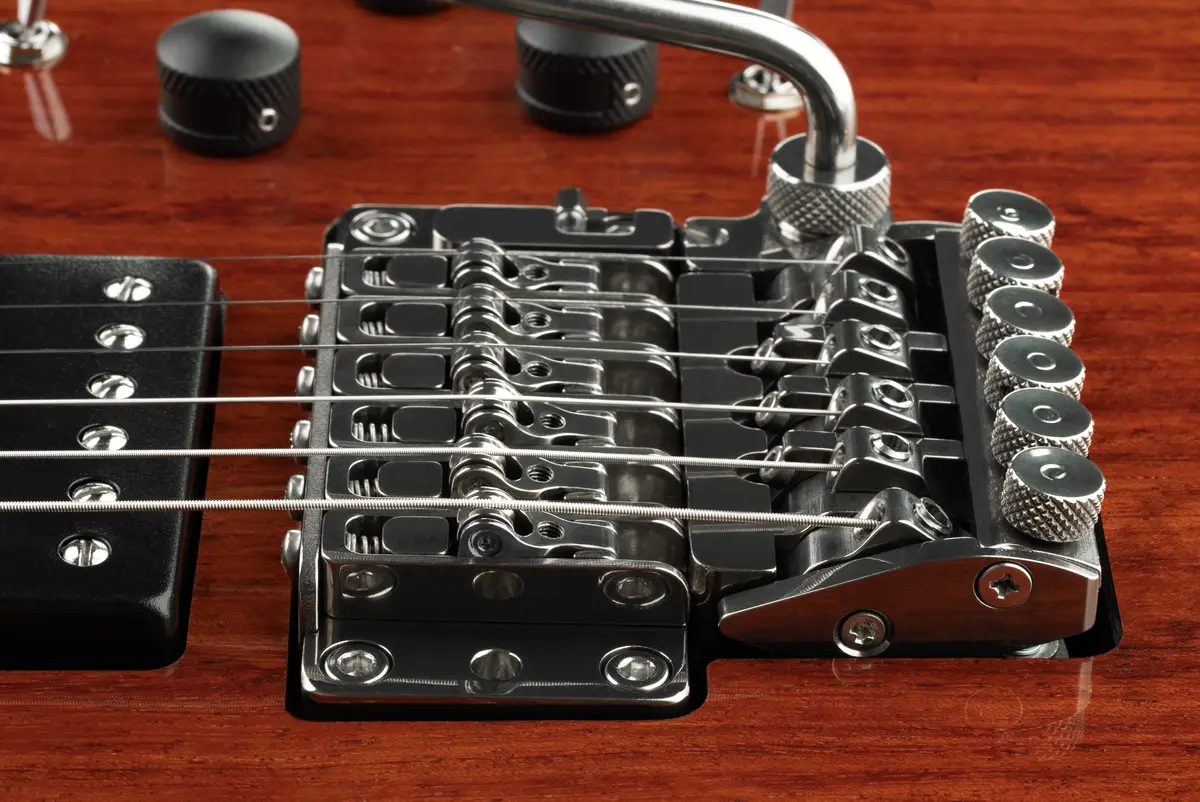
-
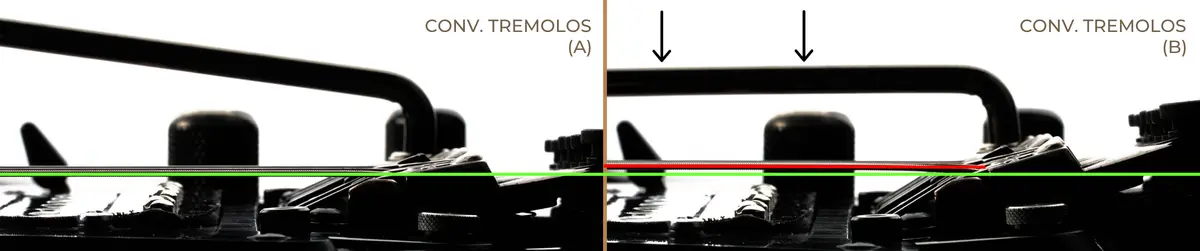
When you press the bar, the saddles move in an arc and the string line tilts.
-
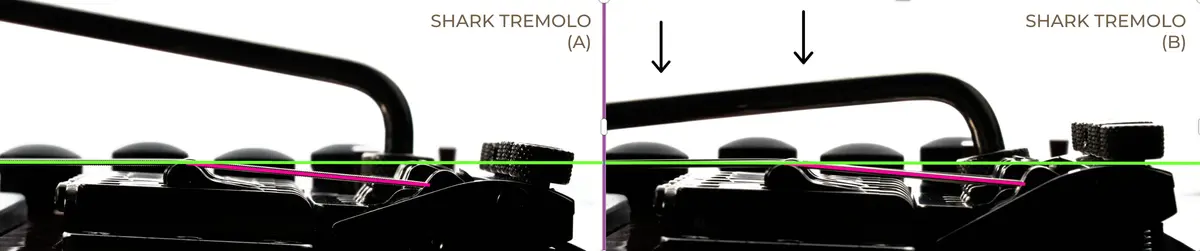
If you compare the string line at rest to the line under action, it sits higher - this is string lift.
-
String lift shifts the effective contact point at the bridge and starts to drift the intonation.
-
After heavy use in a song - deep dives, wide flutters, big pitch swings - the bridge often settles in a slightly different place, so you re-tune before the next song.
Shark Bridge is built to remove both the lift and the drift.
The strings sit on a fixed roller string bed at the front, with a separate linear tremolo and tuning section behind it. When you use the bar, only that rear section moves, so the physical line of the strings stays on the same height plane. The string bed never lifts with the tremolo section, so string height and the bridge scale point stay where they were, even under extreme use.
On top of that, the drive between the arm and the moving section is one-way. The arm can move the tremolo section, but the strings cannot pull it back the other way. From the strings’ point of view, the bridge is a solid reference. It only behaves like a tremolo bridge while you are actually moving the arm; as soon as you let go, it returns to its reference point and stays there.
For the player, this translates to:
-
Bending one string hard does not drag the bridge or pull the other strings out of tune.
-
The extra tension is taken up in the bent string against a fixed string bed, not by tilting the whole bridge.
-
Even after heavy tremolo use in a song, the system comes back to the same zero instead of “resetting” the tuning across the set.
Green line - initial string height (reference). Red line - conventional tremolo string line under action (string lift and intonation loss). Purple line - Shark Tremolo string line under action, staying on the reference height (no lift, tuning remains stable).
Zero Friction
On the string bed, each string rests on micro-rollers built on mini ball bearings. There is effectively no sliding friction at that contact point.
This has three direct results: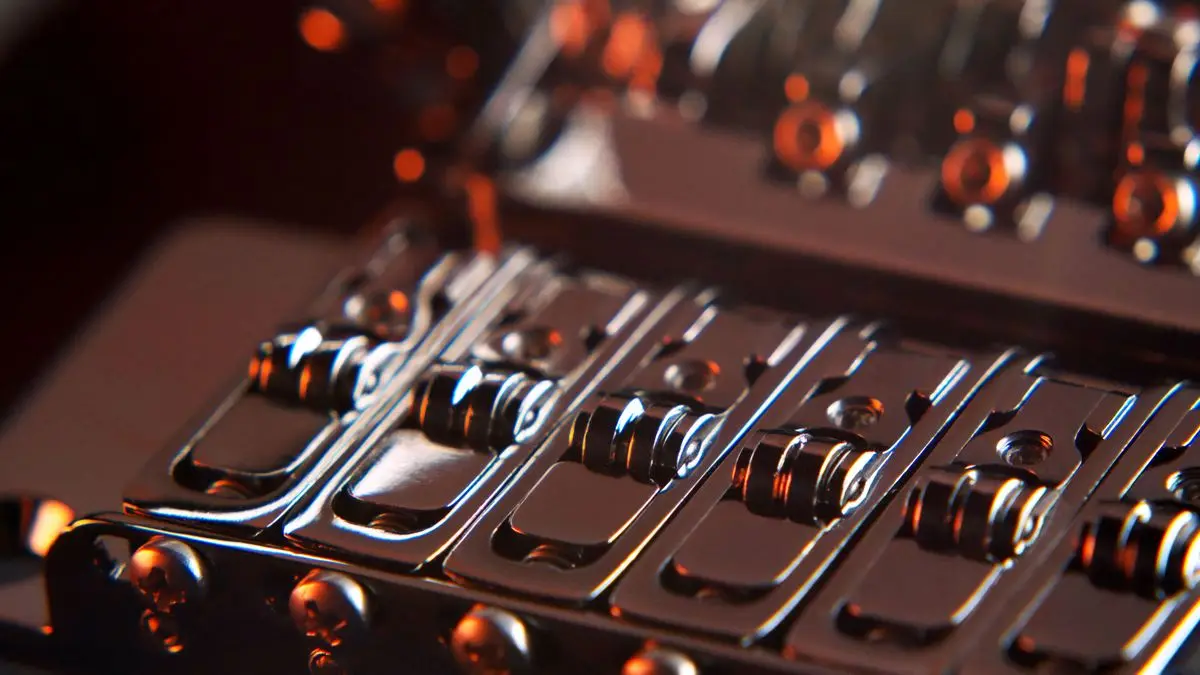
-
The tremolo moves without "grabbing" the strings or dragging them across a hard edge.
-
Wear and tear at the bridge side is greatly reduced, which supports string longevity.
-
Tuning drag at the bridge side is removed, so the system comes back to its reference point more reliably after tremolo use.
The rollers make the mechanical side almost invisible to the player. The bar feels smooth, with no sticking points.
Most Responsive Tremolo Arm to Date
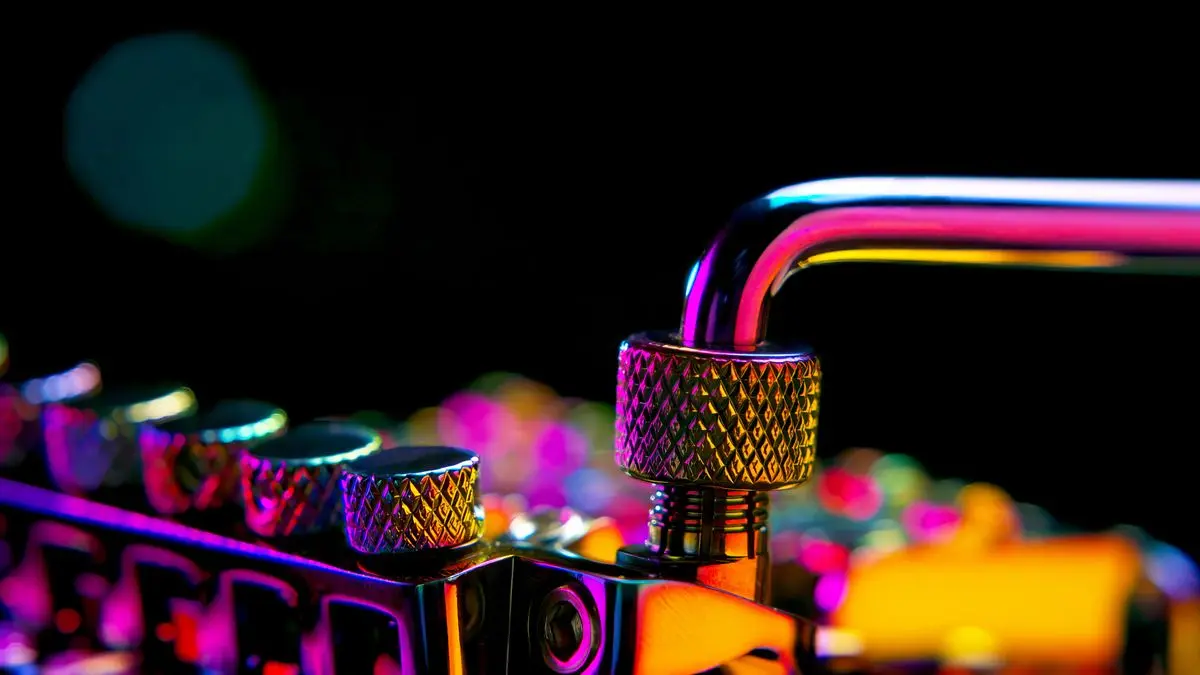 Because the strings sit on a fixed, roller-based bed and the movement sits behind it, the arm doesn’t carry structural load. It only tells the tremolo section how far to travel.
That makes the tremolo arm light and responsive. Its attachment is secure and adjustable, so there is no dead zone where the arm moves but the pitch does not. Small motions give fine changes; wider motions reach up to the physical limits of the strings, in both directions.
Full-Range Precision Tuners
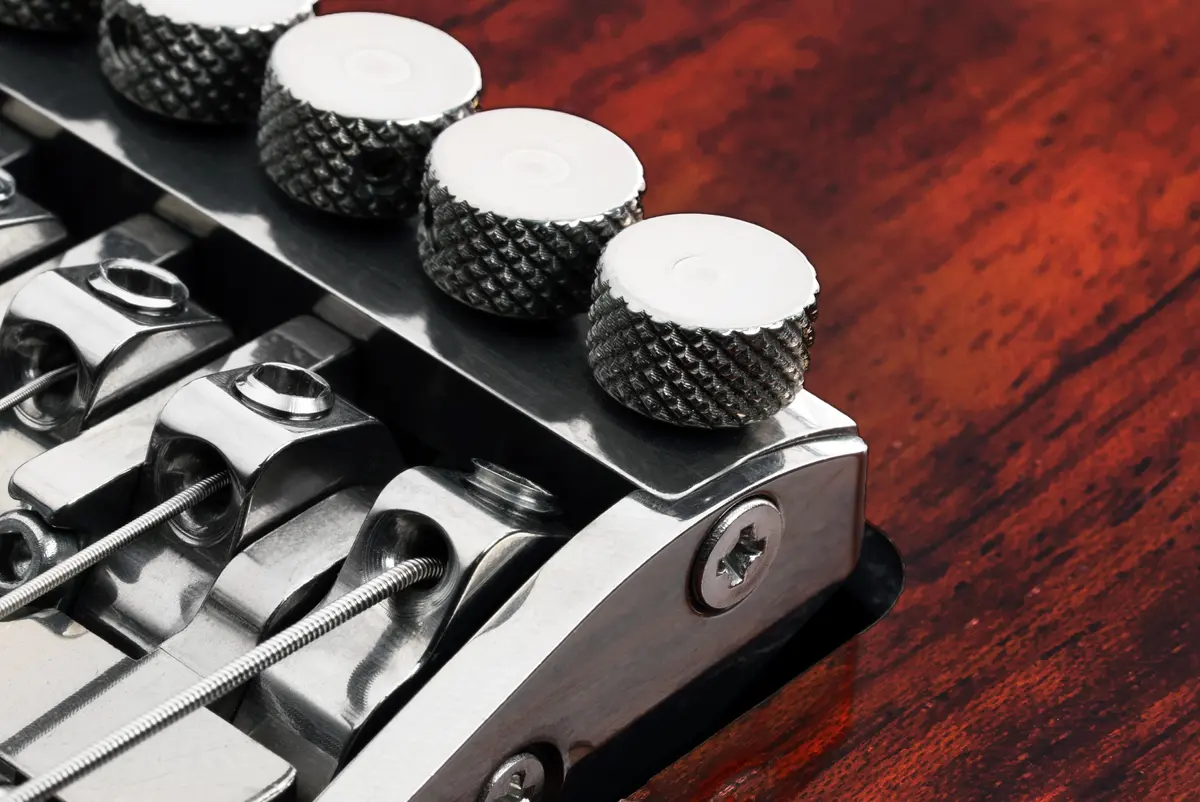
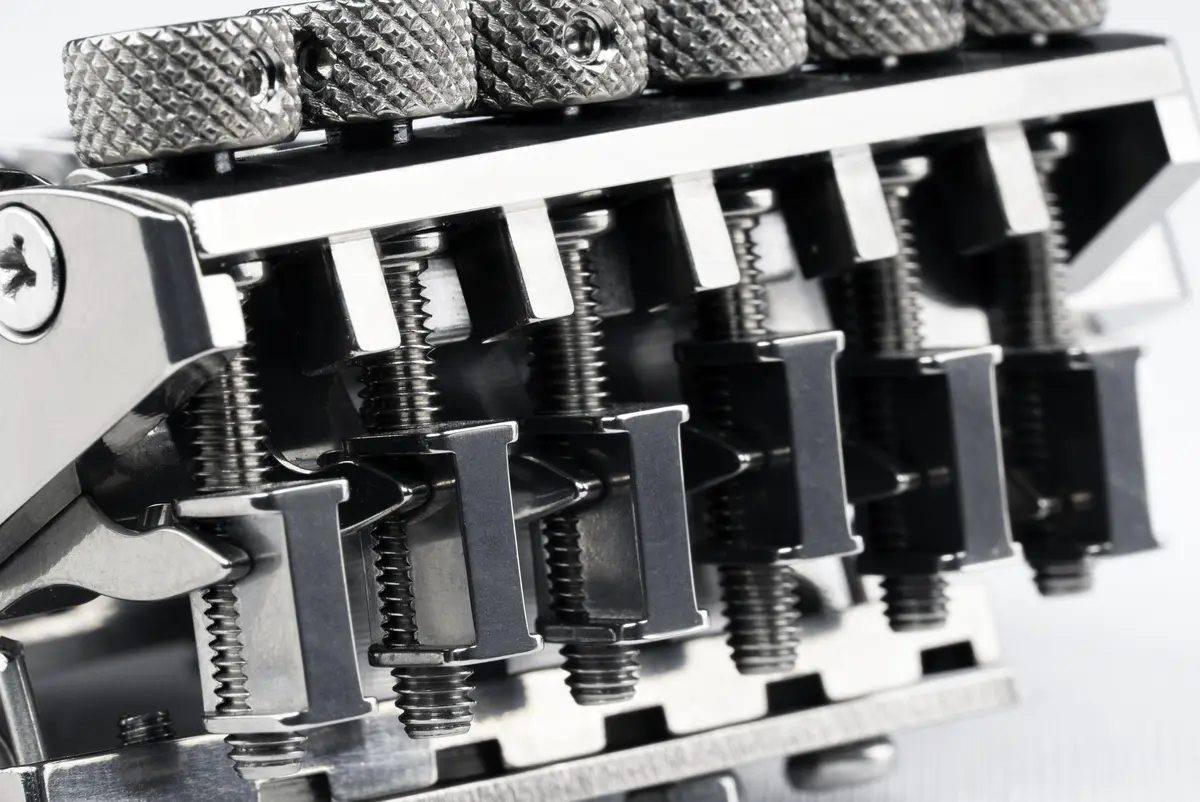
Shark Bridge moves the main tuning function to the bridge end of the string path. Full-range precision tuners sit at the outermost section of the bridge and can do everything headstock tuners can do, and more.
They are self-locking, more stable, and more precise than a traditional machine head set. They also free the headstock and neck from carrying the primary tuning load, which supports modular necks and different tuning layouts. The design supports all tuning combinations rather than forcing a single layout.
Complete String Action Control
Shark Bridge gives full control over string action in all three dimensions: height (vertical), spacing (horizontal), and intonation (length).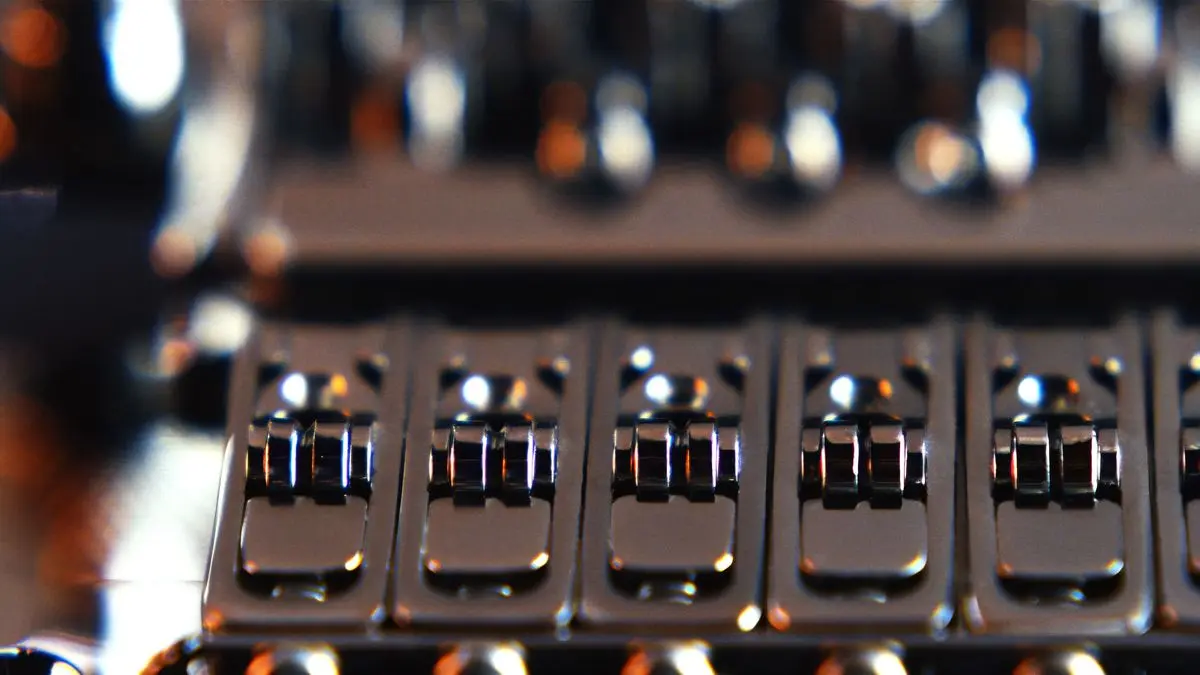
All three can be adjusted at the bridge with simple tools. On top of that, the Shark Nut adds its own two-axis action control on the headstock side, so the same string can be tuned from both ends of the system.
This lets you align strings cleanly along the whole neck, match different neck profiles, and choose high or low action without being boxed in by the hardware. When this is combined with Shark’s neck and fretline geometry, it allows extremely low setups without fret buzz for players who want that feel.
Tremolo / Fixed Bridge Switch
Some situations call for a moving tremolo. Others call for a fully fixed bridge. Sometimes you want all tension off the system for maintenance or travel. Shark Bridge is built to cover all three.
A dedicated slider on the bridge controls the lock. It has three positions:
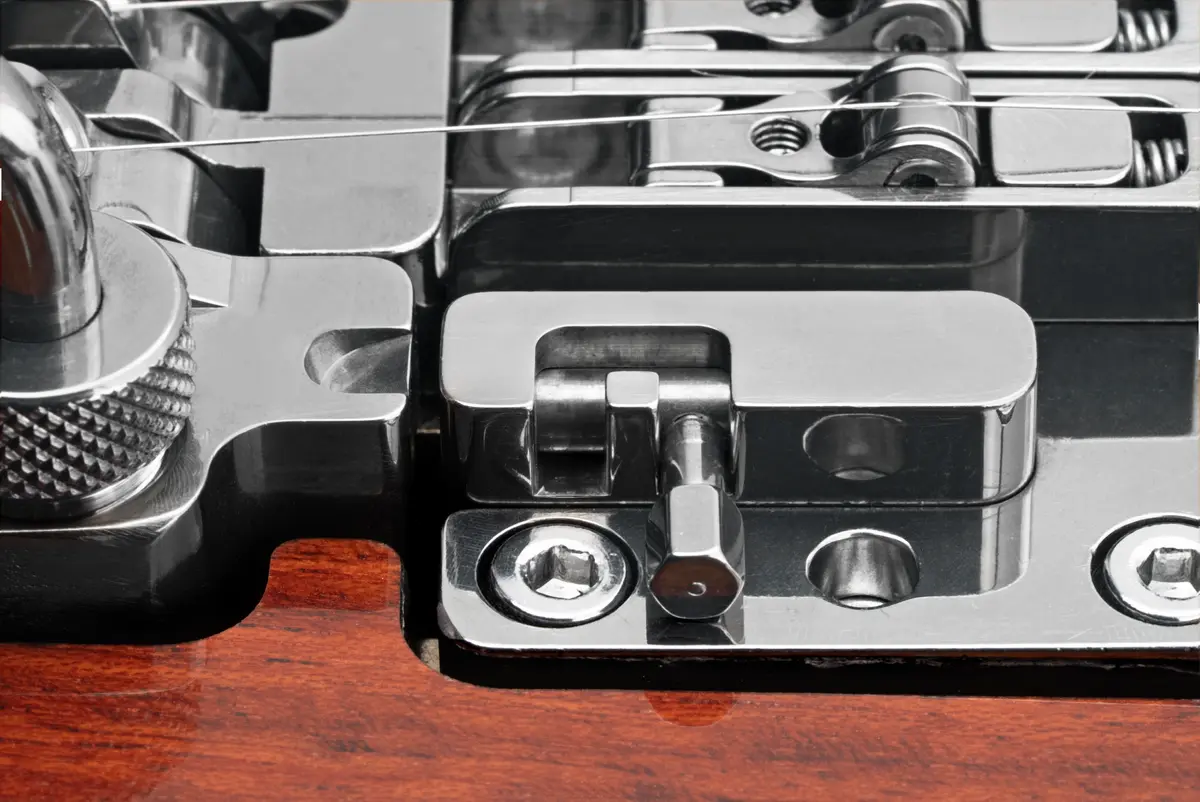 Tremolo mode - The lock is off. The tremolo works in its full linear configuration with wide two-way arm travel, and movement is driven only by the arm as described above. The bridge behaves like a tremolo only while you move the arm; when you release it, it returns to its reference point.
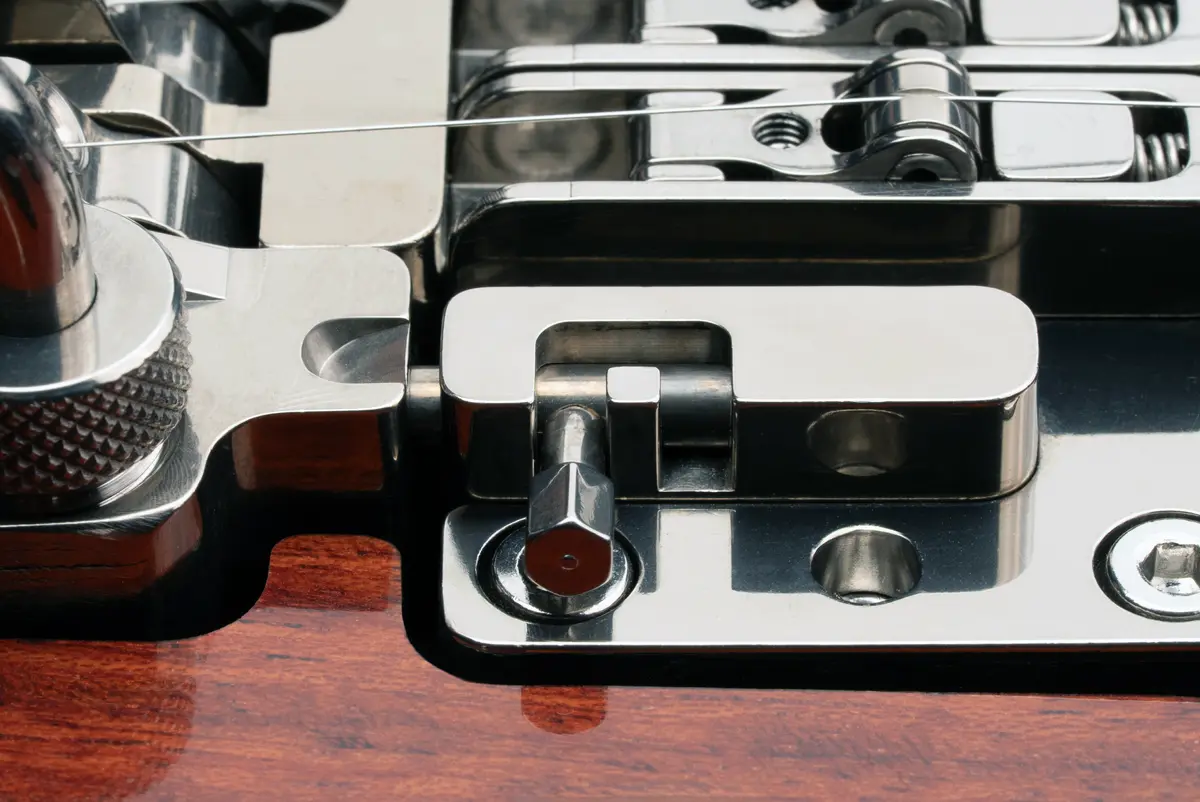 Fixed-bridge mode - The slider locks the moving section to the fixed string bed. The two sections are physically tied together and cannot move. The bridge behaves as a true fixed bridge, without changing the hardware or the way it feels under your hands.
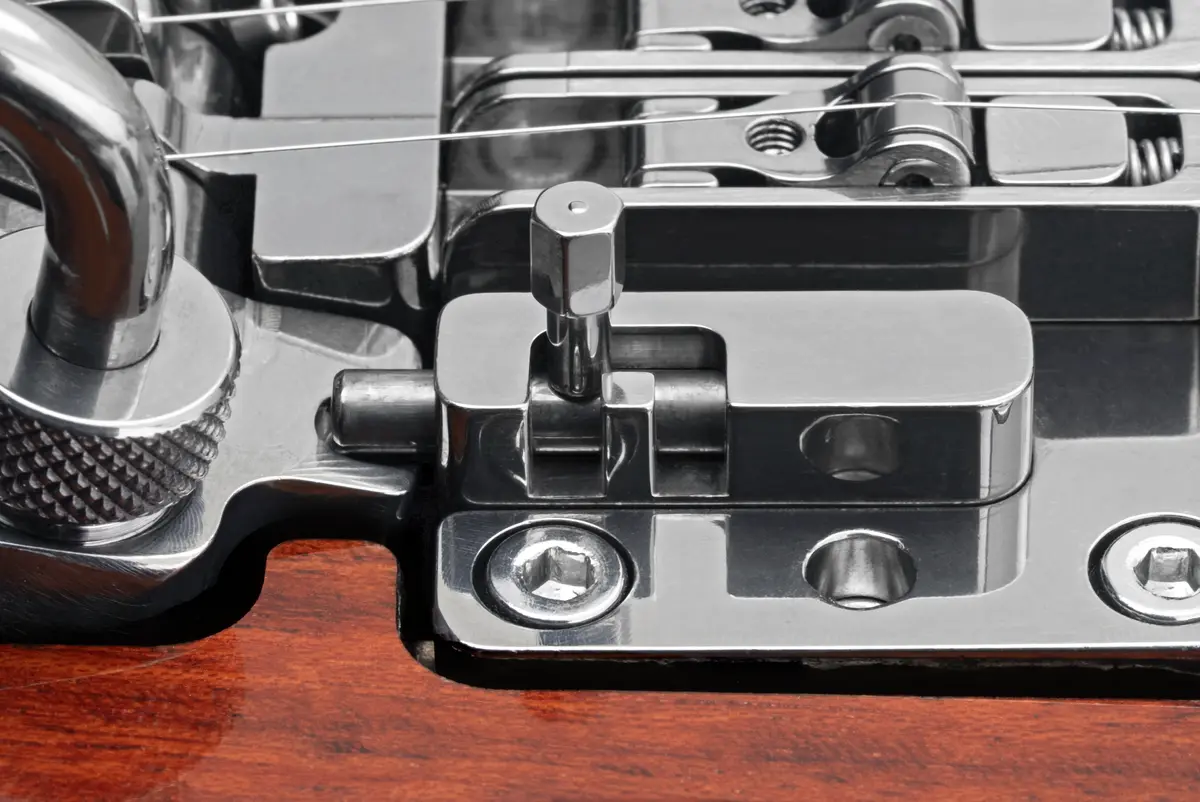 Maintenance mode - You push the tremolo towards the strings side to take up the string tension, then slide the lock into its maintenance position. In this state the bridge holds the load and the strings are relaxed over the nut.
In maintenance mode, the Shark neck and nut system come into play. The neck is latched, not bolted: it can be released with a push of a latch and locked back into place with a push when you reinsert it. The strings rest on a removable nut carrier. With tension off, you can lift the strings out as a group on that carrier, release the neck latch, and separate neck and body.
This makes it possible to pack the guitar down into a smaller, better protected case or bag with the neck removed, without cutting strings or rebuilding the setup from scratch. When you arrive, you snap the neck back into the titanium body neck joint, re-insert the string carrier into the nut slot, return the lock to tremolo or fixed mode which brings the strings back to pitch, and you are close to where you left off - usually little to no fine tuning is needed, depending on the conditions.
Maximum Sustain
The tremolo is one piece of a larger titanium system. Strings are anchored at the bridge with set screws and continue over the rollers, through the Shark Nut, and into a titanium spine inside the neck that locks into the body.
This creates a continuous, stiff path from string to body with minimal energy loss. Sustain and resonance are carried by one connected structure instead of being broken into separate, inconsistent components.
For everyday use, this means a guitar that responds the same way under your hands from session to session, even with neck changes or travel.
Aerospace-Grade Titanium
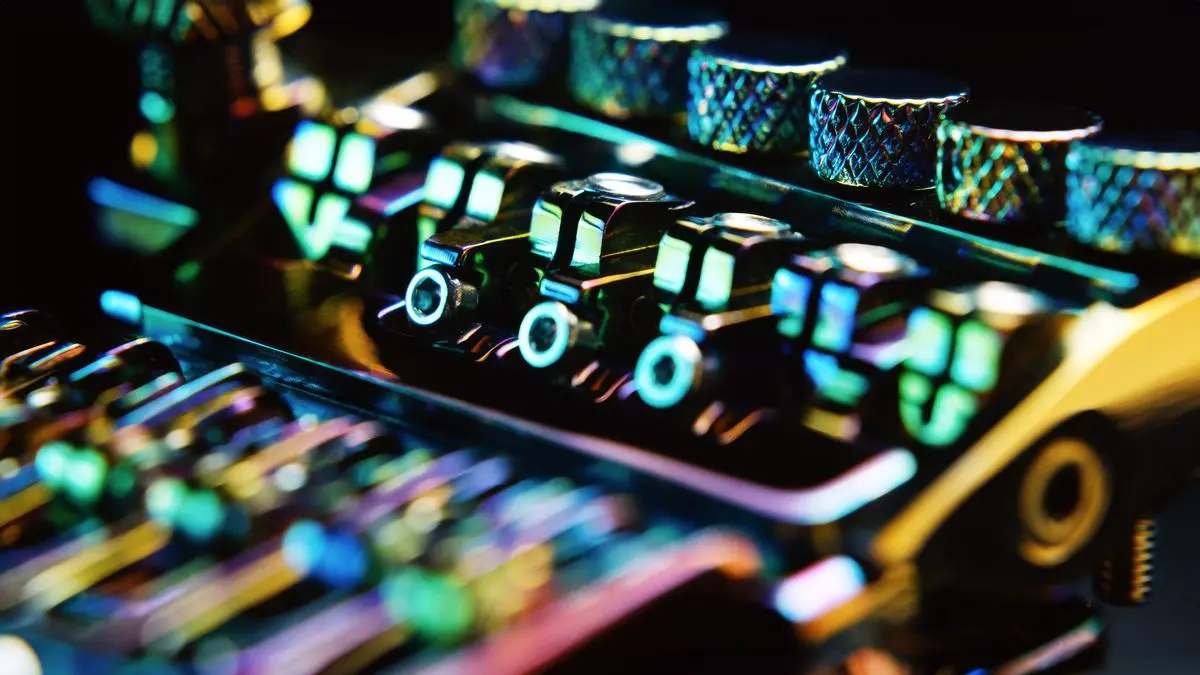
 Every structural part of the Shark Bridge is made from aerospace-grade titanium and CNC-machined in-house to micrometer-level accuracy on multi-axis equipment. The bridge is built with the same mindset as an aerospace component: tight tolerances, repeatable geometry, and no soft or mixed materials in the core structure.
For the player, this means a bridge that does not creep, sag, or soak up energy. Titanium behaves differently from softer metals: instead of damping the string, it reflects that energy back into the string and the body. The result is very strong sustain and a clear, focused note attack.
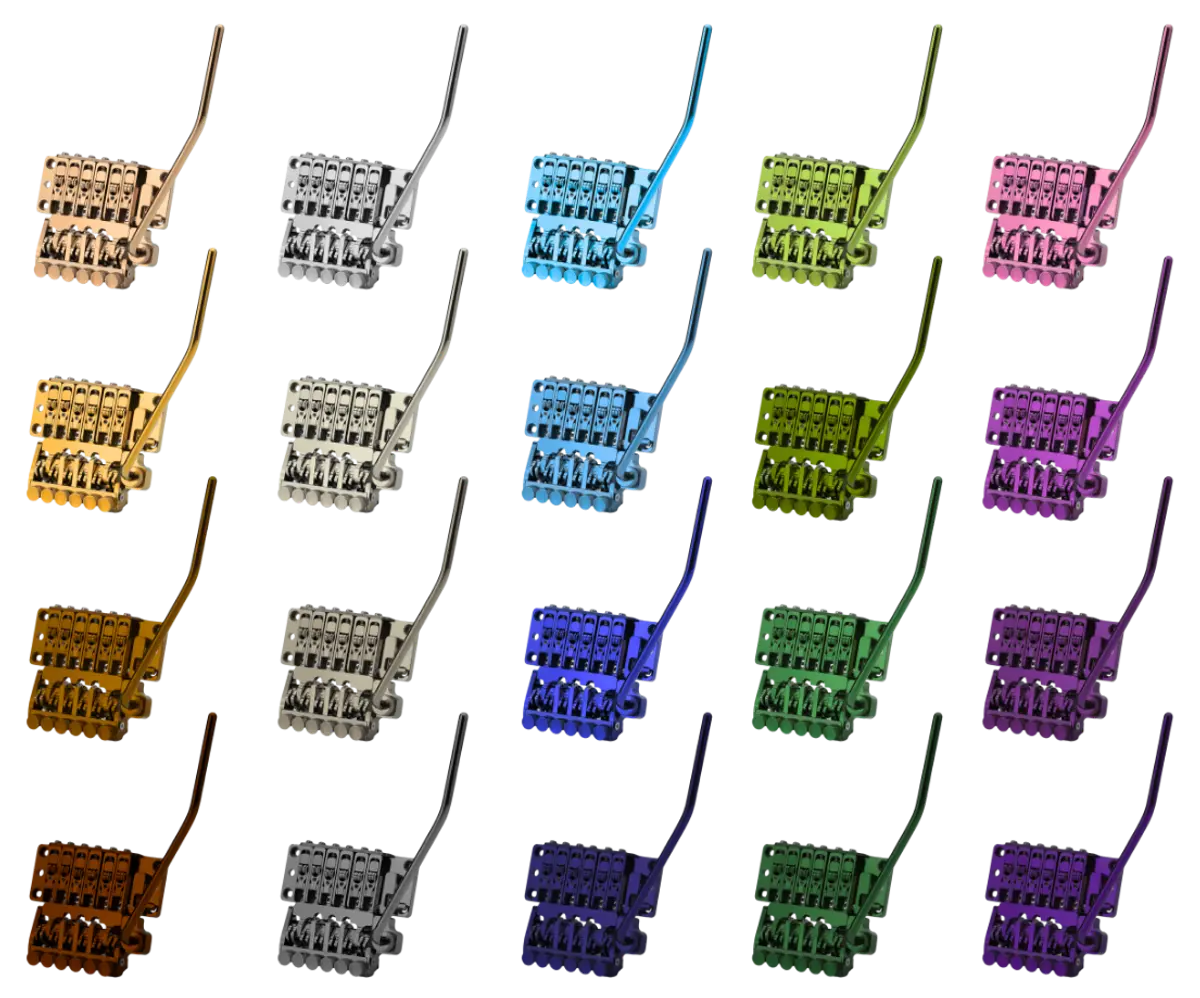
The same titanium parts can be anodized in hundreds of color options, from bright tones to Type 3 matte grey with high scratch resistance. In Shark 3D Designer, players can choose these colors in depth and even assign different colors to different part groups on the bridge.
A Perfected Tremolo-Bridge System
Shark Bridge does not just refine a familiar bridge; it removes the flaw at the center of every traditional tremolo: the built-in tradeoff between expression and stability. It behaves like a fixed bridge in normal playing, then opens up into a full two-way tremolo the moment you touch the arm.
In use, the benefits are clear:
-
You can lean on the bar without planning a re-tune.
-
You can bend strings as far as you want without pulling chords out of pitch.
-
You can keep the action and spacing you like, not the one the hardware forces on you.
-
You can switch between tremolo, fixed-bridge, and maintenance modes on the same guitar, and the bridge keeps returning to the same reference point.
-
You get long, clear sustain from aerospace-grade titanium and low-friction mechanics that give energy back to the strings instead of wasting it.
The tremolo is one part of a larger system that includes the Shark Nut, the modular titanium neck spine, and the electronics platform with pickup modules and FX cards. Together, they form a complete, modern electric guitar architecture that solves half a century-long problems. Permanently.
A guitar with a tremolo no longer has to be “a bit unstable by nature.”
Shark Bridge proves it, and it is already recognised as the benchmark by the people who live with these instruments every day.
Date Edited: 08-01-2026
Date Created: 02-12-2025
TAGSBridge