
Choose Your Neck
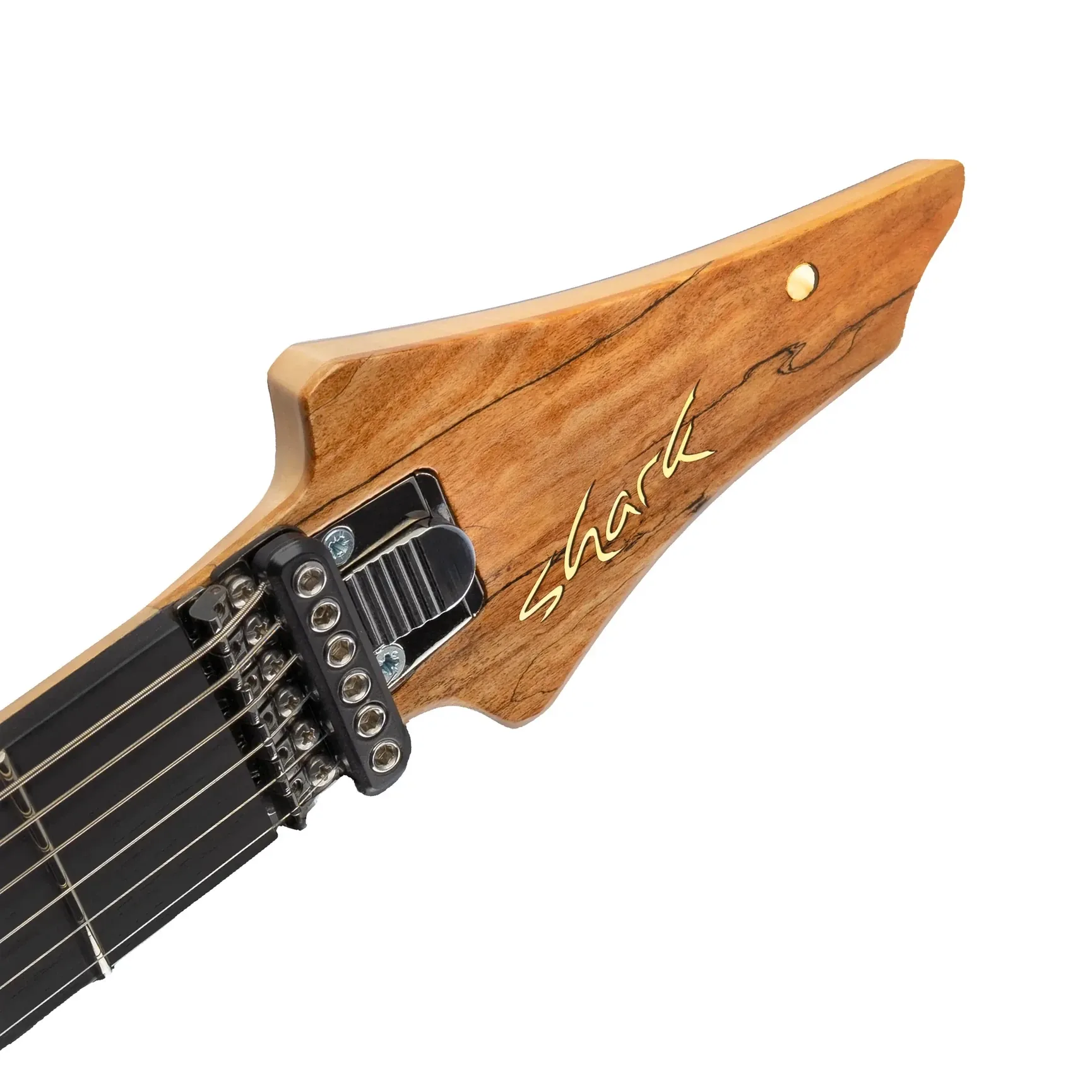
Built Once. Configured Forever.
Every Shark neck shares the same titanium core, the same individually adjustable fret system, the same quick-change mount. You change the profile, the wood, the radius, the scale length. The engineering stays the same.
That is what makes a library of forty-four profiles practical: one guitar body, any neck that fits your hand today, a different one tomorrow.
The neck is what defines the feel of the guitar.
On most guitars, you accept the one that comes with the model. With Shark, you design it.
Bending effort, chord comfort, speed, hand fatigue, technique execution. They all trace back to the geometry under your fingers. Shark treats every dimension as a parameter you set: thickness at the nut, thickness at the twelfth fret, taper behavior, fretboard radius, shape of the back, nut width, scale length, fret count.
A rigid titanium infrastructure under the wood. Stable under string tension and environmental change.
Every fret raises and lowers with one hex key. Set your fretline yourself, anytime.
Manufactured in-house to sub-0.01mm tolerances. No firmware, no apps, no vendor lock-in.
Forty-four profiles across three thickness classes and five categories. Made to fit your hand.
The Neck System, in a Minute
A quick look at the titanium core, the adjustable frets, and the quick-change mount before we go deeper.
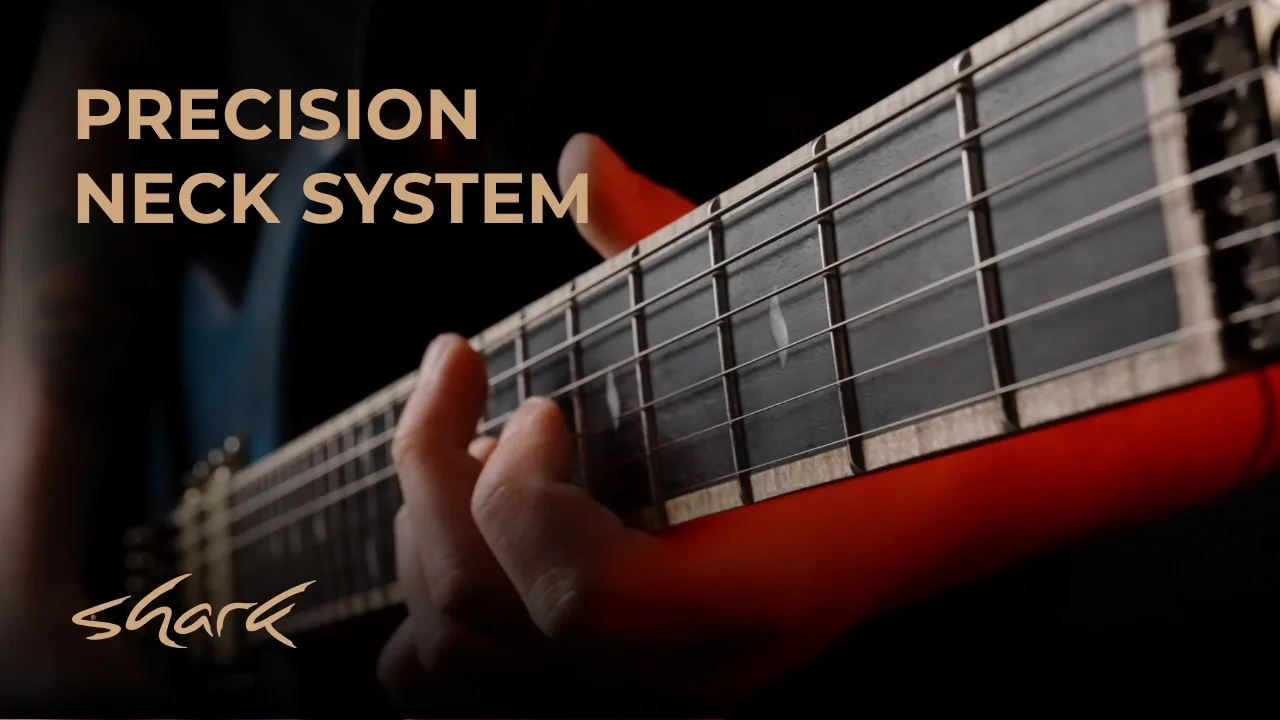 Watch on YouTube
Rigid Titanium Under Every Neck
The truss rod and the joint it forms with the body. The structural foundation that makes a forty-four-profile library practical rather than theoretical.
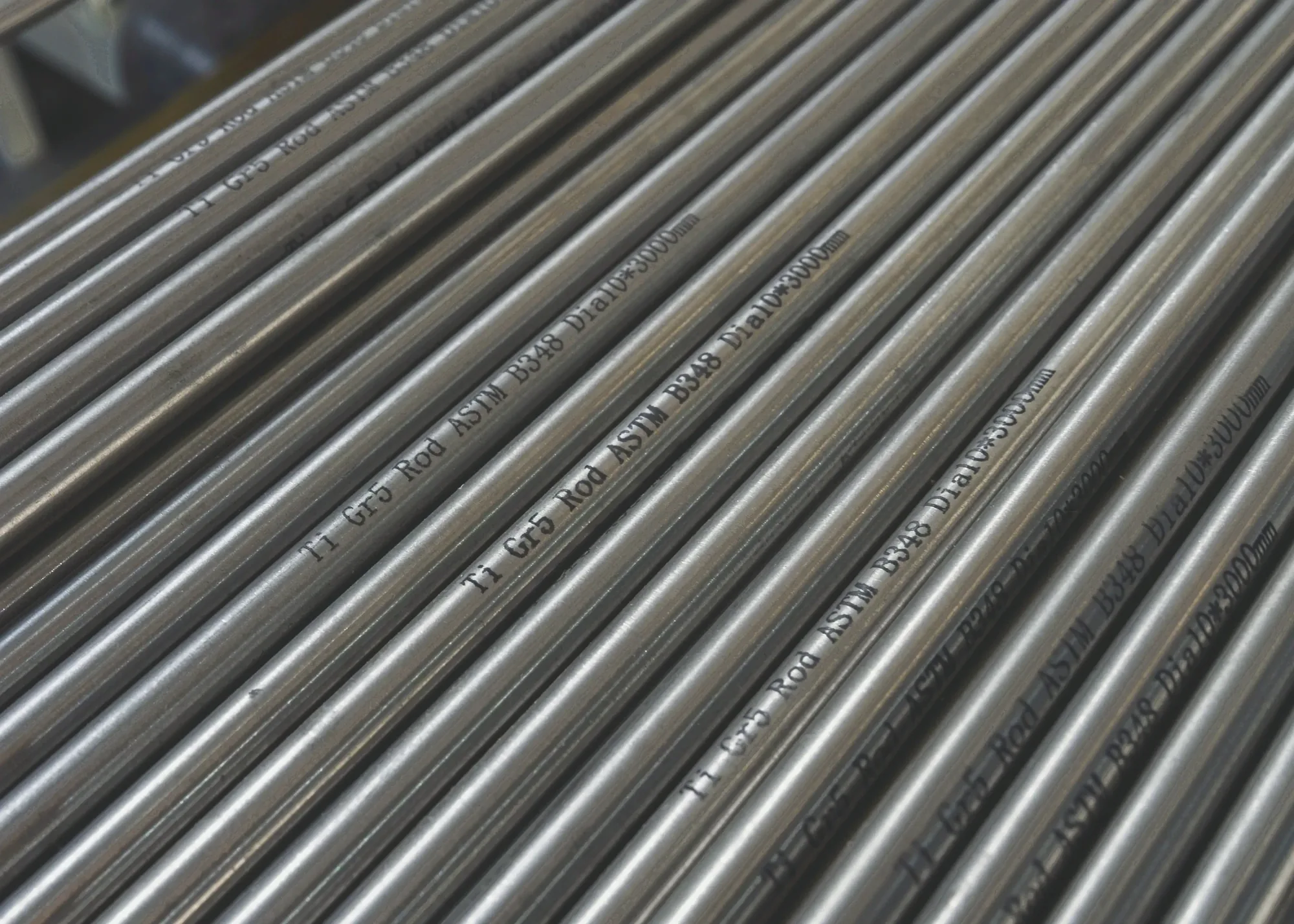
T-Form Titanium Truss Rod
The core of every Shark neck. A grade 5 titanium T-Form truss rod runs the length of the neck, holding it flat under string tension and through temperature and humidity change. The wood above it is free to be maple, roasted maple, mahogany, anything. The stability comes from the titanium.
The T-Form also locks into the body socket, which is what makes the neck swappable in seconds.
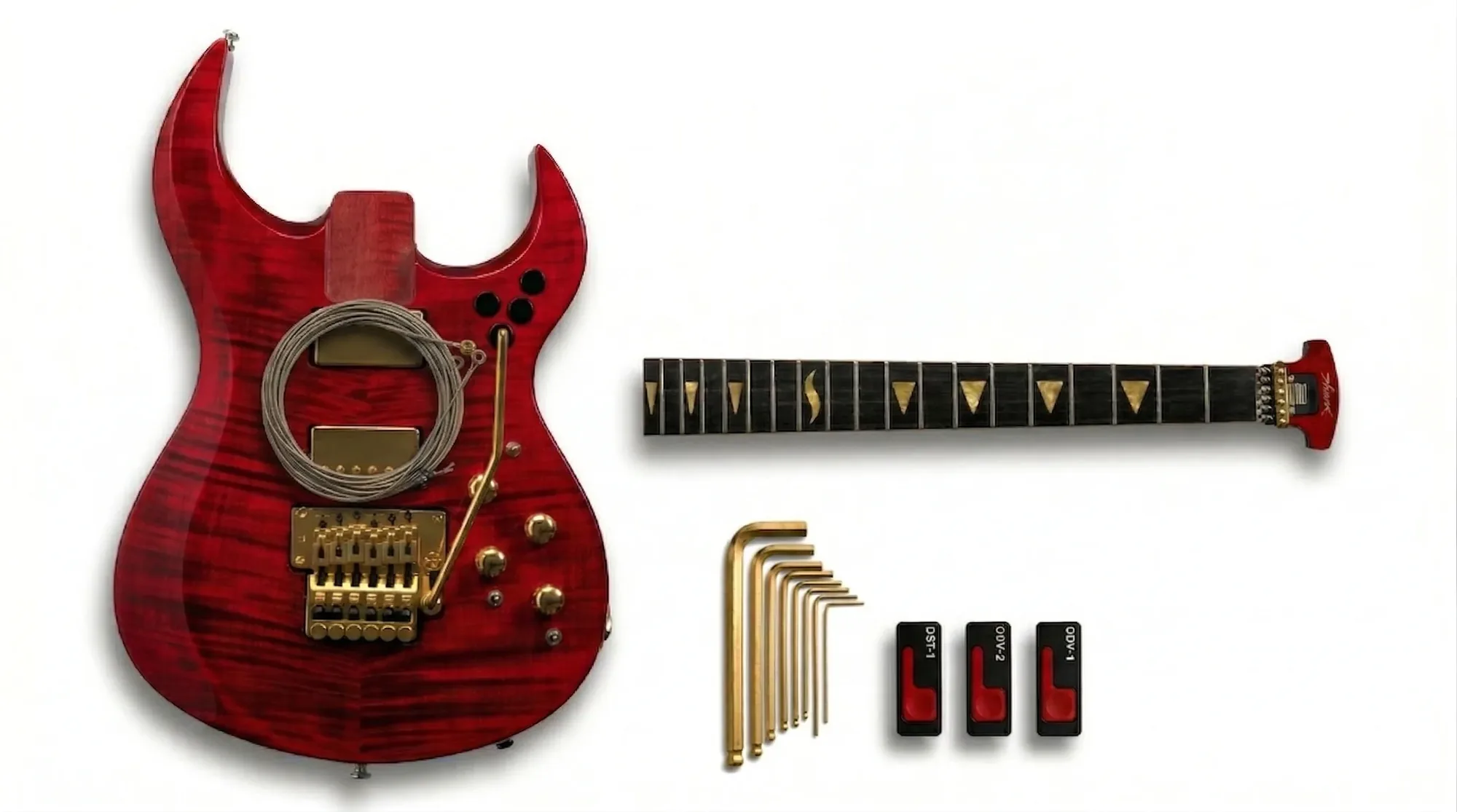
Body-Neck Joint
A titanium-on-titanium interface. Airtight latch, micron tolerances. When the joint is locked, the neck is as stable as a through-neck construction. When it is released, the neck lifts off in seconds without removing the strings, thanks to the string carrier at the nut.
The joint is the same across every Shark body and every neck in the library. Any profile fits any body of the matching fret count.
Set Your Fretline Yourself
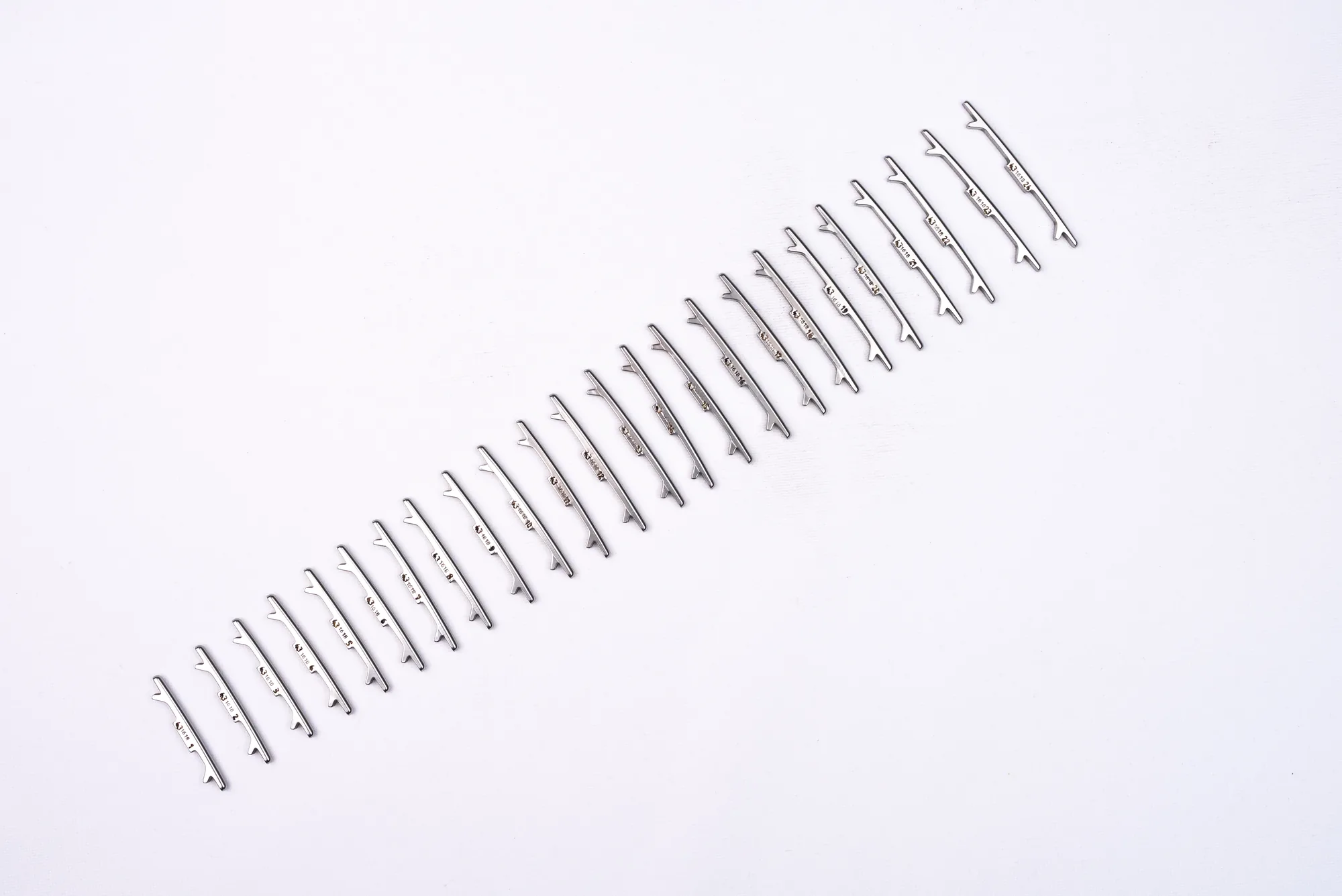
Dial String Action Without a Specialist
Every fret raises or lowers with a single hex key. Combined with height adjustment at the nut and bridge, you control string action across the entire fretboard without taking the guitar anywhere.
Frets are stainless steel or anodizable titanium, manufactured in-house to sub-0.01mm tolerances. Individually replaceable when they eventually wear.
Paired with the forty-four-profile library, you dial the feel and the fretwork to exactly how you play, anytime.
Made In-House, In Antalya
Sub-0.01 mm titanium tolerances. Nothing running on a server. No firmware, no apps, no vendor lock-in.
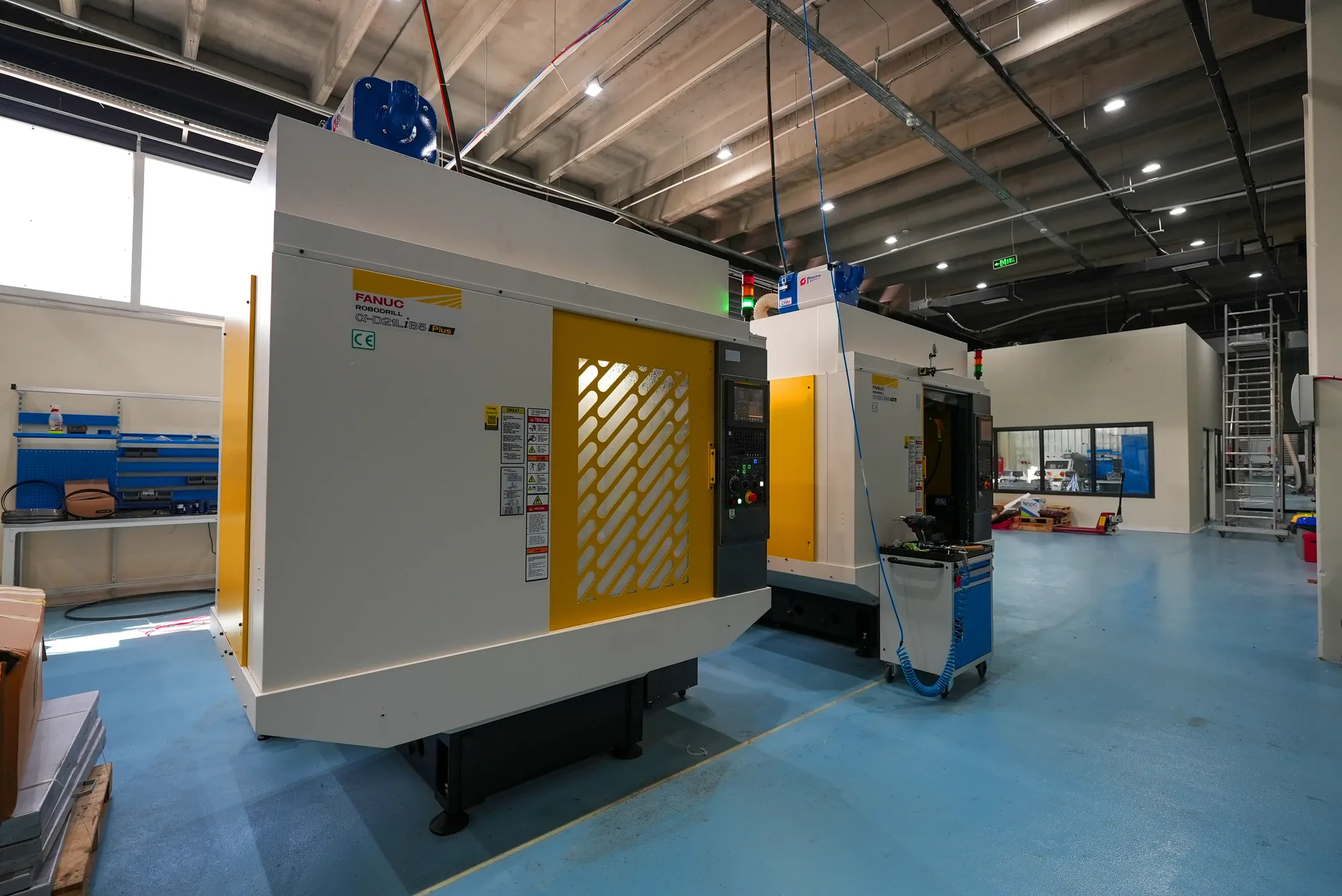
Every Shark neck starts as titanium rod and tonewood, and ends on a measured tolerance. The factory in Antalya runs multi-axis CNC cells, in-house fretting, in-house anodization, and its own metalwork. No outsourced hardware in the signal path.
Titanium tolerances stay below 0.01 millimeters. That is what lets any neck lock into any body, any fret anodize to a matching color, any fret calibration hit the planned surface without correction.
Nothing runs on a server. No firmware, no apps, no cloud sync. The guitar you buy today has no dependency on anyone else staying in business tomorrow. Mechanical, analog, repairable.
Forty-Four Profiles in the Library
Pick a thickness, a category, a shape. The Designer configures the exact spec and sends it to the factory.
Three Thickness Classes
Thickness at the nut is the first thing your hand feels. Every profile in the library sits in one of three classes.
Class 01
Thin
19mm at nutSpeed and minimal hand travel. Reduced fretting effort. Favored by technical lead players and anyone with smaller hands or concerns about hand fatigue during long sessions.
Class 02
Regular
21mm at nutThe modern standard. Balances rhythm comfort with lead agility. Most players find Regular profiles feel right without adjustment, across styles and techniques.
Class 03
Fat
23mm at nutPalm-filling grip. Suits larger hands, thumb-over technique, and players who find thinner necks cause cramping. Something substantial to hold on to.
Five Categories
Each category groups profiles that share a design philosophy.
Constant thickness, rounder 10" radius. Classic feel for chord work. Includes Razor variants at 19mm with flat 18" radius for maximum speed.
Progressive thickness with compound radius. Grows from nut to heel, flatter radius higher up. The most versatile category in the library.
Fretless variants in Vintage and Tapered shapes, with a flatter 16" radius. Built for the precise finger pressure control fretless demands.
Asymmetric profiles. Different shape on the bass and treble sides, for geometry that follows the natural angle of the hand.
MicroShredder, Heritage V, scalloped thin profiles, reverse tapers, Thinline D. Purpose-built shapes for specific techniques and player preferences.
How to Choose
A short path through the library. Configure the exact spec on the Designer when you have a direction.
Start with thickness
- Thin 19mm for speed and smaller hands.
- Regular 21mm is the modern standard. When in doubt, start here.
- Fat 23mm for thumb-over and larger hands.
Pick a category
- Vintage for chord work and classic feel.
- Tapered for versatility across rhythm and lead.
- Fretless, Chimera, Unique for a specific technique or ergonomic need.
Choose the shape
- C is the universal grip.
- D adds flat shoulders for strict thumb-behind positioning.
- U has a flat back with angular shoulders for straight-wrist playing.
- V has a central ridge for thumb placement.
Pick the thickness, category, and shape. Choose the wood, the radius, the scale, the fret count. The Designer builds it real-time, shows you the price as you go, and sends it to our factory when you hit order.
Open the 3D Designer